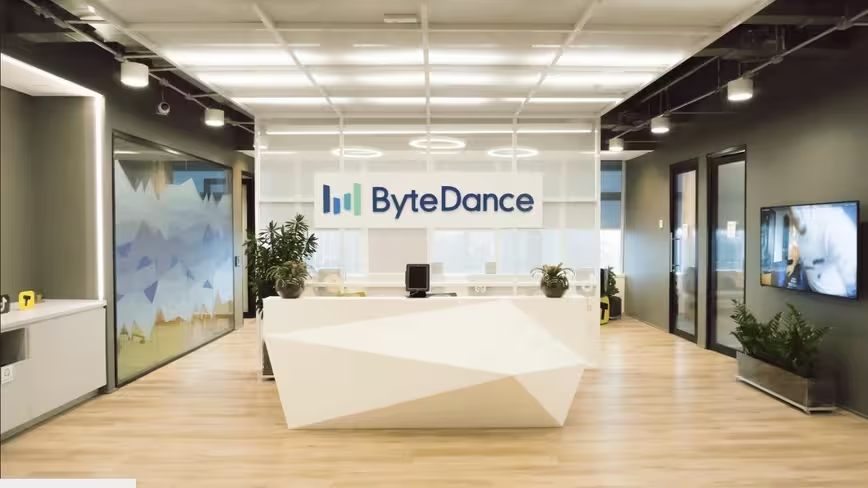
ByteDance has generally been Microsoft’s single biggest AI customer in recent years, and is on track to spend more than $1bn a year on Microsoft’s AI and cloud services, Bloomberg reports.
The surprising part is what the owner of TikTok buys the most: OpenAI models, sold through Microsoft’s Azure cloud, in a market that OpenAI itself cannot work directly.
Both OpenAI and Anthropic refuse to sell their models to Chinese companies, citing fears of intellectual property theft and malicious use. Microsoft, due to its unusual partnership with OpenAI, sets its own policy in China and sells the GPT series there anyway. It offers other models as well, although they are not Anthropic.
ByteDance is not alone. Ant Group, Meituan, and Tencent are also key buyers of AI models through Azure, according to Bloomberg sources.
The fastest growing AI market Microsoft owns
Internally, Microsoft took it as a win rather than a liability.
At a July 2025 sales meeting, then-chief commercial officer Judson Althoff told employees that Azure’s AI revenue is growing faster in China than anywhere else, nearly tripling in the fiscal year to June 2025 after a 400 percent surge the year before, according to a document reviewed by Bloomberg.
“The world’s most advanced AI solutions are being built on the west coast of the United States and the east coast of China,” Althoff said. “One company that combines those two areas is Microsoft.”
The business is still young in context. China accounts for about 1.5 percent of Microsoft’s total revenue by 2024, president Brad Smith told Congress.
Why is it sensitive?
Marketing remains unpopular against a tumultuous political climate. US officials and lawmakers have called China’s AI a potential squeeze on US industry, and Washington has recently tightened rules on who can access America’s most powerful models.
OpenAI has privately complained that Microsoft is not doing enough to stop Chinese firms from copying its models, a process known as distillation, according to Bloomberg. Microsoft says it uses automatic monitoring and sells only to established companies, not individual developers, but Chinese customers are not subject to intensive inspections, and artificial data training is difficult to prevent.
There are limitations that Microsoft recognizes. Under its OpenAI agreements, it does not host models in its China data centers, near Beijing and Shanghai, for fear that the IP could be stolen. Customers instead access them over the Internet from services in other countries, such as Singapore.
Another way to go
While ByteDance buys American models, it moves its actual computer the other way.
The company is accelerating the transition to domestic AI load chips, SCMP reports, and is weighing orders from a group of small Chinese suppliers, called tier-two chipmakers such as Biren, MetaX, Iluvatar CoreX, Moore Threads, and Enflame, as Nvidia’s access to China remains restricted.
That leaves ByteDance straddling both sides of the AI cold war at once: hiring the best Western models through Microsoft, while building its own hardware base at home. The question Microsoft can’t fully answer is what its biggest AI customer is ultimately training for.