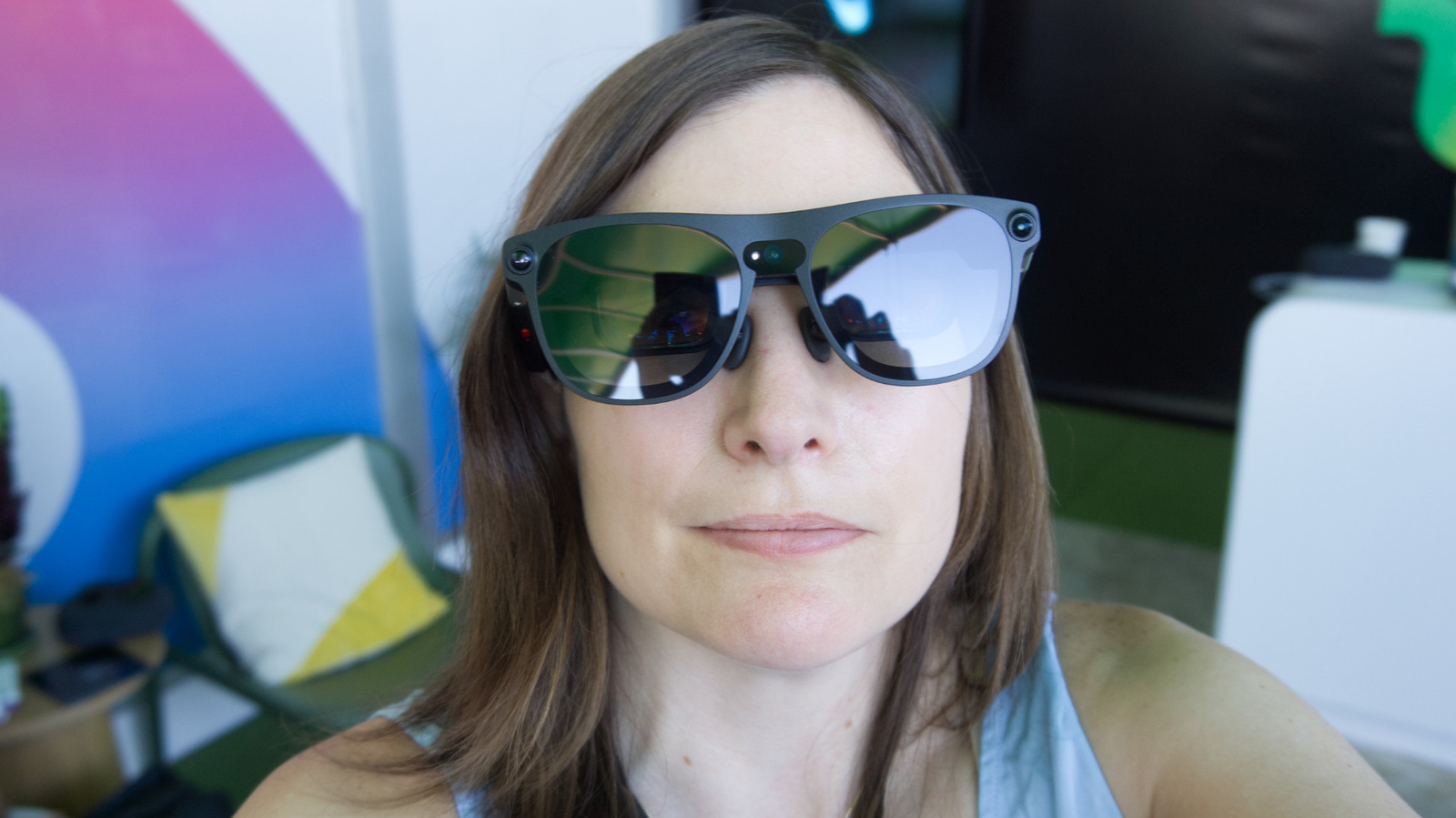
Xreal has always had a unique niche in the smart glasses market. Rather than generic-looking glasses with some smart features, the company offers a more immersive AR experience that’s well-suited for entertainment. That approach is very similar to the company’s Android XR-powered Project Aura. But after spending time with the glasses at Google I/O, it’s clear that Xreal is trying to do a lot more than just another pair of cinema glasses.
If you think of the upcoming audio-only glasses from Warby Parker and Gentle Monsters as smaller versions of the Android XR on glasses, Xreal’s Project Aura is the best of the bunch. Instead of smart glasses that you have to wear all day, Project Aura is sort of a supercharged version of the company’s One Pro glasses.
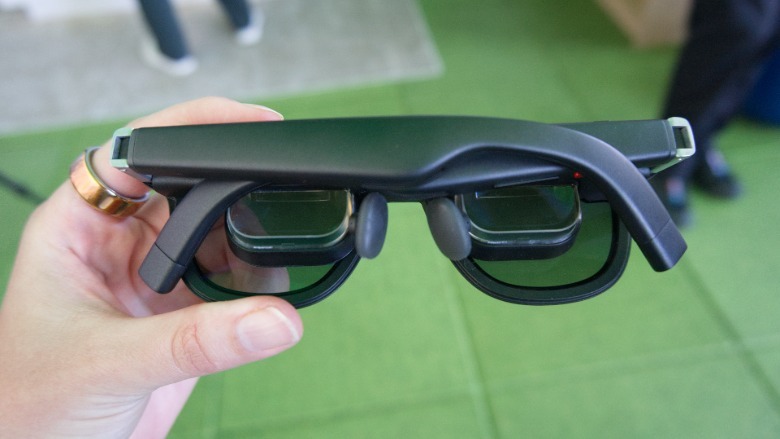
The glasses themselves look and feel very similar to the One Pro frames. But Project Aura adds three cameras to the setup: one on each side of the frames for hand tracking and a third in the center for stills and video. Xreal hasn’t shared much in the way of specs yet, but the 70-degree field of view was impressive. It was extremely sharp and bright, even in the hot outdoor conditions where I was testing. And it was wide enough that I didn’t feel like anything was cutting out while watching a YouTube video or scrolling in Chrome, or that I had to remind myself to look left and right to see more content like YouTube’s comments section.
The interface was also very easy to navigate with my hands. The main touch is a pinch motion that will feel very familiar to anyone who has used other AR setups. I found that the glasses were able to detect my hands reliably and I had no problems resizing or moving the windows around.
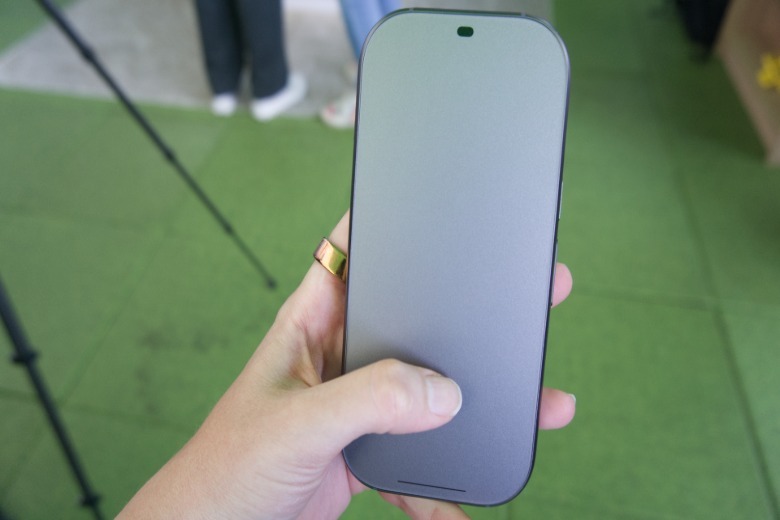
Unlike the One Pro glasses, the Project Aura relies on a tethered connection to a separate puck, similar to Apple’s Vision Pro. The Xreal’s phone-sized puck also has a built-in trackpad and fingerprint sensor, though I couldn’t use either of those features. It got a little hot during my time (about 20 minutes), but we were also outside in 90 degree heat.
 Karissa Bell for Engadget
Xreal was showing off several of its home apps to highlight some of Project Aura’s capabilities, including a simple AR drawing app and something called “Gemini Molecule.” The latter provided a good demonstration of Aura’s multimodal capabilities: look at an object in front of you, give it a pinch with your fingers and the app will spit out the name of the material and a demonstration of its molecular structure. The company told me that both apps were quickly coded for vibe using Gemini. And while they weren’t the most compelling AR apps I’ve ever used, they did offer an interesting look at what’s possible once third-party developers can get their hands on Aura.
Although Project Aura has the same possibilities for immersive entertainment as other Xreal glasses, the company seems to be positioning Project Aura as a pro-level device. You can connect the glasses to a laptop and use the Aura as an external display. Throw in a Bluetooth keyboard and you can accomplish a good amount of real-world work, though I wasn’t able to try this type of setup. One of the Xreal engineers I spoke to, however, insisted that he had ditched his regular monitor in favor of the Aura glasses.
 Karissa Bell for Engadget
Put it all together, and Xreal is showing an ambitious vision of what Android XR could be. And I left my demo very impressed with the setup. But it also makes me wonder who, really, Aura represents. The company hasn’t revealed pricing details yet – that will come with the official launch later this year – but I think it’s pretty clear that it will be priced like a premium device. The Xreal One Pro glasses cost $650, and I would expect the more powerful Project Aura to be more expensive. Still, I could easily see the Aura being popular with developers and vibe coders and anyone looking for a lighter weight alternative to Samsung’s Galaxy XR headset.