
In this article, we’ll explore the concept of robotics and discuss trends and prospects for further robotization.
Industry, Medicine, Education, Space exploration. Agriculture. All these and many other fields are now actively using advances in robotics. Almost every home has a robot vacuum cleaner or smart speaker, factories have automated production lines, and operating rooms have high-precision surgical systems. Driverless cars, humanoid devices, and numerous programming classes for children have emerged. And all this is thanks to the rapid advancement of science and technology. In this article, we will explore the concept of robotics and discuss the trends and prospects for further robotization.
What is robotics?
Robotics is an applied science that focuses on the design and creation of robots, as well as the study of the possible applications of robotic devices.
Robotics is inextricably linked with many engineering disciplines:
- programming,
- radio engineering,
- telemechanics,
- electronics,
- mechanics,
- computer science,
- mechatronics,
- electrical engineering.
The combination of artificial intelligence and modern technology enables the design of complex software-controlled devices. Robots are equipped with cameras, sensors, lidars, thermal imagers, manipulators, voice recognition systems, and other modules. These modules enable robotic devices to:
- collect information, process it;
- create maps of the area, navigate in space;
- perform various manipulations, for example, assemble products, monitor the territory, clean the premises, and sort garbage.
Depending on the programming, the robot can operate autonomously or under operator control. Using machine learning algorithms, developers can teach robots to successfully solve even complex tasks, including those inaccessible to humans. For example, robotic dogs are used for search and rescue operations in hazardous areas, and bionic prosthetics can almost completely restore lost motor functions.
Types of robotics
Robotics is typically categorized by industry. There are construction, medical, consumer, industrial, aviation, and extreme applications. The latter includes the development of technology for military and space applications, as well as for various underwater and other hazardous work.
Mobile robotics is a separate category. This branch of science addresses the challenges of quickly reconfiguring robotic devices for specific purposes. For example, the same robot can assemble finished products, perform welding, or do paint work. This type of technology is called universal.
Applications of robotics
Construction industry
Construction robots speed up the construction process, simplify human work, reduce risks, and improve construction quality.
The following types of construction robots are used worldwide:
- cobots – used for loading and unloading operations, welding, gluing, and preparation of building solutions;
- brick-laying robots – capable of laying over 3,000 blocks per shift;
- universal models – used for stacking building materials, laying foam plastic and fiberglass boards;
- Self-propelled vacuum lifters – capable of holding a weight of approximately 175 kg;
- crane systems – designed for the construction of high-rise structures;
- devices for assembling wooden structures;
- Remote-controlled devices for dismantling works.
Medical industry
Robotics is rapidly developing in many areas of medicine. The most promising developments are considered to be in the fields of surgery, prosthetics, and targeted drug delivery using microrobots.
Automated systems are also used for diagnostic procedures, rehabilitation after surgery and injuries, disinfecting premises, and delivering medications to patients. Clinics employ robot consultants who can help patients schedule doctor appointments or obtain necessary information.
Interactive companions have been developed for the elderly and those with special needs. They provide emotional and psychological comfort, reducing stress in their “charges.”
Every year, more and more smart devices appear around the world. Modern bioprinters, for example, make it possible to create complex biological structures for transplantation: skin, blood vessels, cartilage, and internal organs. However, this area of robotics is still in its early stages of development, so widespread adoption of the technology is still a distant prospect.
Services sector
The following robots are most in demand in the service sector:
- cleaners,
- waiters,
- administrators-consultants.
These devices are called service robots. Most feature an interactive display that displays friendly emotions and a built-in voice module. The robot can guide customers to their table in a restaurant, offer menus, deliver their orders, and even show them a commercial.
Industry
Industrial robotics is a field of science responsible for the development and creation of robotic devices for use in manufacturing, to replace manual labor with automated ones. The classification types of such robots are listed in the table.
| Classification type | Types of robots |
| Method of work | Automatic Biotechnical Interactive |
| Load capacity | Up to 10 kg – light Up to 200 kg – medium Up to 1000 kg – heavy Over 1000 kg – super heavy |
| Maneuverability | Stationary Self-propelled |
| Installation method | Floor-standing Suspended Built-in |
| Purpose | Universal Special Manipulators Serving Cobots |
Robotics: tasks and functions
The primary function of robotics is to simplify human work and make life more comfortable. For example, automating production lines reduces the risk of industrial injuries, and using robotic vacuum cleaners allows people to take a walk or pursue a favorite hobby instead of cleaning.
Robotics solves six key problems.
- Movement. Stationary robots must have a certain range of motion. Self-propelled robots must be able to move and maintain stability while moving. For example, bionic robot dogs can navigate difficult terrain, overcome steep climbs and descents, perform dizzying jumps, and even perform stunts.
- Spatial orientation. Using lidar, cameras, and other technologies, robots can process data, create terrain maps, and navigate accurately.
- Manipulation. Smart devices must be able to interact with objects around them—from decorating cakes with marzipan roses to performing heart surgery.
- Communication with humans. In some cases, it’s important for a robot and a human to be able to collaborate on tasks.
- Working in conjunction with other robots. It’s important that when multiple devices are used simultaneously, they don’t interfere with each other and can exchange information.
- Artificial intelligence training. Correct use of learning algorithms allows us to create sophisticated systems capable of choosing the optimal course of action even in non-standard situations.
Development of robotics: trends and prospects
The field of robotics is rapidly growing and developing. It’s no longer surprising to see servo-powered toys, autonomous vacuum cleaners, or electronic consultants at multifunctional centers. Every year, these devices become more complex, and their capabilities expand.
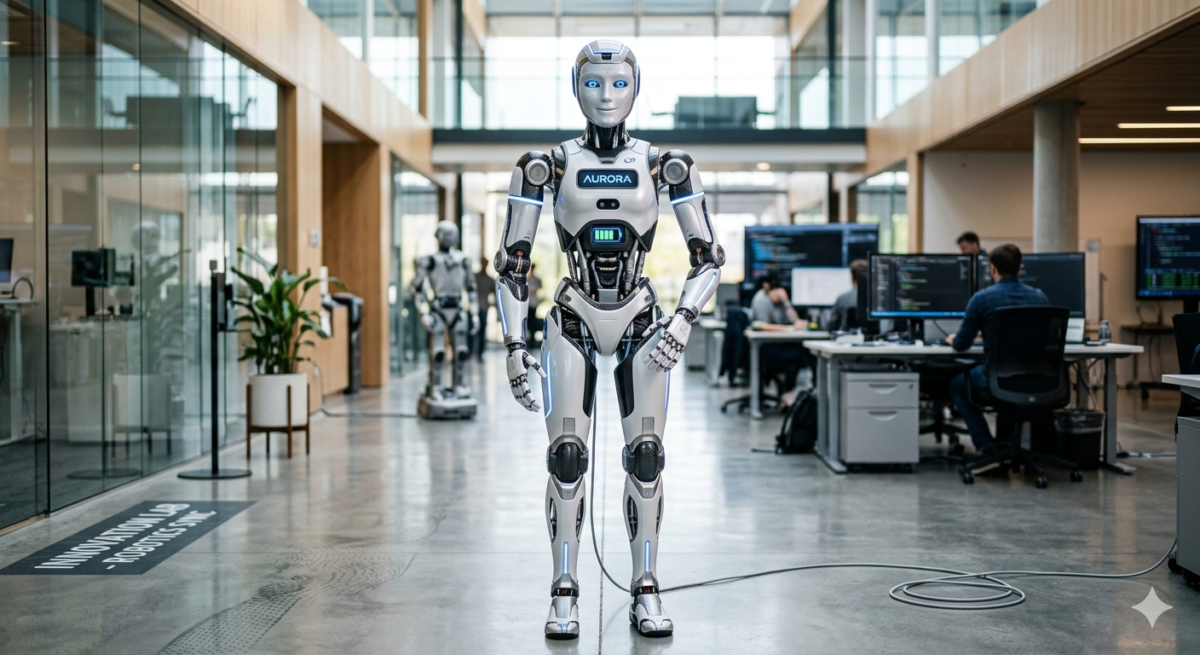
Humanoid robots, once the preserve of science fiction writers, have now become a familiar part of reality. These devices are considered the most promising and complex of all existing robotic platforms. They are used in logistics, medicine, manufacturing, scientific research, entertainment, services, and education.
The development of robotics has also led to the emergence of driverless transport. Robotic taxis can be seen, for example, in Washington, D.C., Austin, and New York. UAVs are widely used for civilian and military purposes on Earth, and in space, the Canadarm—a mobile robotic complex—is used to service the ISS.
Fact about robotics: Robotics combines engineering and artificial intelligence to create machines that can perform tasks autonomously or semi-autonomously, often improving efficiency and safety in industries like transportation, healthcare, and manufacturing.
The rapid development of robotics today is proceeding in three main directions:
- improving artificial intelligence systems and machine learning algorithms;
- development of household and entertainment devices;
- Increasing the quality and duration of people’s lives through the active implementation of innovative technologies in the medical industry.
Despite the promise of universal robotization, widespread adoption of high technologies is still impossible. This is hampered by the high cost of innovation and the lack of a corresponding legal framework. However, as new developments emerge, universal and niche models for solving various problems are becoming more accessible and widespread.