RATE : 8.4 / 10
- True wireless high-fidelity audio for both games and music
- Multiple inputs
- Replaceable batteries
- Premium items
- The microphone sounds unnatural
- It is very expensive
How much do you like good sound in your games? Do you like it enough to spend $600 on a wireless headset? What if that headset promises best-in-class low latency? Or the ability to connect a PC, PlayStation and Xbox — and a Bluetooth device — all at once? That – and “endless” energy; an AI-powered, retractable microphone; and, of course, superior sound fidelity – that’s what Steelseries offers with the Arctis Nova Elite wireless headset.
Steelseries navigates new territory with pricing and performance here. The Nova series is already popular, and the company hopes to carve out a new category with the Elite, but the big question is, are we ready for – or do we need – hyper-premium gaming headsets? After a few hours with this one, I think I have the answer.
Nova Elite hardware

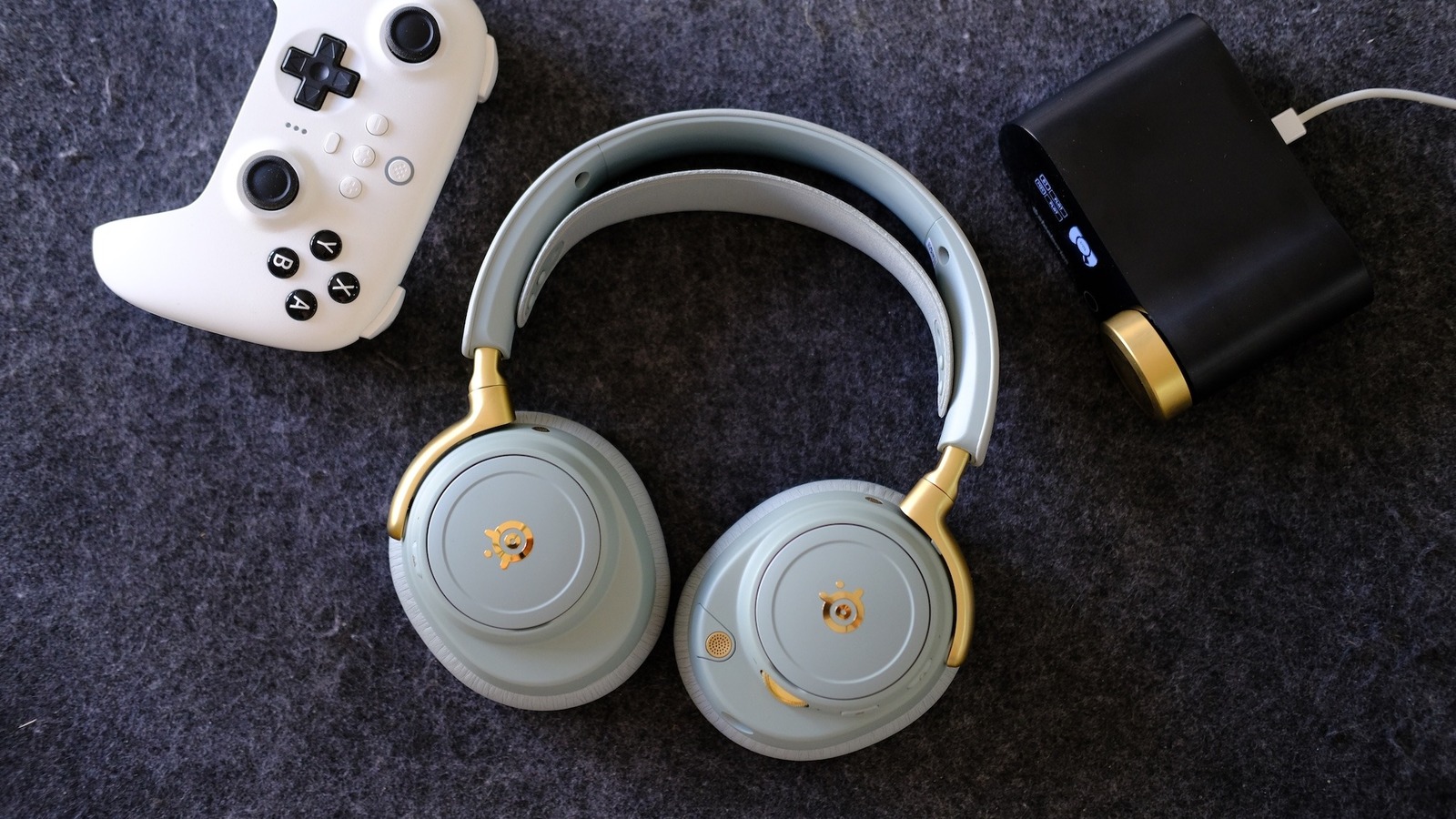
Obviously for this price, you’re getting little more than headphones tuned to gunshots and footsteps, with a boom mic attached. In fact, at first glance, you won’t find a boom mic at all. This gives the Elite a desktop headphone aesthetic, and the little touches of gold and quality materials make for a premium feel. Even the carrying case feels classy.
“GameHub” interface that enables many premium features. There’s a small dial that acts as a volume control and a way to navigate through key settings on the interface, and a display to show levels and other feedback. GameHub is also what makes the Nova Elite interesting for creators looking for a way to work with audio without the latency issues associated with Bluetooth, but more that later on.
For audio buffs, the biggest appeal here is 96kHz/24-bit wireless audio. Gamers, along with video editors and creators, have long lagged behind the switch to wireless, or had to deal with minor inconveniences. There is a small caveat, however, that Steelseries already offers the same freedom with the Nova Pro Wireless ($300) and higher performance in the recently announced Nova Pro Omni ($400). The Elite sets itself apart with more luxurious materials, an additional microphone (on-ear/standard) and carbon fiber drivers.
While the Nova Elite feels premium, don’t expect true audiophile levels of material finesse. When I compared them to the Sennheiser HD630 ($500), the Nova Elite felt more expensive, with more weight on the ear cups and a cold, reassuring metal feel on the headband hinges. Compared to something like the Meze Audio Liric, however, you’re reminded that this is a (very well made) consumer headset.
Unlike the neon-green Razer Blackshark Pro V3 on my desk, the Nova Elite doesn’t scream “gaming headset.” The microphone is hidden, and the general design is like something you’d expect from Sony or Anker. The double-layered headband is comfortable, as are most of the earcup cushions – I’d happily use them as everyday headphones. The sage color is neutral but interesting enough to feel premium.
Games, music and audio
Steelseries’ 40mm drivers may not pack the low oomph of the 50mm Blackshark Pro V3, but that’s the only area where I’d say the Razer feels better. The Nova Elite sounds better balanced and has a stronger bass than its rival, with the high ends ringing out more clearly. In fact, if there was one note I would make on the overall sound profile it’s that the high frequencies are sometimes a little noticeable, which is sometimes nice in the context of a game but a little annoying for music and action scenes in movies.
Otherwise, the Nova Elite offers an adult sound profile that is easy to enjoy for long periods of time, even at high volume. In fact, I might slightly prefer the soundstage on the Steelseries compared to the Sennheiser HD630, as it sounds more open with a touch dynamic range. At least that’s the case for my exploration of electronic music in particular, but I’ll still reach for the Sennheiser for dedicated music listening in most situations. The active noise cancellation (ANC) is effective at reducing background noise, but it doesn’t offer the true soothing experience you get with other premium headphones like Sony’s WH-1000XM6 or Bose’s QuietComfort Ultra.
It’s in specific gaming situations that GameHub’s integrated interface makes a difference. It delivers hi-res 96kHz/24-bit audio via 2.4Ghz wireless, with the option to combine four different audio sources at once. Connect any console, PC or even phone to the rear USB ports and mix between them with the hub menus or with the volume dial on the left ear cup. Click the volume wheel once and it will control the mixing between USB sources. You can listen to Bluetooth audio at the same time, but its volume in the connection is controlled on the appropriate device. Bluetooth media controls are small, smartly use the connection button — play/pause and skip tracks are available even with a single/double/triple click.
Perhaps the most interesting hardware feature is the “infinite” power system. There is a very good star there, in that, in fact, it does not end. But, it’s close and it’s a smart design nonetheless. The GameHub has a charging slot for a removable earphone battery. There are two batteries in the box and Steelseries says if you can replace them in less than eight seconds, the headset will turn on again and the music or sound will continue. It’s very difficult to do in eight seconds with a headset in your hands. It’s basically impossible while wearing it. In fact you have 15-20 seconds and it still works as advertised. It’s not exactly a seamless experience, but it’s definitely useful, so it’s hard to complain about the small trade-in.
The batteries themselves last a long time. It will depend on what you do with the headset, but so far I’ve been using it for 20-30 hours before replacing one and that’s under tough “testing” conditions with multiple installs, all day use and a lot of casual Bluetooth listening.
Checking the microphone
The Elite’s microphone is retractable and neatly hidden in the left earcup, so you don’t have to hunt for it, and it’s easy to find thanks to a small pad you can reach with your thumb. The cable is curved and easy to adjust or slide back when game time is over.
The microphone itself is decent but sounds a bit crispy. You’ll be really clear in a lobby or conversation, but something about it feels processed, or the AI noise rejection is off. The quality is still much better than most headsets, although it’s not something I’d use if I were a guest on a podcast. Not that it sounds bad, it’s just so far away and workable. If you think that’s too much to ask of a headset microphone, I can point you to the Rode NTH-100 which has no noise reduction, but sounds natural. For audio recording, I would like to have more control over how the microphone sounds.
The software
As a standalone headset/headphone, there is little I would change about the sound on the Nova Elite. As for games, I appreciate the option to tune things for certain games. In something like Disco Elysiumi want a more tuned musical experience, but when i’m out in the saddle RDR2, anything that helps me hear incoming horses will help keep me out of trouble. Steelseries’ “GG” software comes bundled with presets for popular titles that may or may not be to your liking. If they are not, there is a full EQ so you can create your own tuning. The software is also where you’ll find useful settings, such as behavior when you receive a call in the middle of a game, and options for mute, low volume or do nothing.
In Bluetooth mode, the mobile app does an excellent job of mirroring the desktop software. This at least allows you to adjust advanced settings without having to pull the tab out of the game. You also get visual feedback about the headset’s battery life if you can quickly view GameHub.
Outside of Games
The biggest advantage of the GameHub interface is the added flexibility it brings. I have a Rodecaster Duo on my desk that I use as my primary audio interface. I don’t record many podcasts at home, but I like that I can easily record audio from my phone or any other device. With three USB inputs, a line in Bluetooth and communication, but in a very small package, the Nova Elite makes a case for freeing the Duo from its permanent place on my desk.
Not to mention, it adds a wireless component with incredibly low latency. I’ve tried video editing with Bluetooth headphones, but I’m not longing for the speed of cables. With GameHub, I can edit videos as if I were directly connected but with the freedom of wireless. In the past, I used two pairs of headphones: a wired set where sound quality and latency were most important and a wireless pair for casual listening. Nova Elite is probably the best all-in-one solution I’ve tried so far.
Finish it
Until the Omni, the Nova line was easy to define. For gamers looking for a high-quality, wireless headset, the Pro series was an easy recommendation. For those who wanted high reliability and a truly premium experience (and that didn’t come at a price) the Elite was the top class option. That’s still broadly true, but the Omni makes selling the Elite a lot harder. For $200 more, you’re really dialing in the upgrade and finish, as the Omni includes many of the title’s features, like hi-res audio and multiple USB inputs. The Elite feels like a complete, premium all-round headset, but the price difference is also enough to limit the appeal to a certain group of discerning listeners.