Why TikTok Is Expanding Its Premium Ads Push And What That Means For You

Key Takeaways
- TikTok introduced four new or expanded premium ad formats in its 2026 Newfronts: Logo Takeover, Prime Time, TopReach, and expanded Pulse offerings.
- More than 200 million Americans are on TikTok, and the platform reaches 1.99 billion active users worldwide.
- Early results from the Logo Takeover showed a double-digit lift in brand awareness and purchase intent.
- TikTok’s engagement rate of 3.7 percent is almost eight times higher than Instagram and twenty-five times higher than Facebook.
- The platform positions itself as a full-funnel engine, with trading potential and low-funnel maturation near its reach.
- TikTok’s creative authenticity remains important, even within the premium placement.
TikTok’s creative authenticity remains important, even within the premium placement TikTok’s presentation at the 2026 IAB NewFronts made one thing clear: the platform no longer asks brands to treat it as a social experiment. It’s asking for a seat at the table next to TV and broadcast budgets, and the new ad products it’s unveiling give it a credible case to make.
If you’re still using TikTok as an afterthought in your media mix, it’s time to reassess.
New Formats, Explained
TikTok’s NewFronts announcement introduced a set of formats designed to capture premium brand investment.
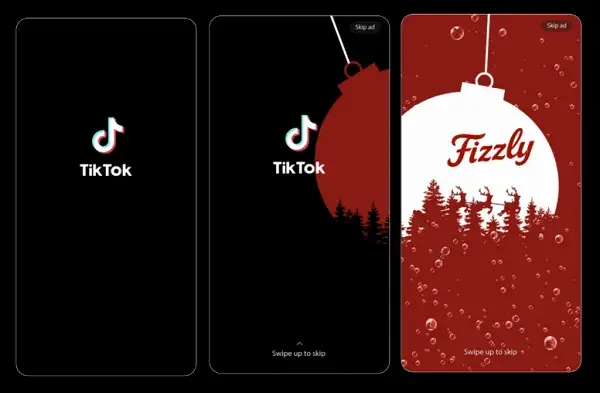
Logo Capture positions your brand when users open the app, before anything else on the screen competes for attention. It’s integrated with TikTok itself, which carries an implicit trust signal alongside raw access. Early testing has shown meaningful increases in both awareness and purchase intent, giving marketers a real benchmark to work on rather than just a pitch.
The source
Prime Time is a sequential format that delivers up to three ads from the same brand to the same user within a 15-minute window, limited to periods of high engagement or large cultural moments. The ability to tell a continuous story in multiple narratives in a short window has historically been a strength of TV. TikTok brings that capability to an original, creator-driven platform.
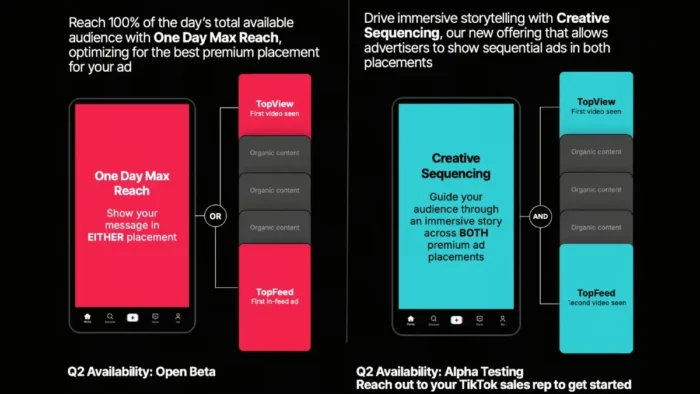
TopReach combines two existing high visibility placements into one purchase: the first ad users see when they open the app, and the first ad in the middle of the For You feed. For brands running large launches or trying to control cultural time, increasing daily unique reach with a single purchase is a real efficiency advantage.
The source
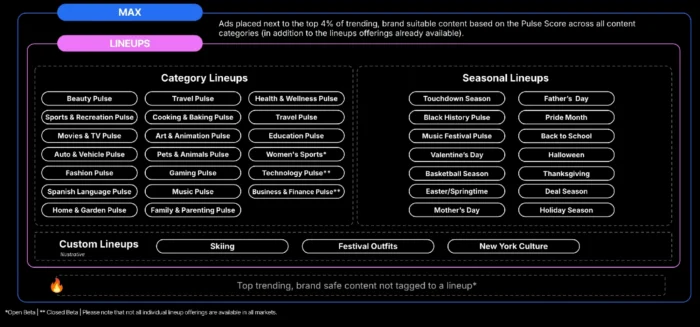
Pulse’s expanded offerings include Pulse Mentions, which places products next to conversations already happening about their category, and Pulse Tastemakers, which allows brands to align their ads with specific communities of creators. Both formats rely on what TikTok does better than any other platform: making ads feel like they’re part of the content rather than distracting.
The source
TikTok has grown beyond its original glory
There is still a version of TikTok on most marketing budgets that looks like a social channel with unpredictable ROI. That picture is out of date.
The numbers tell a different story. TikTok has generated $33.1 billion in global advertising revenue by 2025, a 43 percent increase from the previous year. Its engagement rate of 3.7 percent sits well above all major social media competitors. More than half of TikTok users have bought from companies after seeing their products featured on the platform. The TikTok store has generated $15.82 billion in US sales by 2025, growing 108 percent year over year.
Only 26 percent of advertisers are currently running TikTok campaigns. For products that haven’t reached the platform in a critical way, that gap is an opportunity.
Marketing power has grown to the point where lower funnel performance can truly be measured. Creator-led storytelling has proven to improve purchasing behavior in ways that traditional video placement often cannot. And now, with premium formats designed to deliver the kind of reach and storytelling that TV has historically had, TikTok is a legitimate way for budgets to flow towards direct and broadcast video.
Brands that shifted budgets toward digital video early, before it was seen, created advantages that took competitors years to close. A similar opportunity exists here.
Why Cost Eligibility is Important
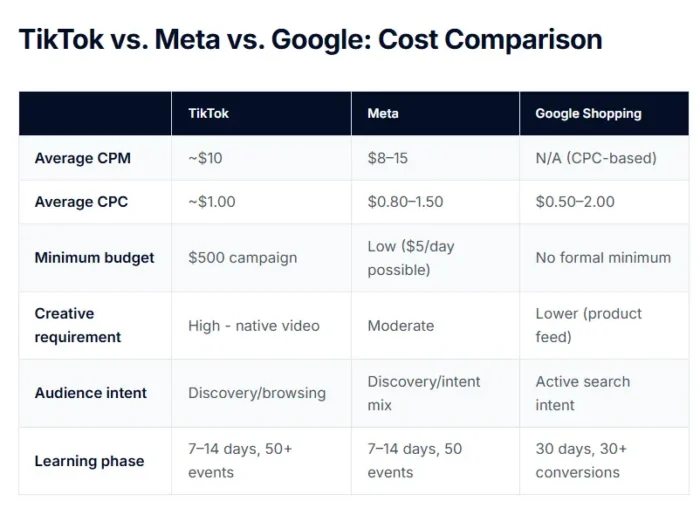
Beyond reach and engagement, TikTok’s advertising cost structure makes it worth serious consideration. TikTok ads average a CPM of $9, compared to Facebook’s Meta CPM average of $15. That cost advantage combined with the platform’s high engagement rate means that dollars spent on TikTok tend to generate more interactions per dollar than on competing platforms.
The source
That advantage won’t last forever. As more advertisers move budget to the platform, auction competition will increase and CPMs will increase. Brands that establish their TikTok presence and learn what works now will build that experience at a lower cost than those that wait.
How to Approach This
The most common mistake TikTok makes is importing art from other channels. A CTV spot or YouTube pre-roll that performs well won’t automatically translate. TikTok rewards content that feels like it was made for the platform and the moment. Even within premium placements, the native experience of content is important.
Research supports this. Spark Ads deliver 34 percent higher conversions than standard in-feed ads. Brand content that works best on TikTok doesn’t look like advertising. It seems like something that someone can do and share. Getting that balance right, especially within premium, high-production formats, is a creative challenge.
That doesn’t mean sacrificing production quality. The new format is designed for the exact intersection of high production value and storytelling of the platform. Getting both right is a challenge, and requires thinking creatively from TikTok’s original vision rather than adapting the legacy built by other channels.
A few practical steps you should take now:
- Check out Logo Takeover and TopReach early, while placement competition is low and cost benchmarks are best.
- Revisit your media mix model. If TikTok remains a social budget beast, it may weigh less compared to what it can bring against video and streaming goals.
- Align your paid social and commercial groups. The power of TikTok’s bottom funnel only brings its full value when both sides of the house are working towards the same goals with the same data.
- Pay attention to the creator’s choice. Pulse Tastemakers gives you the ability to align placements with specific creators. Treat that as a target decision, not a creative one. The right creator community for your product will outperform broad placement every time.
Frequently Asked Questions
How is TikTok’s ad audience different from other platforms?
TikTok reaches 1.99 billion monthly active users worldwide, and the 25 to 34 age group is now its largest group at 40 percent of users. The audience is maturing, which means that the idea that TikTok skews too young is becoming increasingly outdated. The platform also sees daily active users returning an average of five to fifteen times a day, making the exposure frequency higher than most other social channels.
What makes TikTok advertising different from Meta or YouTube?
The main difference is how the ads fit into the platform’s information. TikTok’s ad formats, at their best, look and feel like content people are already watching. This native quality drives higher engagement and, in many cases, better conversion performance. The platform’s algorithm also rewards content quality over account size, meaning strong art can reach an audience beyond your existing fan base.
Is the TikTok Store worth investing in aside from paid ads?
Yes. With sales of US $ 15.82 billion in 2025 and 108 percent growth year-on-year, the TikTok Store has crossed the threshold from an experiment to a serious commercial channel. Research shows that 25 percent of users who have purchased from TikTok Shop received an item through a TikTok ad. Paid media and buying strategy work best when planned together.
What budget should I start with for the new premium formats?
There is no universal answer, but a general rule applies: treat initial spend on new formats as a learning investment rather than expecting immediate ROAS. Get in early while competition is low, build benchmarks, and measure from a place of knowledge instead of guesswork.
{ “@context”: “@type”: “FAQPage”, “mainEntity”: [
{
“@type”: “Question”,
“name”: “How is TikTok’s ad audience different from other platforms?”,
“acceptedAnswer”: {
“@type”: “Answer”,
“text”: “
TikTok reaches 1.99 billion monthly active users globally, with the 25 to 34 age group now its largest single cohort at 40 percent of users. The audience is maturing, meaning the perception that TikTok skews very young is increasingly outdated. The platform also sees daily active users return an average of five to fifteen times per day, making frequency of exposure higher than most other social channels.
”
}
}
, {
“@type”: “Question”,
“name”: “What makes TikTok advertising different from Meta or YouTube?”,
“acceptedAnswer”: {
“@type”: “Answer”,
“text”: “
The key difference is how ads fit into the platform experience. TikTok’s ad formats, at their best, look and feel like the content people are already watching. This native quality drives higher engagement and, in many cases, better conversion performance. The platform’s algorithm also rewards content quality over account size, which means strong creative can reach audiences far beyond your existing follower base.
”
}
}
, {
“@type”: “Question”,
“name”: “Is TikTok Shop worth investing in alongside paid ads?”,
“acceptedAnswer”: {
“@type”: “Answer”,
“text”: “
Yes. With $15.82 billion in U.S. sales in 2025 and 108 percent year-over-year growth, TikTok Shop has crossed the threshold from experiment to serious commerce channel. Research shows that 25 percent of users who bought from TikTok Shop found the item through a TikTok ad. Paid media and shop strategy work best when they are planned together.
”
}
}
, {
“@type”: “Question”,
“name”: “What budget should I start with on the new premium formats?”,
“acceptedAnswer”: {
“@type”: “Answer”,
“text”: “
There is no universal answer, but the general principle applies: treat initial spend on new formats as learning investment rather than expecting immediate ROAS. Get in early while competition is lower, build benchmarks, and scale from a position of knowledge rather than guesswork.
”
}
}
]
}
The conclusion
TikTok doesn’t set itself up as an ad-supported social media platform, but rather a full-funnel engine where entertainment, commerce, and work meet. The numbers back that up: global ad revenue is growing by 43 percent year-on-year, an engagement rate eight times that of Instagram, and commercial activity that has grown by more than 100 percent in one year.
Brands that take that seriously now and build creative strategies and budgets to match will be hard to catch as the platform continues to mature. The window to get an early presence in a cost-effective way is still open. It won’t stay that way forever.


