Transcript: Sam Vinograd and AT Smith on “Face the Nation with Margaret Brennan,” April 26, 2026

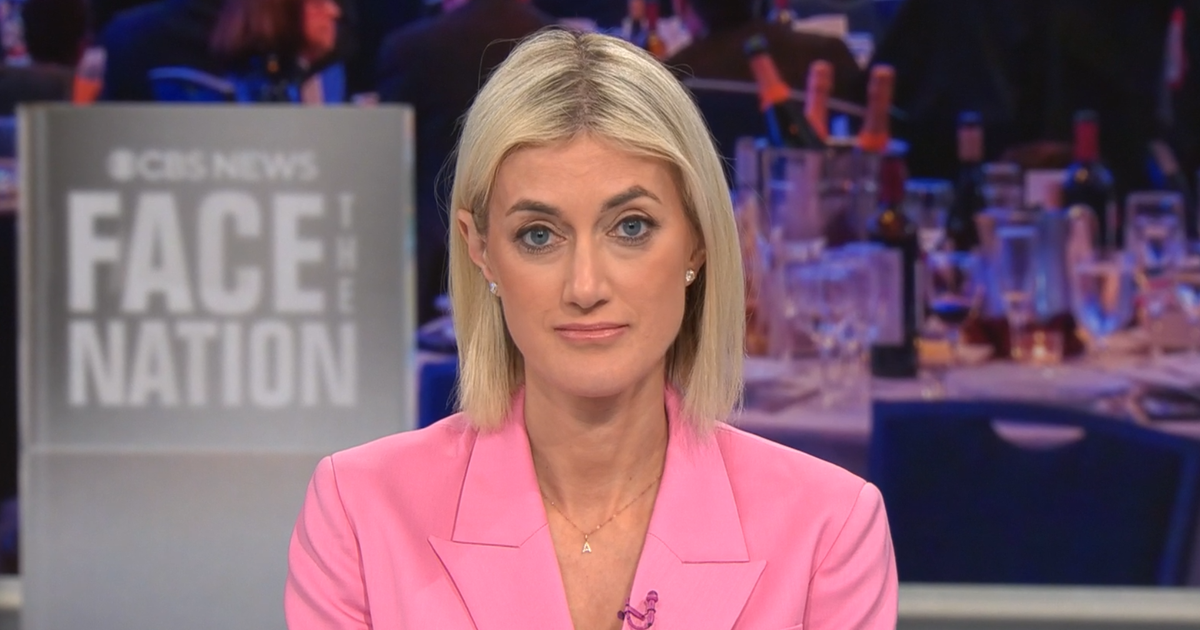
The following is a transcript of an interview with CBS News national security contributor Sam Vinograd and CBS News legal analyst AT Smith that aired on “Face the Nation with Margaret Brennan” on April 26, 2026.
MARGARET BRENNAN: Now we turn to Samantha Vinograd. He was the top national security official in the Biden administration. He’s now a national security contributor here at CBS and AT Smith is now the deputy director of the secret service and now a legal analyst for CBS and he joins us from Greenville, South Carolina. It’s good to have you both here. Sam, you were in the room with us, sheltered with other colleagues, as I understand it, you were close to the perimeter and could see what was going on. I was beaten, the national guard was there, the secret service was there, private security was there, the national guard was there. The security perimeter is too far out. There were protests around the building. There weren’t just protests against Trump. There have been protests surrounding Jeffrey Epstein. There were protests about the organization that manages this news network. There were protests about the war in Iran. How did you assess the security situation last night?
SAMANTHA VINOGRAD: Well, Margaret, I think many of us are waking up this morning and asking the basic question of, is anything safe? And the truth is that in this country, we are facing the most complex threat situation in our nation’s history, especially, from individual actors, people who turn to violence, often online. In this case, two things can be true. It would be true that law enforcement and intelligence experts were fully prepared the night before, weeks of planning, intelligence gathering, physical security barriers, officers in the area. But it can also be true that at this moment in this area of security, the paradigms of the past may not be enough to meet this moment, and with that in mind, security professionals and private citizens need to rethink what it will take to protect these large gatherings where there are many defenders, and what it will take to protect communities.
MARGARET BRENNAN: It’s scary. I mean, AT – we were in a room with the most heavily guarded man in the world, yet this happened. The acting attorney said the plan is working. In your opinion, did the program work?
AT SMITH: The program worked according to what the secret service trains every day when it comes to covering and taking out a protector, and as you’ve seen the security system, where – there was a situation where the president and the vice president came out in different ways. They came out in different ways than ordinary people used to come to this meeting, they said that the secret service, as I have said many times, no one criticizes them more than the secret service. So they’re going to have to look at this very carefully, according to this person, how he was able to run that magnetometer like he did, and get as close as he did with two guns. That is unacceptable, and they will have to try to find that part. And, you know, see what – what the intelligence and the investigation is going to bring up, in terms of what this person’s history was, and then, as you said earlier, Margaret is trying to figure out how he got those guns into the hotel. Did he avoid, like you said, you know, taking a plane to get there? And by using the train and stuff, he was able to hide it somehow and get him there. So, it’s a difficult thing. The secret service was very successful in the way they did that. And like Sam said, the perimeter around the hotel was perfect. But again, any time you have a violation like this, you just have to fix it and be the worst, you know, critic.
MARGARET BRENNAN: You know, AT, I was talking to some of our producers before the show. Many of us have traveled with the president in the past, with past presidents and other high officials. When the president goes overseas or the vice president, they usually take the whole hotel. the secret service is really closing the place down. That didn’t happen last night here on US soil. Is that the kind of thing we’re going to start seeing, that it’s going to be like the Israeli model?
AT SMITH: It might be necessary, especially, you know, it’s difficult because you have a hotel that’s open to the public. They have other guests that are not related to the event last night, and they will have to look carefully at how to screen those guests. It’s very difficult to know everything about everyone there, but maybe one security situation would be what you just said to close the hotel a bit. We don’t usually do that in the United States. And usually the secret service is very effective in coordinating and organizing that area, like a ballroom, you know, that’s going to be used for an event, and making it secure. But again, they’ll have to look at that. And I also said that, you know, this was not a special national security event, but the planning, the preparation, the weeks of work, really align with that kind of security strategy. So I’m sure, in terms of perimeters, all that has been done.
MARGARET BRENNAN: Sam, I think you make such a good point, which is, really, you can’t protect against the unexpected, right? It cannot protect against everything. We have talked about this before. Even as parents, as people, and being in that room, many of those legislators, many of those journalists, they have no humanity. They are attacked online. They attack each other. You have high hostility in public places, people were united to the president and he said that he is not wrong to use that name, because they were all afraid of what would happen. I don’t know how we solve that as a society, because it seems to have really permeated our politics and our conversations. I mean, it’s just a new trend.
SAMANTHA VINOGRAD: Every time an incident like this happens, the optimist in me thinks, maybe this will be a turning point. Maybe this will be a change when everyone in this country thinks about what they say and how they behave. Words matter, indeed. At the same time, whenever an incident like this happens, and I mean this Margaret as a mother and as a security expert, I hope it is also a wake-up call to legal professionals to reconsider whether additional measures are needed, such as checking visitors who come to a public place in a large circle with many guards. But it is also a warning to everyone in this country to understand that they have a role to play in the security of our country while law enforcement is looking at whether additional agreements are needed at various sites, every observer, every person in this country, needs to say something when he sees something, someone in his circle, in his work, in his family, shows signs that he may be walking on the path to violence. They need to ask for help from a law enforcement professional or another trained official, and we really need to give all the resources we can to make sure that the coordination between state and local and federal officials is not only where it was before, but stronger than ever, to try to prevent these incidents from happening in the future.
MARGARET BRENNAN: Sam, I’m glad you’re safe. I’m glad you’re with us. AT, thank you, very much for your comments. We will be right back.


