What is AMD and what kind of products does it manufacture?
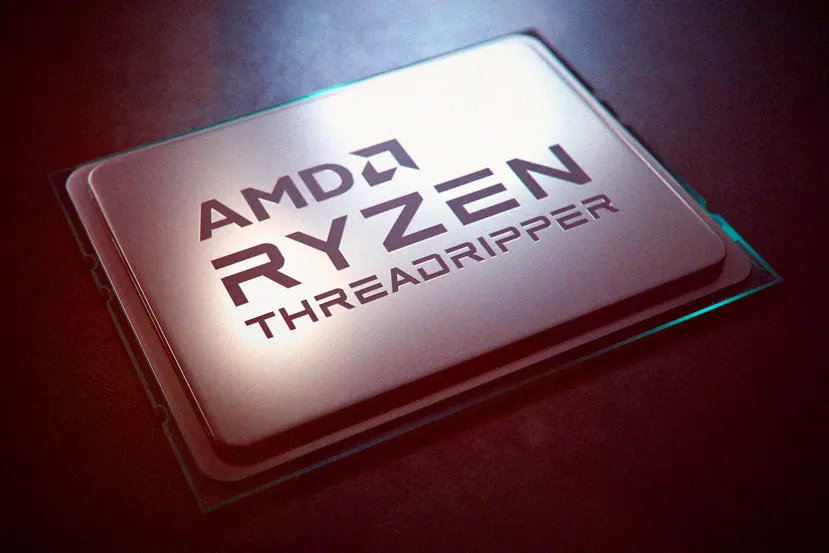
Table of Contents
ToggleWhat is AMD?
AMD, short for Advanced Micro Devices, is a semiconductor company that manufactures microprocessors and graphics processors, among other products, for both home and business use. Its headquarters are in Santa Clara, California, in the United States, and its CEO is Lisa Su
AMD was founded on May 1, 1969. Initially, it focused on manufacturing integrated circuits, later beginning to produce RAM in 1975. It then abandoned the production of other products, such as RAM, to concentrate on Intel-compatible processors, thus becoming its main competitor. In its early years, MD manufactured 8086 and 8088 processors, and even 286 processors, under license from Intel. This was made possible by an agreement signed by both companies. However, with the arrival of the 386 around 1986, Intel broke the contract to avoid revealing some of the secrets of this new model, a breach that would later cost Intel a considerable sum of money.
In 1995, AMD manufactured its first processor independent of Intel’s microcode, the K5, a fifth-generation processor equivalent to Intel’s Pentium. The following year, it acquired NexGen, a company that manufactured x86-compatible processors, from which the K6 emerged, a sixth-generation processor that outperformed its Intel competitor, the Pentium II, in some versions. AMD continued manufacturing processors to compete with Intel.
AMD’s eighth generation of processors put them ahead by taking the lead by including a 64-bit instruction set in their K8 processors. In this case, it was Intel’s turn to do the reverse engineering work that AMD had done in the past to include the added instructions in their processors, since Microsoft had included these instructions in its operating system .
The company continued manufacturing processors to compete with Intel, and in the following years came Phenom and Athlon, which were very well received by users. But 2011 was a bd year for AMD; it was forced to lay off a large part of its workforce and continued its improvement process, which fortunately proved successful with its new processors based on the Zen architecture.
AMD wanted to become a serious and strong rival to Intel, so in 2006 it bought the graphics card manufacturing company ATI, which would later be called AMD. Thus, AMD offers the most complete set of semiconductor solutions on the market, offering all kinds of products for home or professional equipment.
What type of products does AMD manufacture?
Advanced Micro Devices manufactures chips of all kinds, but is mainly known for its CPUs and graphics cards used in millions of computer systems worldwide.
AMD offers a wide range of desktop and laptop processors, from lightweight options for home and multimedia applications, to more powerful Ryzen processors for gaming and heavy workloads, and finally, powerful workstations powered by its Threadripper processor line. For desktop and laptop processors, AMD offers integrated CPU and GPU solutions called APUs.
AMD also manufactures server processors under its EPYC line, optimized for cloud computing, databases, virtualization, and artificial intelligence, and offering robust security thanks to AMD Infinity Guard. Large data centers have relied on AMD and its EPYC processors to provide solutions for clients requiring these types of servers.
Thanks to the acquisition of ATI, AMD offers graphics solutions to compete with the leading GPU manufacturer, NVIDIA. In addition to the well-known AMD Radeon gaming cards, it also manufactures cards dedicated to graphic design and professional video editing with its Radeon PRO line, and even solutions for servers that require heavy graphics processing.
AMD also offers semi-custom solutions based on its CPU and GPU technologies, allowing you to use its processors and graphics solutions tailored to your needs. A prime example is the Microsoft Xbox and Sony PlayStation consoles, which utilize this technology, with AMD handling the internal processing and graphics .
About the Author

BuzzBongo Tech Team
Administrator
The BuzzBongo Tech Team is composed of seasoned professionals with decades of combined experience in hardware analysis, software architecture, and digital journalism. We don’t just report on the latest gadgets; we live, breathe, and stress-test them. Our team is driven by a singular passion: ensuring that our readers have the honest, impartial, and expert-level information they need to navigate the rapidly evolving tech landscape.https://www.buzzbongo.com/buzzbongo-tech-team