
It’s important to remember that being productive isn’t something you do for others. It should be something you do for yourself. After all, if you make the most of your work time, you’ll still have energy to spend in your free time doing the things you love most.
Today, we decided to take a look at the best productivity apps for Android in 2026. Why? It’s simple—you need a tool that can help you organize your day or schedule, manage your tasks, and collaborate with your team .
Why you need productivity apps
It doesn’t matter if you’re a student, employee, or business owner. Everyone can benefit from this type of app. Ultimately, these tools are designed to:
- Optimize your workflows, even if you’re not on a PC.
- Minimize distractions with notifications right from your pocket.
- Increase productivity with the rapid assistance of AI tools.
- Always stay in touch with your team through video or text chats.
To ensure you find the right app for you, we’ve divided the top Android productivity apps into 3 different categories: individual work, team collaboration, and project management.
15 essential apps for productivity on Android
Android apps have challenged the idea that productivity requires a desktop computer. We’ve compiled a list of the best Android productivity apps to help you optimize tasks, manage your time, take notes, edit and save documents , and even manage projects directly from your phone. Browse the corresponding category to find the best tool for solo or team work.
Apps for personal work
If you’re looking for apps and tools to help with your work, here are a few that can be very useful—and the best part is that most of their features are free.
1. Joplin
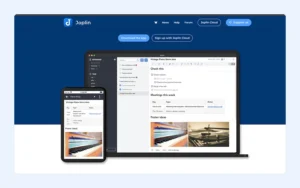
Joplin is a very simple and effective note-taking app. You can see this open-source application as an evolution of Evernote, as it allows you to capture notes. Here you can also organize, find, and save them.
Recommended for: Solo users, privacy-focused individuals, and small teams.
Main features:
- Markdown for notes
- Search and marking
- Synchronization between devices
- Importing data from Evernote.
Pros:
- It’s free.
- It has strong security.
- Enables synchronization options.
- It works on different platforms: iOS, Android, Windows, macOS, Linux, and web.
Cons:
- It has few tools for teamwork.
- It offers limited integration.
- Some users find the Markdown format complicated for beginners.
Price: The basic Joplin app is completely free, but if you need Joplin Cloud for more storage, the price starts at €2.99 per month.
2. DocuSign
As we mentioned at the beginning of this article, we live in a fast-paced world—and even signing a document needs to be quick. That’s where an app like DocuSign comes in.
Suitable for: Companies of all sizes. Solo entrepreneurs can also use it to send signed documents.
With DocuSign, you can not only review and sign documents and contracts online using a touchscreen, but also manage contracts efficiently.
Main features:
- Electronic signatures
- Upload documents in all formats.
Pros:
- User-friendly interface
- Simple integration with business tools.
- Strong security.
Cons:
- The cheapest plan offers fewer features.
- Even the personal plan is expensive.
Depending on your needs, the app may be free or require a paid plan. For example, if you only need to sign forms, there is no cost. But if you want to collect signatures and send documents, a subscription will be required.
Price: Starts at $10–$15 per month.
3. Microsoft OneNote
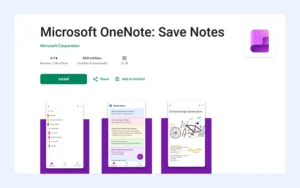
Another solution you can consider for daily work is Microsoft OneNote. This is a great tool for taking notes, and it’s completely free.
Recommended for: Individual and group use.
This note-taking app lets you use voice notes—simply sync with OCR (optical character recognition). Plus, you can use Microsoft OneNote across multiple platforms.
Main features:
- Creating notes
- Text correction
- Personalize your notes with images, audio, and handwriting.
Pros:
- Free to use
- It offers a convenient editing format.
- Supports synchronization between iOS, Android, Windows, macOS, and the web.
- It integrates with other Microsoft 365 applications.
Cons:
- Some new users find the interface confusing.
- Some features work better on the desktop version.
We truly believe that you don’t need to pay anything to use this app. However, if you want to expand your storage, you will need to pay.
Price: Starts at $6.99 per month.
4. Grammarly
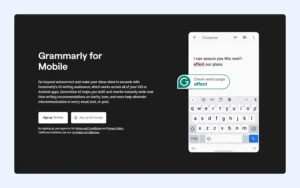
More than just a spell checker, Grammarly is an app that serves as your personal writing assistant. Once you start using it, you’ll likely continue to use it for a long time.
Suitable for: Both individual users and teams.
Whether you need to send an email, write a report, a proposal, or a simple letter, Grammarly will be there to make your writing impeccable.
What sets Grammarly apart is that it not only corrects errors, but also makes suggestions and style changes.
Main features:
- Advanced AI-powered writing assistant
- It automatically corrects your text.
- It offers a plagiarism checker.
Pros:
- Excellent grammar and spelling correction.
- Style guidance
- It works on mobile devices, desktops, browsers, email, and apps.
Cons:
- The free plan is very limited.
- The premium plan can be expensive.
Price: While you can use Grammarly for free, the premium plan starts at $12 per month (if billed annually).
5. Google Workspace
We couldn’t talk about personal work apps without mentioning Google Workspace. Even if you’ve never heard of it, this is just the new name for G Suite, which includes Google Drive, Docs, Sheets, Calendar, Meet, and Slides.
Suitable for: Small to large businesses and organizations.
Google Drive is a great way to save important documents and spreadsheets, as well as allowing you to work on new files. Everything is saved and synced automatically, making it easy to share between your phone, PC, or other devices. For productivity, it’s important to use Google Calendar, which allows you to add lots of information and reminders.
Main features:
- Corporate email
- Cloud storage
- Online collaboration in Docs, Sheets, and Slides
- Intelligent assistance with Gemini AI
- Video conferencing via Google Meet.
Pros:
- Unified work environment
- AI-powered tools
- Advanced security.
Cons:
- The price can be high, especially for small groups.
- Advanced security available only on higher-tier plans.
Since you likely already have a Google account, you can use it for free. However, business accounts require a paid subscription.
Price: Starts at approximately $7 per user/month.
6. Microsoft 365
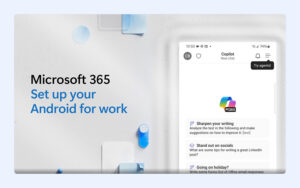
If you’re looking for a more comprehensive set of tools for work, take a look at Microsoft 365.
Suitable for: Businesses and individual professionals
Think of it as a direct competitor to Google Workspace. This app includes many different tools, such as Word, Excel, PowerPoint, and Outlook, in addition to Microsoft OneNote, which we mentioned above.
Main features:
- Copilot Assistance with AI
- Familiar productivity suite: Word, Excel, PowerPoint, and more.
- OneDrive cloud storage
- Team chat and video conferencing.
Pros:
- Excellent communication tools
- Multiplatform support
- Advanced security.
Cons:
- Subscriptions can be expensive for small groups.
- Cloud services require an internet connection.
- Advanced tools are only available on higher-tier plans.
It’s completely free, but if you want more OneDrive storage, you’ll need to subscribe to a plan.
Price: Starts at $6.99 per month (for individual use).
Free tools for team collaboration
Working together is essential when performing as a team, so make sure you use the right tools .
Although all the apps described are free, many developers also offer paid subscriptions for enhanced security or additional features.
1. Miro
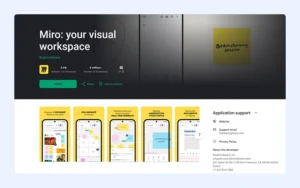
If you’re looking for collaborative tools, try Miro. With this app, it’s easy to create unique presentations, slideshows, mind maps, or diagrams.
Recommended for: Teams, especially those working remotely or in a hybrid model.
Integrated video and audio calls make it easy to discuss ideas with colleagues or even with your manager.
Main features:
- Whiteboard with infinite workspace.
- Templates for mind mapping, brainstorming, and more.
- Tools for real-time communication.
Pros:
- Strong integration with Slack, Jira, Zoom, and more.
- Intuitive interface
- All the tools needed for remote interaction.
Cons:
- The mobile version offers fewer features than the desktop version.
- Paid plans can be expensive.
Keep in mind that this software doesn’t include all the features of Miro, but it covers the essentials for efficient collaboration.
2. Zoom Workplace
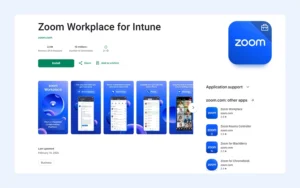
Zoom Workplace is probably nothing new to you. After all, we all know Zoom as one of the most widely used video conferencing apps during the COVID-19 pandemic.
Suitable for: Companies of all sizes.
The truth is that Zoom Meetings remains the core part of Zoom Workplace. You may not know this, but you can add face filters like on Snapchat and Instagram, as well as virtual backgrounds if you wish.
Main features:
- Video conferencing
- Group chat
- Tools for webinars and events.
Pros:
- Reliable administrative control
- It also works on iOS, Windows, macOS, and the web.
- High quality video and sound.
Cons:
- In the free plan, the duration of group calls is limited.
- Advanced features are only available on higher-tier plans.
The good news is that Zoom Workplace is largely free. You’ll only need to pay if you want longer meetings, to edit documents, or to use advanced AI features.
3. Slack
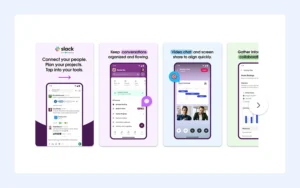
We couldn’t talk about connected work without mentioning Slack. It’s one of the most popular team messaging tools in companies.
Suitable for: Teams and companies of all sizes.
With Slack, you can send messages or make video and audio calls with individuals, groups, or channels. The first option most companies use is to create a team group for collaborative work. After that, each member decides whether to send a public message to the entire group or a private message to a specific colleague.
What users like most about Slack is the ability to communicate in real time or asynchronously.
Main features:
- Private and public channels for conversations
- Sharing files, images, videos, and other documents.
- Mention keywords for targeted notifications
- Searchable message and file history.
Pros:
- Integration with many popular productivity tools.
- High-quality audio and video for online communication.
- Organizing channels and making search convenient.
Cons:
- Advanced tools require a premium subscription.
- It may be too complex for individual use.
Slack is free and includes most of the features businesses need for collaboration. If you want additional features, you can upgrade to a paid subscription.
4. Microsoft Teams
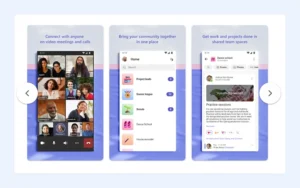
If we mentioned Zoom above, we also need to mention Microsoft Teams. After all, this was another extremely popular tool for video conferencing and meetings during the pandemic.
Recommended for: Teamwork and organizational communication, rather than individual use.
Microsoft Teams is a meeting platform that accommodates up to 300 people in a single video call. With its intuitive design, you can use this app to communicate reliably with your team. You can also access meeting summaries and Copilot (an AI-powered chatbot).
Main features:
- Team chat with private and group channels.
- Video conferencing
- Screen sharing and recording
- File storage
- Team scheduling calendar
Pros:
- Excellent video and audio quality.
- Strong integration with other Microsoft products.
- Good security.
Cons:
- Some new users find it complicated.
- The best tools are only available with a subscription.
- Mobile functionality is more limited than the desktop version.
If you’d like to try Microsoft Teams, you’ll be happy to know that pricing starts at $4 per user per month.
5. Webex by Cisco
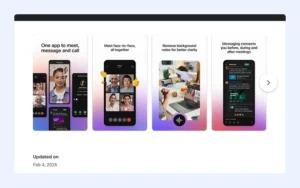
Webex by Cisco is another strong competitor to Zoom and Microsoft Teams. In addition to video conferencing, it offers additional features that set it apart.
Suitable for: Companies of all sizes
Main features:
- HD video meetings
- It recognizes hand gestures and transforms them into emojis.
- Powerful AI Assistant
- Asynchronous video recordings with Native Vidcast
Pros:
- Multiplatform support
- High quality video
- Robust security
Cons:
- The free plan limits meeting duration and the number of participants.
- Some users find the integrations unintuitive.
Android apps for project management
Working on projects involves many different tasks and several people working towards the same goal. It’s not always easy for the manager to keep everything in order. Avoiding conflicts and errors, and adjusting processes and workflows while meeting deadlines are just some of the things they need to do. That’s why they really need a project management app to help deliver work on time.
1. Flowlu
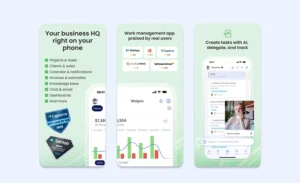
Flowlu is a powerful cloud-based system that also has a mobile version. It allows you to manage and run your business anywhere, anytime.
Suitable for: SMEs, freelancers, and solopreneurs.
Flowlu offers a wide range of features, but at the same time remains easy to use and navigate.

Key features for PM:
- Extensive project customization: to-do lists, priorities, subtasks, and more.
- Multiple visualization formats: Kanban board , Gantt chart, and list.
- Tools within projects for collaboration: comments, notes, and activity feed.
- Reports, budgets, and finances linked to specific projects.
- Workflow automation rules (configurable via web version)
- Customized dashboards with selected KPIs.
- Integrated CRM: Connecting businesses, customers, and service providers.
Pros:
- Complete workspace (all-in-one)
- Clear tools and intuitive interface.
- Multiplatform support: iOS and web
Cons:
- Advanced tools can be complicated for new users.
You can try Flowlu on your smartphone for free—no credit card required. If you like it, you can then choose the subscription plan that best suits your needs.
Price: Starting at $9 per user/month (Forever Free plan available).
2. Teamwork
Teamwork is an app developed to help small and medium-sized businesses manage their workflow.
Recommended for: Small, medium and growing businesses.
Both team members and the manager have access to the project, but only the manager can add milestones and deadlines. Team members are responsible for keeping the manager updated on the progress of their tasks.
Key features for PM:
- Many tools for project organization.
- Multiple views: table, Kanban, or Gantt chart.
- Practical tools for teamwork
- Integrated billing and time tracking
- Customizable dashboards and detailed project reports (status, timeline, budget).
Pros:
- User-friendly access for customers
- Strong integration with popular tools.
Cons:
- Advanced features require higher-tier plans.
- It can be complex for new users.
Price: Starting at $10.99 per user/month.
3. Zoho Projects

Zoho Projects is a popular project management app, known for its customization features and user-friendly interface.
Recommended for: Small, medium and growing businesses.
With the Zoho Projects app, you can track your work, from tasks and due dates to processes and milestones. Every feature is designed to help you meet your deadlines.
Key features for PM:
- AI Assistant (Zia)
- Clear organization of projects with tasks, subtasks, and team assignments.
- Visual planning tools: Gantt charts, Kanban boards , and list views.
- Ready-made templates
- Integrated communication: chat, comments, and feeds
- Reports and analyses.
Pros:
- Competitive price
- AI Assistance
- Easy-to-use tools.
Cons:
- Limited integrations
- The mobile experience is weaker compared to the desktop version.
One of the best things about Zoho Projects is that you can try it for free. However, this app offers several add-ons that can be useful for improving your workflows.
Price: Approximately $5 per user/month.
4. Asana
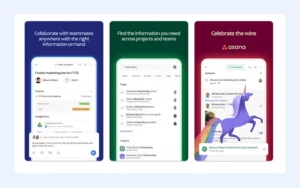
Asana is another very popular project management software.
Suitable for: Any type of company.
Here, you can accomplish everything related to project management.
Key features for PM:
- Complete organization of tasks and projects.
- Multiple project views: List, Timeline (Gantt style), or Calendar.
- Task dependencies
- Communication with comments and mentions
- Customized dashboards with metrics
- Reports.
Pros:
- It also works on iOS, web, and desktop.
- It offers a wide variety of useful integrations.
Cons:
- Advanced features are only available in paid plans, which can be expensive for small teams.
Some of Asana’s tools may be easier to use on the desktop or web version. However, the developers have made them available on your smartphone. Furthermore, you can always sync your account across devices.
If you want to try Asana, you can do so for free, but you will only have access to basic task management for individuals or small teams.
Price: Starting at approximately $10.99 per user/month.
How to assemble your own Android productivity kit.
Productivity will increase if you focus on controlling different aspects of your workflow. All-in-one solutions typically offer a wide range of functions, which is convenient for both individuals and teams.
A general toolkit should include the following options:
- Task Manager
- Calendar
- Time tracker
- Notes
- File manager
If it’s not necessary to cover all of these areas, opt for specialized apps. For example, Todoist as a sole task tracking solution , Forest for time management, or Evernote for organizing ideas and notes.
If you work with contractors or collaborate with freelancers, look for programs with remote control. Also check if they offer good video and audio quality, and offline use.
For personal productivity, choose several tools—2 to 4 are usually sufficient.
If you manage a small or growing team , this type of kit will be inconvenient. In that case, it’s better to consider an all-in-one solution like Flowlu. It combines essential business tools and offers a convenient shared workspace for team interaction and client communication. All the projects you start will be well-organized, and you won’t miss any deals or clients.
Your quick guide to comparing apps.
Apps for personal work
| Platform | Most suitable for | OS (besides Android) | Starting price | Main function |
| Joplin | Individual users, privacy-conscious individuals, small teams | iOS, Windows, macOS, Linux, Web | Free (€2.99/month for Cloud) | Open-source notes with Markdown and advanced security. |
| DocuSign | Teams, companies, solopreneurs | iOS, Web | From $10–$15/month | Secure electronic signatures and contract management |
| Microsoft OneNote | Individual users and teams | iOS, Windows, macOS, Web | Free ($6.99/month for extra storage) | Flexible note-taking with audio, handwriting, and OCR. |
| Grammarly | Individual users and teams | iOS, Desktop, Browser | Free (Premium from $12/month) | Writing and style assistant with artificial intelligence. |
| Google Workspace | Teams, companies, organizations | iOS, Web | Starting from ~$7/user/month | Cloud-based coordination with Docs, Drive, Calendar, and AI. |
| Microsoft 365 | Professionals, teams, companies | iOS, Windows, macOS, Web | Starting at $6.99/month | Complete productivity suite with Copilot AI and cloud storage. |
Tools for team collaboration
| Platform | Most suitable for | OS (besides Android) | Starting price | Main function |
| Miro | Remote and hybrid teams | iOS, Windows, macOS, Web | Free (paid plans available) | Infinite collaborative whiteboard |
| Zoom Workplace | Teams and companies of all sizes | iOS, Windows, macOS, Web | Free (paid plans available) | Video conferencing with webinars and events |
| Slack | Teams and companies | iOS, Windows, macOS, Web | Free (paid plans available) | Real-time and asynchronous messaging |
| Microsoft Teams | Team organizational communication | iOS, Windows, macOS, Web | Starting at $4/user/month | Meetings, chat, files, and calendar all in one hub. |
| Webex by Cisco | Companies and teams | iOS, Windows, macOS, Web | Free (paid plans available) | AI-powered video meetings and asynchronous recordings |
Project management apps
| Platform | Most suitable for | OS (besides Android) | Starting price | Main function |
| Flowlu | SMEs, freelancers, solopreneurs | iOS, Web | Starting at $9/user/month (free plan available) | PM, CRM, finance, and automation all in one. |
| Teamwork | Small to medium-sized teams | iOS, Web | Starting at $10.99/user/month | Project management with a focus on the client and revenue. |
| Zoho Projects | Small to medium-sized growing businesses | iOS, Web | Starting from ~$5/user/month | Project planning with AI and templates. |
| Asana | Teams of all sizes | iOS, Web, Desktop | Starting from approximately $10.99/user/month | Advanced task dependencies and multiple views |
Conclusion
This list of the best productivity solutions for Android in 2026 can help you become more productive.
It doesn’t matter if you’re a sole proprietor or own a small, medium, or large company. Productivity is something we should all strive for. It’s what helps us stay focused on our work and, ultimately, on our goals.
From signing documents and discussing ideas in meetings to delivering projects on time, we’ve selected the top options for 2026. What stands out about these solutions? Many of them are free. So why not give them a try?
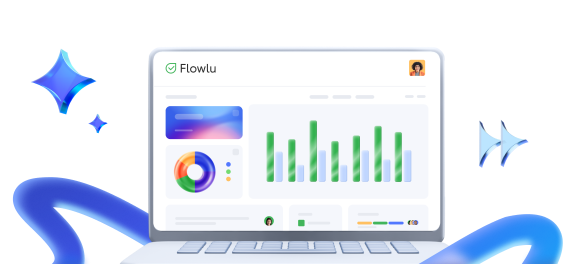
For example, start improving your company’s workflow with Flowlu . This software goes beyond a standard PM. Flowlu offers users an informative visual space—a dashboard with customizable widgets. Here, managers and employees can track KPIs and activities in real time, staying involved in ongoing processes.
Frequently Asked Questions
About the Author