What is a graphics card and what is it used for?
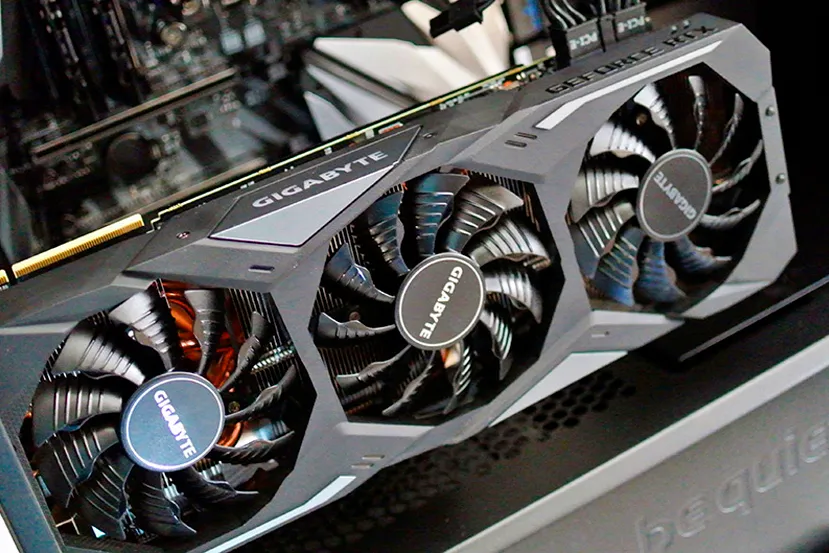
Table of Contents
ToggleWhat is a graphics card?
A graphics card is an electronic component that processes incoming information and then displays it visually to the user via a monitor. It’s most common to talk about graphics cards in computers, where they play a crucial role, especially in gaming and video editing.
When we say graphics card, we’re referring to the printed circuit board (PCB) along with all the necessary chips and physical controllers, but it’s usually abbreviated as GPU (Graphics Processing Unit). Both are well-known terms in the hardware world. It’s important to distinguish between dedicated and integrated graphics cards. A dedicated GPU is a full-size graphics card that plugs into a PCIe slot on the motherboard, while an integrated GPU (iGPU) is built into the processor itself, consuming significantly less power, taking up no extra space, and providing enough power to run some less demanding video games .
There are primarily two manufacturers of dedicated graphics cards for computers: NVIDIA and AMD, although Intel is close behind . As for integrated graphics cards, these are also developed by the CPU manufacturers themselves, and in this case, we have Intel and AMD, with AMD being the common factor between both categories.
Dedicated graphics cards often require additional power , a 6- or 8-pin connector (or several), since the PCIe port can only supply 75W of power. Higher-end models exceed 200W TDP.
What is a graphics card used for?
A graphics card serves as an output device for the user, allowing them to see their interaction with the computer in real time. A computer can be powered on without any graphics card (dedicated or integrated), but it won’t display anything on the screen , and therefore, we won’t know what we’re doing
The two main uses of dedicated graphics cards are gaming and video editing, which are precisely the areas where the most processing power is required. Dedicated graphics cards are usually categorized according to their model, dividing them into three main ranges: entry-level, mid-range, and high-end. Depending on the graphics card’s category, you’ll be able to run certain games at maximum detail, taking into account the screen’s resolution (where memory capacity plays a significant role) and refresh rate. Currently, with technologies like G-Sync or FreeSync, it’s possible to adjust the graphics card’s FPS output to the monitor’s refresh rate , thus eliminating tedious problems like screen tearing and input lag (which results from enabling vertical sync to prevent tearing).
The graphics card is one of the components with the most potential for overclocking , thus increasing its performance (and power consumption and temperature) to further push its circuitry to the limit. Similarly, it can be used for underclocking , the opposite technique, which reduces its temperature, power consumption, and performance. There are also ways to reduce fan noise by configuring a custom fan curve, which we explain in this guide.
In short, a graphics card (dedicated or integrated) is essential for using a computer , while dedicated cards are more common in computers with high performance requirements. Similarly, it’s possible (and common) to find laptops with dedicated graphics cards , as gaming laptops are increasingly popular.
About the Author

BuzzBongo Tech Team
Administrator
The BuzzBongo Tech Team is composed of seasoned professionals with decades of combined experience in hardware analysis, software architecture, and digital journalism. We don’t just report on the latest gadgets; we live, breathe, and stress-test them. Our team is driven by a singular passion: ensuring that our readers have the honest, impartial, and expert-level information they need to navigate the rapidly evolving tech landscape.https://www.buzzbongo.com/buzzbongo-tech-team