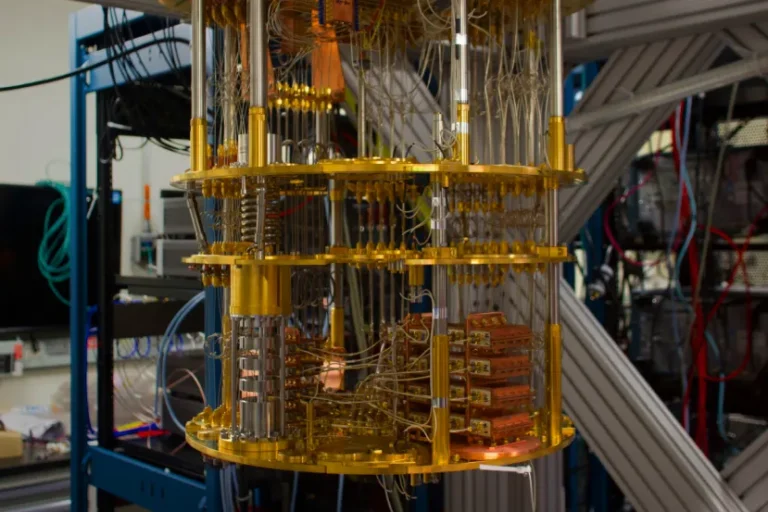
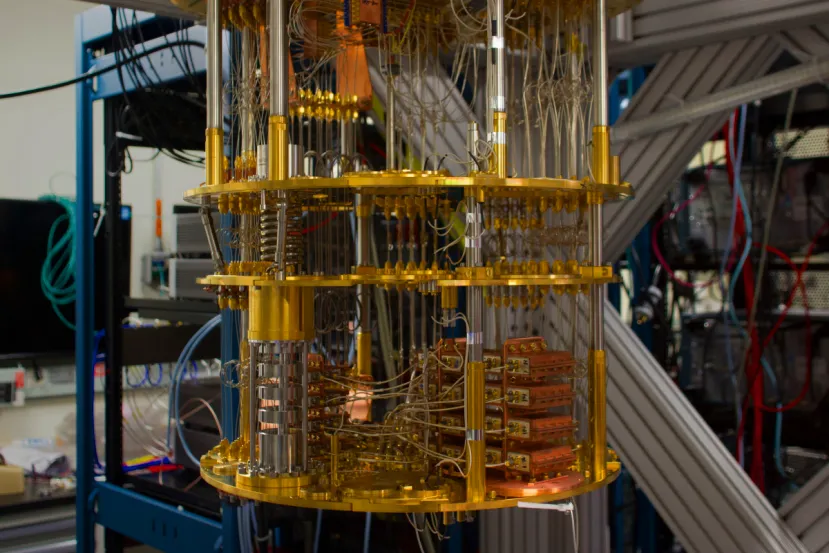
Unlike conventional PCs, a quantum computer uses quantum mechanical principles to perform the various calculations required to complete a task. In these computers, the typical bits of regular PCs are replaced by qubits, which have a greater capacity for representing data. Qubits can represent a 0 or a 1, just like bits, but they can also represent a superposition of both simultaneously, allowing for the calculation of much more complex operations with a far more refined and efficient result than a conventional computer.
Quantum computers use the principle of superposition, which allows a single qubit to achieve multiple results simultaneously. This seemingly impossible paradox is achieved with these computers, enabling greater processing power by considering different representation options in parallel. A qubit can be represented as 0, 1, or both simultaneously, opening new avenues for problem-solving and achieving faster, more efficient results.
Quantum entanglement is also taken into account, a key concept when changing the states of different qubits. This allows two or more qubits to be entangled so that if one of them changes its state, the others can do so instantaneously. This principle also allows for the development of more complex algorithms than those currently available, as well as new types of algorithms that enable the resolution of other kinds of problems that might currently seem unfeasible with a conventional PC.
Quantum computing has arrived to revolutionize computing in certain areas that can benefit from this greater computing power, more elaborate and complex algorithms, along with much faster and more accurate results than conventional methods.
However, efforts are currently underway to overcome some existing limitations with this type of computer, such as its complex construction and maintenance, which require unusual operating temperatures. Furthermore, work is also being done to address the instability of qubits, which are highly sensitive to interference.
What is a Quantum Computer used for?
Quantum computers offer greater processing power, faster and more reliable. They allow us to tackle problems that are currently untreatable with existing PC technology, even the most powerful servers. Quantum computing enables us to solve more complex problems in areas such as simulation, whether for molecules, drugs, or climate simulation.
Thus, greater scientific advances can be achieved in less time, since quantum computing also allows for faster results. Thanks to this type of computing, progress can also be made in fields that have been stagnant for some time, such as physics and materials science. It will also help in other fields such as medicine, biology, and so on. Furthermore, thanks to the new algorithms made possible by this type of computing, doors are also opened to discoveries in different fields, allowing them to continue advancing and researching.
Another field that will benefit from these types of quantum computers is the highly sought-after field of Artificial Intelligence. Thanks to greater computing power, Artificial Intelligence can perform more precise calculations than with current classical computers. This increased processing power for large and complex natural language can also help robotics develop better models for smarter robots. Security will also be improved thanks to this more robust type of computing, an area in which companies are investing heavily.
But before we can continue to explore all these benefits, we must also address some challenges that arise with this type of computing. These are problems that will need to be solved so that quantum computers can begin to offer all the advantages they possess compared to the computers we commonly use today.
About the Author