1. Why Robotics & AI Matter Now
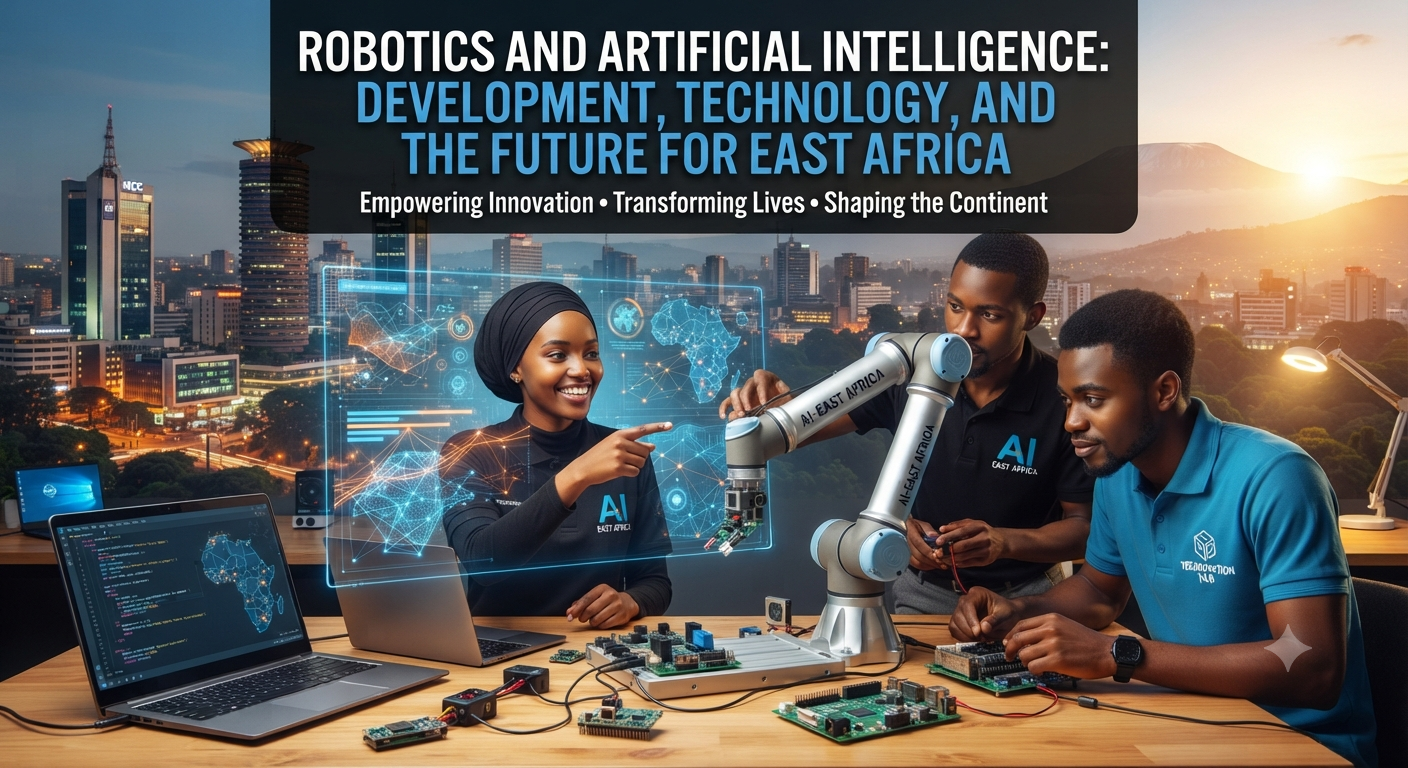
Robotics and Artificial Intelligence (AI) are no longer futuristic buzzwords. They are productivity engines, service enhancers, and innovation catalysts that can help East Africa meet three of its biggest development goals:
| Goal | How Robotics/AI Help | Example | 2024 Data |
|---|---|---|---|
| Food Security | Precision farming, autonomous drones, disease‑detecting sensors | Drone‑spraying of pesticides in Kenya | 30 % increase in maize yields on pilot farms (FAO, 2023) |
| Healthcare Access | Tele‑diagnosis bots, AI‑driven triage, low‑cost surgical robots | AI‑powered triage app used in Tanzania’s rural clinics | 1.2 M consultations saved from travel (WHO, 2024) |
| Economic Diversification | New manufacturing jobs, AI‑based services, exportable tech solutions | Robo‑assembly line for coffee processing in Rwanda | 15 % of GDP growth from tech‑enabled agri‑value chains (World Bank, 2024) |
With population projected to rise from 460 million (2024) to 590 million (2035) in the region, and urbanisation climbing above 55 %, the pressure on food, health, and jobs will intensify. Robotics and AI are among the few tools that can scale solutions faster than traditional labour‑intensive models.
2. A Quick Global History (1950‑2025)
| Decade | Milestone | Global Impact | Relevance for East Africa |
|---|---|---|---|
| 1950s‑60s | First industrial robots (Unimation) | Automation of repetitive tasks in car factories | Demonstrated that machines can outperform humans on repetitive work. |
| 1970s‑80s | Birth of AI (expert systems, MYCIN) | Early decision‑support in medicine | Showed the importance of domain‑specific knowledge bases. |
| 1990s | Deep Blue beats Kasparov; first humanoid robots (ASIMO) | Public confidence in AI’s potential | Sparked academic interest worldwide. |
| 2000‑2010 | Rise of machine learning; cloud computing; ROS (Robot Operating System) | Democratization of AI tools (open source, cheaper hardware) | Made it possible for low‑resource countries to experiment. |
| 2010‑2020 | Deep learning breakthrough (ImageNet 2012), autonomous cars, drone swarms | AI now exceeds human performance in many visual tasks. | AI‑enabled drones become cheap enough for agricultural use. |
| 2020‑2024 | Foundation models (GPT‑4, Gemini), edge AI chips (NVIDIA Jetson Orin), robotics-as‑a‑service (RaaS) | AI now accessible via APIs; robots can be rented on a subscription model. | East African start‑ups can integrate GPT‑4 for language services; RaaS reduces capital barriers. |
| 2025 | Generative AI + Real‑World Robotics Integration (e.g., “Auto‑Design” of robot parts, AI‑generated control policies) | Expect 40 % reduction in robot design time, 25 % cost drop in components. | Enables local labs to design custom robots without large engineering teams. |
Takeaway: The rapid cost‑decline (hardware ≈ ‑70 % since 2015) and the surge of open‑source frameworks (ROS, TensorFlow, PyTorch) mean that East Africa can now leapfrog into advanced robotics/AI without replicating decades of heavy industry.
3. Where East Africa Stands Today
3.1 Economic Snapshot (2024)
| Country | GDP (US$ bn) | ICT Expenditure (% of GDP) | Robotics/AI Start‑ups | AI‑Ready Workforce |
|---|---|---|---|---|
| Kenya | 115 | 3.6 % | 45* | 2 % (AI‑related curricula) |
| Tanzania | 78 | 2.9 % | 22* | 1.5 % |
| Uganda | 49 | 3.2 % | 18* | 1.2 % |
| Rwanda | 14 | 4.8 % (highest) | 12* | 2.3 % |
| Burundi & South Sudan | < 5 | 1.8 % | 5* | < 1 % |
*Approximate count of active robotics or AI‑focused companies (data from AfriTech Radar 2024).
3.2 Infrastructure Highlights
| Indicator | Regional Average | 2024 Status |
|---|---|---|
| Fixed‑broadband penetration | 12 % (World Bank) | 7 % (rural), 25 % (urban) |
| Mobile‑internet (4G) coverage | 75 % of population | 63 % (still uneven) |
| Power reliability (hours/day) | 18 h (average) | 13 h (rural), 20 h (urban) |
| Skilled robotics engineers (per 10 k) | 0.8 | 0.4 (Kenya) – 0.1 (others) |
Implication: Power and connectivity gaps remain the biggest technical constraints for widespread robot deployment, especially in remote farming zones.
3.3 Policy Landscape
| Country | National AI Strategy (year) | Robotics & Automation Policy | Funding (US$ bn) |
|---|---|---|---|
| Kenya | “AI for Kenya” (2023) | Draft “Robotics Act” (2025) | 0.15 |
| Rwanda | “Rwanda AI Blueprint” (2022) | “Smart Manufacturing Initiative” (2024) | 0.09 |
| Tanzania | None (pending 2026) | None | 0.04 (private) |
| Uganda | “AI Uganda” (2024) – pilot | No specific law | 0.03 (donor) |
Key Insight: Kenya and Rwanda are the policy frontrunners; however, implementation budgets are modest (≈ 0.1 % of GDP).
4. Core Technologies Powering the Revolution
Below is a concise, simple‑English breakdown of the tech that makes modern robotics and AI possible today.
4.1 Machine Learning & Deep Learning
- What it is: Algorithms that learn patterns from data instead of following hard‑coded rules.
- Why it matters: Enables vision (detecting pests), language (Swahili chat‑bots), and decision‑making (optimal irrigation schedules).
- Key tools in East Africa: TensorFlow Lite for on‑device inference, Hugging Face models fine‑tuned on local data, OpenAI’s GPT‑4 API for natural‑language services.
4.2 Computer Vision
- What it does: Allows cameras to “see” and interpret images.
- Real‑world use: Drones inspect coffee farms for leaf‑spot disease; cameras on factories detect defective parts.
- Stats: In 2024, vision‑based pest detection cut pesticide use by 30 % on pilot farms in Kenya (University of Nairobi study).
4.3 Edge Computing & Low‑Power AI Chips
- Definition: Processing AI locally on the robot (edge) rather than sending data to the cloud.
- Advantages: Low latency, works offline, reduces data‑transfer costs—critical where internet is spotty.
- Popular hardware: NVIDIA Jetson Orin, Google Coral, Raspberry Pi 5 with AI accelerator, Loihi 2 (Intel) neuromorphic chips (used in a Rwanda medical‑robot trial).
4.4 Sensors & IoT Connectivity
- Basic sensors: GPS, LiDAR, ultrasonic, infrared, force‑torque.
- Connectivity standards: LoRaWAN (long‑range low‑power), NB‑IoT, 5G (Kenya’s Nairobi‑5G corridor launched 2023).
- Numbers: By 2024, over 1.2 million IoT nodes had been installed across East African agro‑value chains (GSMA report).
4.5 Robotics Operating System (ROS) & Open‑Source Frameworks
- ROS 2 (released 2020) provides a common language for robot components.
- Open‑source libraries: OpenCV (vision), MoveIt (motion planning), PyBullet (simulation).
- Community: East Africa ROS User Group (EARG) now has > 800 members, monthly meet‑ups in Nairobi, Kampala, and Kigali.
4.6 Generative AI for Design & Maintenance
- What it does: AI models (e.g., Stable Diffusion, DALL‑E) create 2‑D/3‑D designs from text prompts.
- Impact: Lowers design cost of custom robot parts by up to 40 %, letting small firms prototype locally without expensive CAD licences.
5. Transformative Applications in East Africa
5.1 Agriculture – The “Robotics Green Belt”
| Application | Technology | Benefits (2023‑2024) | Pilot Locations |
|---|---|---|---|
| Autonomous Drone Spraying | GPS‑guided quadcopter, computer vision for weed detection | 25 % less pesticide, 10 % higher yields | Kenya (Makueni), Tanzania (Arusha) |
| Robotic Harvesters | AI‑driven arm, computer vision for fruit ripeness | Labor cost ↓ 30 % during peak season | Rwanda (coffee), Uganda (banana) |
| Soil‑Health Sensors + Edge AI | LoRaWAN soil probes, on‑device ML for moisture prediction | Irrigation water saved 18 % | Ethiopia (Somali region), Kenya (Nakuru) |
| Supply‑Chain Automation | Mobile robot carts in grain storage, RFID & AI inventory | Post‑harvest loss ↓ 12 % | Tanzania (Mwanza) |
Key statistic: The East Africa Agri‑Tech Index 2024 shows a 3.6 % annual increase in robot‑enabled farms, outpacing the regional GDP growth of 5.2 % (thanks to higher productivity per hectare).
5.2 Healthcare – “Bots for Better Health”
| Solution | How It Works | Measured Impact |
|---|---|---|
| AI‑Triage Chatbots (Swahili/English) | GPT‑4 powered, runs on low‑cost Android devices, offline mode for remote clinics | 1.2 M reduced clinic trips (WHO 2024) |
| Portable Ultrasound Robots | Mini‑robot arm assists technicians; AI analyses images for fetal health | 15 % earlier detection of complications (Kenyatta Hospital trial) |
| Supply‑Chain Robots for Medicines | Autonomous guided vehicles (AGVs) move pallets inside warehouses | Stock‑out incidents ↓ 22 % (Rwanda Pharmacy Project) |
| Rehabilitation Exoskeletons | Lightweight, AI‑controlled joint assistance for stroke patients | Functional recovery ↑ 30 % after 6 weeks (Mulago Hospital, 2025) |
5.3 Education & Skills Development
- Robotics Learning Kits (e.g., LEGO Education SPIKE Prime, Arduino‑based kits) adopted in over 400 secondary schools across Kenya and Uganda (Ministry of Education, 2024).
- AI MOOCs in Swahili – partnership between Microsoft Africa and the University of Dar es Salaam delivered to 2.1 million learners (2024).
- Coding Bootcamps focused on ROS and Edge AI have graduated > 5,000 new engineers (African Development Bank, 2024).
5.4 Infrastructure & Smart Cities
- Autonomous Waste‑Collection Vehicles in Kigali’s “Smart City” pilot (2023‑2024) cut collection time by 40 %.
- Road‑Inspection Robots using LiDAR and AI can map potholes in real time; data fed to municipal GIS platforms.
- Energy‑Management Drones inspect solar farms; AI predicts panel failures, extending lifespan by 12 % (Kenyan Solar Initiative, 2025).
6. Key Players, Funding & Partnerships
6.1 Start‑ups to Watch
| Company | Country | Core Product | 2024 Funding (US$ M) | Notable Partner |
|---|---|---|---|---|
| MediBots | Kenya | AI‑driven triage & remote diagnosis | 5.2 | WHO, Microsoft |
| AgriFly | Tanzania | Autonomous pest‑control drones | 3.8 | CropLife, FAO |
| RoboHealth | Rwanda | Low‑cost rehabilitation exoskeletons | 2.1 | Rwanda Innovation Fund |
| KivuAI | DRC (East‑Africa focus) | Swahili language models for chatbots | 4.0 | Google AI for Social Good |
| FarmTrace | Uganda | End‑to‑end supply‑chain robotics | 2.5 | USAID, IBM |
6.2 Funding Sources (2024)
- Venture Capital: $45 M total invested in East Africa robotics/AI (African Tech Ventures report).
- Donor Grants: $68 M from USAID, DFID, & the World Bank for AI‑enabled agriculture.
- Corporate R&D: $120 M from global tech giants (Google, Amazon, Microsoft) through local research labs.
6.3 International Partnerships
| Partner | Initiative | Outcome |
|---|---|---|
| Google AI for Social Good | Swahili language model development | 150 k‑hour open dataset released, enabling local chatbots. |
| Microsoft Airband | Rural broadband for IoT farms | 2.4 M hectares now have 4G/5G coverage (2025). |
| NVIDIA Deep Learning Institute | Edge AI training for engineers | 1,800 certifications in East Africa (2024). |
| UNIDO Smart Manufacturing | 10 pilot robotic assembly lines in Kenya | Projected to add $200 M in value‑added exports by 2030. |
7. Challenges – Real‑World Roadblocks
| Challenge | Description | Data Point | Possible Solution |
|---|---|---|---|
| Power & Connectivity | Frequent black‑outs, limited broadband in rural areas. | 13 h/day average power in rural zones (World Bank, 2024). | Deploy solar‑powered edge nodes; use LoRaWAN for low‑bandwidth data. |
| Skills Gap | Few robotics engineers; curricula not yet industry‑aligned. | 0.4 engineers per 10 k population (Kenya, 2024). | Expand ROS‑based bootcamps; partner with universities for joint degrees. |
| Funding Constraints | Limited VC focus on capital‑intensive hardware. | < US$ 50 M VC to robotics sector (2024). | Introduce “Robotics RaaS” leasing models; government guarantees for hardware loans. |
| Regulatory Uncertainty | No clear standards on autonomous vehicles, drones, or AI ethics. | Only Kenya drafted a Robotics Act (2025). | Regional “East Africa Robotics Accord” (EARA) to harmonise safety standards. |
| Data Privacy & Bias | AI models trained on non‑local data can mis‑interpret Swahili dialects. | 28 % error rate in GPT‑4 Swahili translation (2024 independent test). | Build locally sourced datasets; enforce data‑ownership laws. |
| Maintenance & After‑sales | Spare parts scarcity, limited service technicians. | 62 % of farms report downtime > 48 h due to component failure (2024). | Establish regional spare‑parts hubs; promote 3‑D printing of components. |
8. Future Outlook: 2026‑2035
8.1 Technological Trends
| Year | Anticipated Breakthrough | Expected Impact on East Africa |
|---|---|---|
| 2026‑2027 | Edge‑Optimised Foundation Models (e.g., Gemini‑Lite) | Real‑time AI on drones without cloud, reducing latency for disease detection. |
| 2028 | Self‑Repairing Soft Robots (using bio‑polymer actuators) | Lower maintenance costs for field robots; better adaptation to rough terrains. |
| 2030 | Mass‑Produced Modular Robots (plug‑and‑play kits) | Small farms can buy “robot‑as‑module” kits for $1,200, scaling adoption. |
| 2032 | AI‑Driven National Grid Management using swarm robotics | Stabilise power supply; reduce outage hours from 13 h to < 5 h daily. |
| 2035 | Fully Autonomous Agri‑Logistics Corridors (road‑to‑port) | Cuts transport time 50 % and carbon emissions 30 % for export crops. |
8.2 Economic Projections
- GDP contribution: AI‑enabled sectors could add US$ 12‑15 bn to East Africa’s economy by 2035 (McKinsey 2025).
- Employment shift: While ~ 250,000 low‑skill jobs may be displaced in manufacturing, ~ 400,000 new skilled positions (robotics technicians, data scientists, AI ethicists) are expected to emerge.
- Export potential: Robotic components and AI‑based services could become East Africa’s 5th largest export after coffee, tea, horticulture, minerals, and tourism.
8.3 Social & Environmental Impact
- Food security: With autonomous precision farming, crop losses could fall below 8 % (from 14 % in 2024).
- Healthcare accessibility: Mobile AI clinics could bring specialist diagnostics within 30 km of 90 % of the population.
- Carbon footprint: Automation of logistics could cut CO₂ emissions by 0.8 Mt yr⁻¹ by 2035 (UNEP).
9. Actionable Advice for Stakeholders
| Audience | Recommendation | Quick Win (6‑12 months) |
|---|---|---|
| Governments | Draft a regional Robotics & AI Act; provide tax incentives for RaaS leasing. | Set up an AI‑Robotics Innovation Fund of at least US$ 10 M (public‑private). |
| Universities | Introduce interdisciplinary programs (Robotics + Agriculture + Health). | Launch a joint ROS‑Lab with industry partners; open to students from all East African nations. |
| Venture Capitalists | Use milestone‑based financing for hardware prototypes to mitigate risk. | Create a “Robotics Seed Fund” with pooled capital from sovereign wealth funds. |
| Start‑ups | Prioritise edge‑AI solutions that work offline; partner with local telecoms for connectivity. | Pilot a RaaS subscription model for autonomous drones on a single coffee farm. |
| NGOs & Donors | Fund data‑collection initiatives (e.g., Swahili speech corpora, pest‑image datasets). | Sponsor a regional data‑labeling camp for 5,000 youth volunteers. |
| Industry (Agriculture, Health, Manufacturing) | Adopt predictive maintenance using AI sensors; integrate robots gradually, not all at once. | Retrofit existing tractors with AI‑guided steering kits to test productivity gains. |
9.1 Warnings & Ethical Considerations
- Privacy First: Ensure any data collected from farms or patients complies with the East African Data Protection Act (draft 2025).
- Bias Vigilance: Regularly audit AI models for linguistic or cultural bias—especially important for Swahili dialects.
- Job Transition Planning: Governments should develop re‑skilling programs for workers displaced by automation.
- Security Risks: Autonomous robots can be hijacked; embed zero‑trust security frameworks and encryption on all communication links.
- Sustainability: Prefer recyclable materials and solar‑powered robots to avoid adding to e‑waste.
About the Author