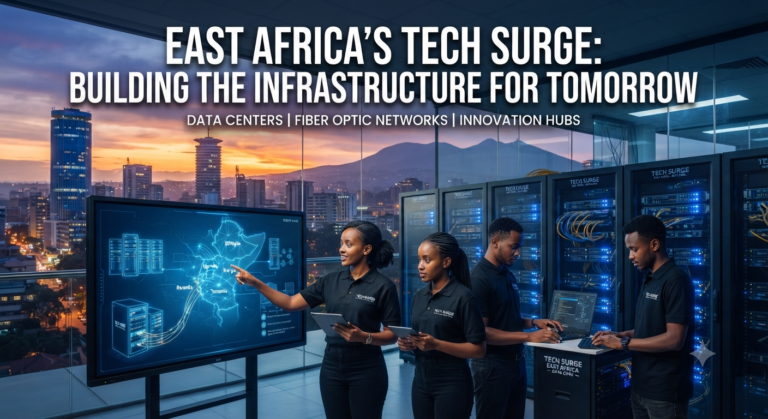
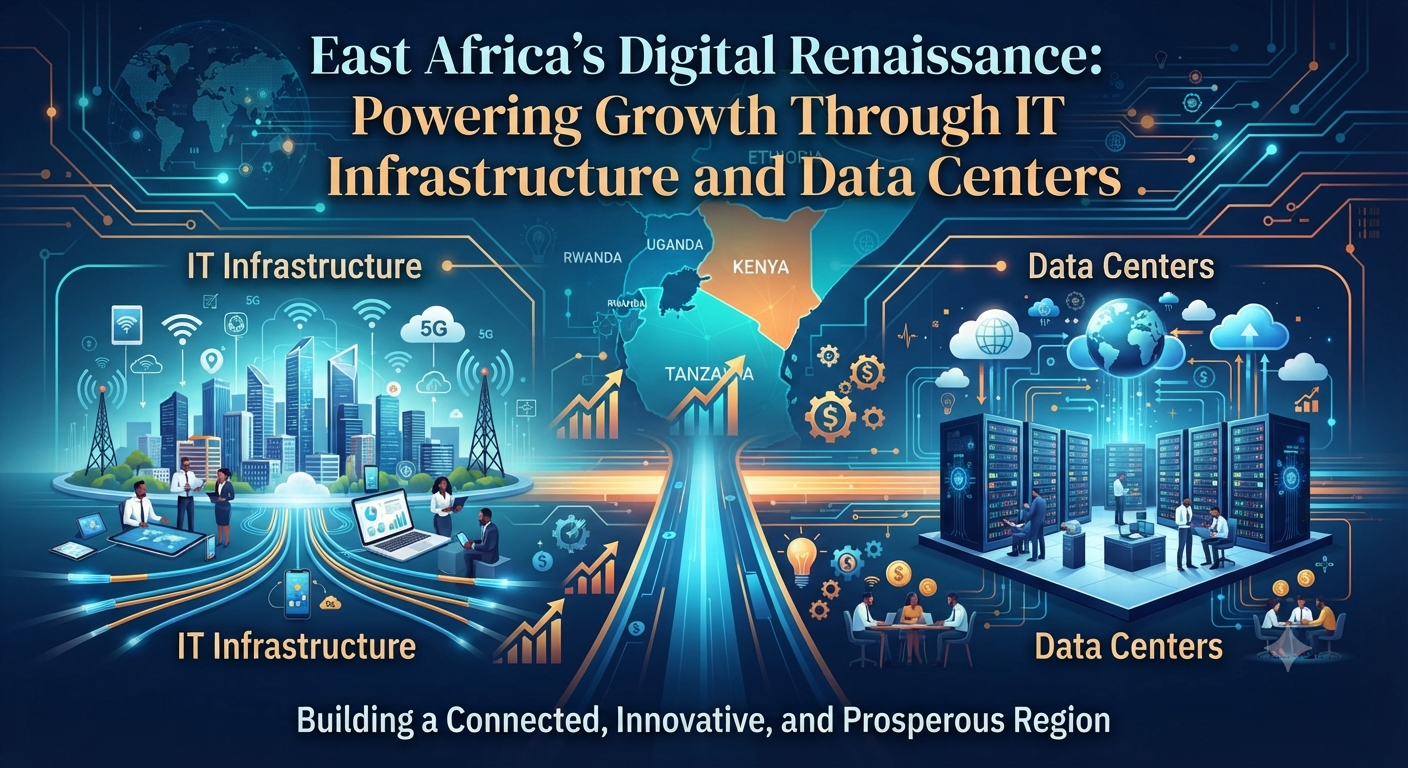
The East African region has been transforming itself into a crucial digital center at a fast pace due to an increase in technological development. Right from the innovative centers in Nairobi and Kigali to the accelerating economies of Dar es Salaam and Kampala, a quiet revolution is taking hold. At the core of this transformation lies a robust expansion of IT infrastructure and the proliferation of data centers. Far from being mere technical assets, these foundational systems serve as the essential arteries and heartbeats of the region’s burgeoning digital economy.
This comprehensive guide delves deep into the current state of IT infrastructure and data centers across East African countries, exploring their challenges, their undeniable potential, and charting a course for their future. We’ll uncover how the region is positioning itself as a key player in the global digital landscape, attracting the attention of big tech companies and fostering a vibrant ecosystem of innovation.
The Digital Awakening: Why East Africa Matters
East Africa, comprising countries like Kenya, Tanzania, Uganda, Rwanda, Ethiopia, and others, is a region characterized by its youthful population, rapidly expanding middle class, and an insatiable appetite for digital services. With a combined population exceeding 200 million, the demand for connectivity, digital services, and local data processing is skyrocketing.
- Demographic Dividend: A youthful population (over 60% under 25 in some countries) presents a massive consumer base eager for mobile services, e-commerce, and digital entertainment.
- Economic Growth: Many East African nations have consistently demonstrated robust economic growth, outpacing global averages, fueled by sectors like agriculture, tourism, and increasingly, technology.
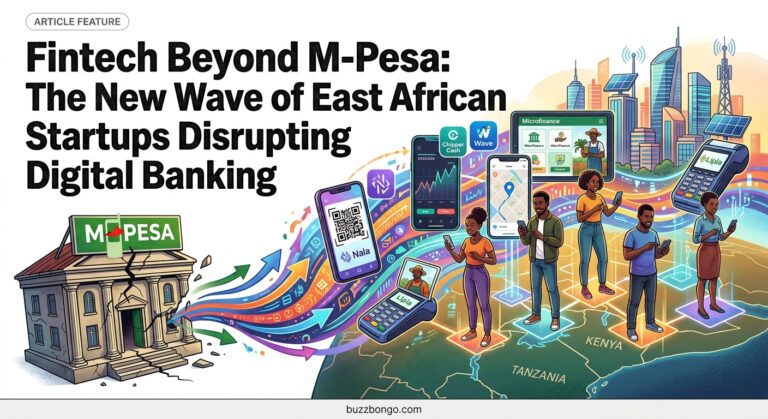
- Mobile-First Revolution: With limited legacy fixed-line infrastructure, the region leapfrogged directly to mobile technology. Mobile money platforms like M-Pesa (Kenya) are global success stories, demonstrating the region’s capacity for digital innovation and adoption.
This dynamic environment sets the stage for exponential growth in IT infrastructure and data centers, as they are essential for supporting everything from simple mobile transactions to complex cloud-based enterprise solutions.
Understanding IT Infrastructure: The Digital Foundation
IT infrastructure refers to all the components that support the exchange, storage, and processing of digital information. Think of it as the nervous system of the digital world. In East Africa, this primarily includes:
- Internet Connectivity: The backbone that links the region to the global internet and connects users within countries.
- Network Hardware and Software: The equipment and programs that manage data traffic and enable services.
- Power Infrastructure: The reliable energy supply needed to keep all digital systems running.
Let’s break down each component with a focus on the East African context.
1. Internet Connectivity: The Lifeline to the World
The journey of East Africa’s internet connectivity has been transformative. Until the early 2000s, most internet traffic relied on expensive and slow satellite links. The arrival of submarine fiber optic cables changed everything.
- Submarine Cables: Bridging Continents
- SEACOM (2009): One of the first major cables to land in East Africa, connecting countries like Kenya and Tanzania to Europe and India. It significantly reduced bandwidth costs and increased speeds.
- EASSy (Eastern Africa Submarine Cable System, 2010): A regional initiative connecting numerous East African coastal and landlocked nations.
- TEAMS (The East African Marine System, 2009): A partnership primarily involving the Kenyan government and private investors, focusing on Kenya’s connectivity.
- DARE1 (Djibouti Africa Regional Express 1, 2020): Further enhanced connectivity, linking Djibouti, Somalia, and Kenya.
- PEACE Cable (Pakistan & East Africa Connecting Europe, ongoing): Expected to further boost capacity and redundancy.
Example: Before SEACOM, a typical business in Nairobi might pay hundreds of dollars for a slow, unreliable internet connection. Post-SEACOM, prices plummeted, and speeds surged, making sophisticated online services accessible.
- National Fiber Backbones: Spreading the Reach Inland. Once these submarine cables land on the coast, national fiber optic networks are crucial for distributing the bandwidth inland to cities and towns.
- Kenya’s National Optic Fibre Backbone Infrastructure (NOFBI): A government initiative to extend fiber connectivity across all counties, reaching even remote areas.
- Tanzania’s National ICT Broadband Backbone (NICTBB) similarly aims to connect district capitals and neighboring countries.
- Uganda’s National Backbone Infrastructure (NBI): Managed by the National Information Technology Authority (NITA-U), connecting government institutions and extending to borders. These backbones are vital for reducing the digital divide between urban and rural areas.
- Last-Mile Connectivity: The Final Frontier. While national backbones are growing, the “last mile” – connecting individual homes and businesses – remains a challenge, especially in rural areas.
- Mobile Broadband: 4G LTE dominates, with 5G deployment beginning in major cities. Mobile network operators (MNOs) like Safaricom, Vodacom, Airtel, and MTN are the primary providers of internet access for most East Africans.
- Fixed Wireless Access (FWA): Over 4G/5G networks, providing home internet without physical cables.
- Satellite Internet: Solutions like Starlink are emerging, offering high-speed internet to remote or underserved areas, though often at a higher cost.
- Community Networks: Local initiatives using low-cost wireless technologies to provide internet access in digitally marginalized communities.
Example: A farmer in rural Kenya can now access market prices online via their smartphone, thanks to expanded 4G coverage, a significant improvement from relying solely on physical markets or radio.
2. Network Hardware and Software: The Engines of Data Flow
Beyond just pipes, the infrastructure includes the equipment that manages data flow and the applications that leverage it.
- Routers, Switches, Servers: The physical devices that direct internet traffic, connect devices, and host applications.
- Cybersecurity Infrastructure: With increased connectivity comes increased risk. Firewalls, intrusion detection systems, and secure software are critical to protect sensitive data and national infrastructure. East African governments are increasingly investing in national Computer Incident Response Teams (CIRTs).
- Software Ecosystems: The explosion of mobile applications (fintech, e-commerce, ride-hailing), cloud-based enterprise solutions (CRM, ERP), and government e-services all rely on robust, well-managed network hardware and software.
3. Power Infrastructure: The Unsung Hero
Reliable and affordable electricity is arguably the single most critical, yet often overlooked, component of IT infrastructure. Data centers, network towers, and user devices all require constant power.
- Energy Challenges: Many East African countries face issues with grid stability, frequent blackouts, and high electricity costs. This directly impacts the operational efficiency and cost-effectiveness of running data centers and other IT facilities.
- Renewable Energy Solutions: To circumvent grid unreliability and reduce the carbon footprint, there’s a growing trend towards integrating renewable energy sources.
- Solar Power: Many telecom towers and smaller data centers are incorporating solar panels with battery backups.
- Hydropower: Countries like Ethiopia (Grand Ethiopian Renaissance Dam) and Uganda have significant hydropower potential that can provide relatively clean and stable energy.
- Geothermal Energy: Kenya is a global leader in geothermal energy, providing a clean and reliable power source, particularly beneficial for energy-intensive operations like data centers.
Example: A data center in Nairobi might have multiple redundant power lines from the national grid, colossal diesel generators for backup, and increasingly, large solar array installations to ensure uninterrupted service, minimizing downtime for thousands of businesses and millions of users.
Data Centers: The Digital Heartbeat of the Region
If IT infrastructure is the nervous system, then data centers are the brain, the central processing unit where all the digital information is stored, processed, and managed. These secure facilities house thousands of servers, storage systems, and networking equipment, allowing businesses and governments to host their applications, websites, and critical data locally.
What is a Data Center? (Simply Explained)
Imagine a very large, specialized building designed to keep computers running 24/7. It has:
- Servers: Powerful computers that store and process information.
- Storage: Systems to keep vast amounts of data (like photos, documents, videos).
- Network Equipment: Devices to connect all these computers and the internet.
- Power Systems: Uninterruptible power supplies (UPS), generators, and cooling systems (air conditioning) to keep everything running and prevent overheating.
- Security: Physical security (guards, cameras, biometric access) and cybersecurity measures to protect the data.
Current Landscape in East Africa: A Growing Ecosystem
The African data center market is experiencing unprecedented growth, and East Africa is at its forefront. While South Africa has traditionally dominated the continent’s data center capacity, East Africa is rapidly catching up, driven by increased internet penetration and demand for localized services.
- Key Players and Investment:
- Liquid Intelligent Technologies: A major pan-African fiber and data center operator, with significant presence and data centers in Kenya (e.g., East Africa Data Centre in Nairobi), Uganda, Rwanda, and Tanzania.
- Safaricom (Kenya): As a leading telecom in East Africa, Safaricom operates its own enterprise-grade data centers to support its vast array of services, including M-Pesa.
- Raxio Data Centres: Focused on building and operating Tier III, carrier-neutral data centers across Africa. They have facilities in Uganda (Raxio Uganda) and Ethiopia and are expanding into other East African markets.
- PAIX Data Centres: Another key player expanding its footprint, with a presence in Kenya.
- Teraco (via partnerships): While primarily based in South Africa, its influence and partnerships extend northwards as the market matures.
- Local Enterprises and Government: Many large banks, corporations, and government agencies operate their own smaller, private data centers for internal use.
- Geographic Concentration: The majority of significant data centers are concentrated in capital cities and major commercial hubs:
- Nairobi, Kenya: The undisputed leader in East Africa, often referred to as “Silicon Savannah,” boasting multiple carrier-neutral and enterprise-grade data centers.
- Dar es Salaam, Tanzania: A growing hub with increasing investment in connectivity and data center facilities.
- Kampala, Uganda: Benefiting from improved national fiber infrastructure and rising demand.
- Kigali, Rwanda: Positioning itself as an innovative tech hub with government support for digital infrastructure.
- Addis Ababa, Ethiopia: With its huge population and recent economic liberalization, Ethiopia is a market with immense future potential for data center growth.
- Types of Data Centers:
- Carrier-Neutral Data Centers: These are open to all network providers, allowing customers to choose their preferred carrier for connectivity. This promotes competition and better services. Most new, major data centers in East Africa are carrier-neutral.
- Enterprise Data Centers: Privately owned and operated by large organizations (banks, telcos, government) for their exclusive use.
- Colocation Facilities: Where multiple businesses can rent space for their servers within a larger data center. This is a common model in East Africa, reducing upfront costs for businesses.
- Hyperscale Data Centers: Massive facilities typically built by global cloud providers (like AWS, Azure, Google Cloud). While direct hyperscale presence is still nascent in East Africa, the region is ripe for it.
Why Data Centers are Crucial for East Africa
Data centers are not just buildings with computers; they are catalysts for economic growth and digital empowerment.
- Data Sovereignty and Latency:
- Latency: When data has to travel long distances (e.g., to a server in Europe or South Africa), it takes time. This “latency” can slow down applications, particularly for real-time services like video conferencing or gaming. Local data centers drastically reduce latency, improving user experience.
- Data Sovereignty: Many countries prefer or mandate that their citizens’ and government’s data is stored within national borders for security, privacy, and regulatory reasons. Local data centers enable this.
- Cloud Computing Adoption: The global shift to cloud computing requires robust local infrastructure. Cloud adoption in Africa is accelerating, and local data centers are essential for:
- Providing local points of presence (PoPs) for global cloud providers: While full AWS/Azure/Google Cloud regions are still limited, local data centers can host “zones” or “edge locations” for these giants, bringing services closer to users.
- Hosting local cloud providers: East African companies can offer their own cloud services, tailored to local needs and regulations.
- Digital Transformation of Businesses and Governments:
- Businesses: From small startups to large corporations, businesses need reliable infrastructure to host their websites, e-commerce platforms, customer databases, and internal applications. Local data centers provide this securely and efficiently.
- Governments: E-governance initiatives (online tax filing, digital identity, public service portals) rely heavily on secure and reliable local data centers to serve citizens efficiently and transparently.
- Support for Local Tech Innovation (Tech Hubs): East Africa’s vibrant tech hubs (like iHub in Kenya, KLab in Rwanda, Outbox in Uganda) are breeding grounds for startups. These startups often need flexible, affordable computing resources. Local data centers offer colocation and cloud services that are accessible, helping these innovators scale without massive upfront capital expenditure on their own IT infrastructure.
Table: Snapshot of Key East African Countries’ IT & Data Center Landscape (Illustrative Data)
| Country | Internet Penetration (2023 Est.) | Major Submarine Cables Landings | Notable Data Centers & Providers (Examples) | Tech Hub Activity | Key Growth Drivers |
|---|---|---|---|---|---|
| Kenya | ~48% | SEACOM, EASSy, TEAMS, DARE1 | Liquid Intelligent Technologies (East Africa Data Centre), Safaricom, PAIX, Icolo.io | “Silicon Savannah” (iHub, Nailab), strong startup ecosystem, mobile money leadership. | Government digital initiatives, fintech, e-commerce, cloud adoption, regional hub status. |
| Tanzania | ~30% | SEACOM, EASSy | Liquid Intelligent Technologies, Zantel, TTCL | Kijiji Innovation Centre, Buni Hub, emerging startup scene. | Growing mobile internet users, e-governance push, natural resources, and increasing FDI. |
| Uganda | ~28% | EASSy (via Kenya/Tanzania) | Raxio Data Centres, Liquid Intelligent Technologies, NITA-U | Outbox, Innovation Village, flourishing youth entrepreneurship. | Oil & gas sector, mobile money growth, government digitization, improving national backbone. |
| Rwanda | ~60% | EASSy (via Tanzania) | Raxio Data Centres, Liquid Intelligent Technologies, Government of Rwanda | KLab, Norrsken House, strong government support for tech, smart city initiatives. | Vision 2050 (digital transformation), tech-friendly policies, high smartphone penetration, FDI. |
| Ethiopia | ~25% | SEACOM, DARE1 (via Djibouti) | Raxio Data Centres, Ethio Telecom (emerging) | Ice Addis, blueMoon, vast untapped market, recent liberalization. | Large population, economic liberalization, mobile money expansion, government e-service ambitions. |
(Note: Internet penetration figures are approximate and can vary based on the source and definition. “Major Data Centers” refers to significant commercial or government facilities. This table provides a snapshot and is not exhaustive.)
Challenges and Obstacles: Paving the Digital Path
Despite the impressive strides, East Africa’s digital journey faces significant hurdles that need strategic attention.
- Power Reliability and Cost: As highlighted, unstable power grids and high electricity tariffs remain major challenges. This increases operational costs for data centers, leading to higher prices for customers and potentially deterring investment. Frequent power outages can also lead to service disruptions if backup systems fail.
- Connectivity Gaps and Affordability: While urban areas boast decent connectivity, vast rural populations remain underserved or unserved. Even where connectivity exists, the cost of internet data can be prohibitive for many, limiting the widespread digital economy in East Africa. “Last-mile” infrastructure is expensive to deploy in sparsely populated areas.
- Skilled Workforce Shortage: The rapid growth of IT infrastructure and data centers outpaces the availability of adequately skilled professionals. There’s a critical need for expertise in network engineering, cybersecurity, cloud architecture, data center operations, and maintenance.
- Regulatory Frameworks and Policy: While progress is being made, inconsistent or underdeveloped regulatory frameworks can create uncertainty for investors. Issues like data protection laws, cross-border data transfer policies, intellectual property rights, and ease of doing business need to be clear and harmonized to attract and retain investment.
- Capital Investment: Building state-of-the-art data centers and extensive fiber networks requires massive capital investment. While foreign direct investment (FDI) is growing, sustained public-private partnerships and local investment mechanisms are crucial.
- Cybersecurity Threats: As digital adoption increases, so does the risk of cyberattacks. East African countries are becoming targets for various forms of cybercrime, from ransomware to phishing. Inadequate national cybersecurity strategies and infrastructure can undermine trust and hinder digital growth.
- Socio-economic Factors: Digital literacy levels, particularly in older generations or specific demographics, can limit the uptake of digital services, even where infrastructure is available.
The Future of IT Infrastructure and Data Centers in East Africa: A Vision of Growth
The trajectory for IT infrastructure and data centers in East Africa is overwhelmingly positive, driven by powerful demographic and economic forces. The region is poised for a significant leap forward in its digital maturity.
Drivers of Future Growth
- Population Growth and Youth Bulge: The sheer number of young people entering the workforce and becoming consumers will fuel demand for digital services.
- Increasing Smartphone Penetration: As phone prices drop and incomes rise, more East Africans will own smartphones, driving demand for apps, mobile internet, and cloud services.
- Government Digital Transformation Initiatives: Many governments are championing e-governance, digital identity, and smart city projects. Rwanda’s “Smart Kigali” initiative is a prime example.
- Rise of Digital Services: Sectors like e-commerce, fintech, edtech, agritech, and telemedicine are booming, all requiring robust underlying IT infrastructure and data centers.
- Example: Companies like Jumia (e-commerce) and Twiga Foods (agritech) in Kenya rely on scalable cloud infrastructure to manage their vast operations.
- Interest from Big Tech Companies: Global giants are increasingly recognizing East Africa’s potential.
- Microsoft has established African Development Centres in Nairobi (Kenya) and Lagos (Nigeria), focusing on innovation and talent development.
- Google continues to invest in connectivity (e.g., Equiano subsea cable) and digital skills initiatives.
- Amazon Web Services (AWS): While the main AWS Africa Region is in South Africa, its presence and services are widely used across East Africa, driving demand for local peering and edge locations.
- Huawei: A significant player in providing telecom infrastructure and smart city solutions across the region. The interest from these big tech companies signals a maturation of the market and opens doors for further investment and talent development.
Emerging Trends and Technologies
The future will see not just more infrastructure, but smarter, greener, and more decentralized infrastructure.
- Hyperscale Data Centers: The eventual arrival of full-fledged hyperscale cloud regions (like AWS, Azure, Google Cloud) in East Africa is highly anticipated. This would dramatically reduce latency and costs for cloud services, accelerating cloud adoption Africa-wide. Nairobi is often tipped as a prime candidate for the first East African hyperscale region.
- Edge Computing: As more data is generated at the “edge” (e.g., IoT devices, smart sensors, autonomous vehicles, 5G networks), there will be a need for smaller, localized data centers closer to the source of data. This “edge computing” will reduce bandwidth usage and enable real-time applications, critical for smart cities and industrial IoT.
- Renewable Energy Integration: Future data centers will increasingly rely on renewable sources like solar, wind, and geothermal. This will not only address power reliability issues but also align with global sustainability goals. Green data centers will become a competitive advantage.
- AI and Machine Learning (AI/ML): The rise of AI and ML applications, from predictive analytics in agriculture to personalized education platforms, demands immense computing power and specialized infrastructure. East African data centers will need to evolve to support these computationally intensive workloads.
- 5G Deployment: The rollout of 5G networks in major East African cities will unleash new possibilities, including ultra-low-latency applications, massive IoT deployments, and enhanced mobile broadband. This will, in turn, drive demand for more robust and distributed IT infrastructure and data centers.
- Data Sovereignty and Localization: As countries mature in their digital governance, there will be increased emphasis on storing sensitive data within national boundaries. This will spur the construction of more local and regional data centers, fueled by evolving data protection regulations (e.g., GDPR-inspired laws).
- Role of Tech Hubs in Driving Demand: East Africa’s vibrant tech hubs will continue to be incubators for innovation. Startups developing solutions in fintech, agritech, health tech, and e-commerce will be major consumers of localized cloud and data center services, driving demand and specialization within the African data center market. These hubs also attract skilled talent and foster a culture of digital entrepreneurship.
Solutions and Recommendations: Building a Sustainable Digital Future
To fully capitalize on its digital potential, East Africa needs a concerted effort from governments, the private sector, academia, and international partners.
- Policy and Regulatory Harmonization:
- Streamlined Regulations: Governments should work to create clear, transparent, and consistent regulatory frameworks that encourage investment in IT infrastructure and data centers. This includes simplifying licensing, land acquisition, and import processes.
- Data Protection Laws: Implement and enforce robust data privacy and protection laws that build trust and ensure compliance with international standards, attracting more foreign investment and fostering data sovereignty.
- Economic Incentives: Offer tax breaks, grants, and other incentives for companies investing in digital infrastructure, renewable energy for data centers, and local talent development.
- Regional Collaboration: Harmonize policies and standards across East African Community (EAC) member states to facilitate cross-border data flow and create a larger, more attractive regional market.
- Infrastructure Investment and Public-Private Partnerships (PPPs):
- Attracting FDI: Create an attractive investment climate to draw more international capital into fiber optic networks, data centers, and renewable energy projects.
- Government-Led Initiatives: Governments should continue to invest in national backbone networks and support the extension of last-mile connectivity, potentially through universal service funds.
- PPPs: Foster strong partnerships between governments and private sector players to share risks and leverage expertise for large-scale infrastructure projects.
- Human Capital Development:
- Education and Training: Invest heavily in STEM education from primary to tertiary levels. Develop specialized vocational training programs and university curricula for network engineering, cybersecurity, cloud computing, and data center operations.
- Upskilling and Reskilling Initiatives: Implement programs to equip the existing workforce with new digital skills, focusing on emerging technologies like AI/ML, IoT, and edge computing.
- Talent Retention: Create an environment that retains skilled professionals, possibly through competitive remuneration, career development opportunities, and incentives for working in the local tech sector.
- Energy Solutions and Sustainability:
- Reliable Power Grids: Governments must prioritize investment in upgrading national power grids to ensure stability and reduce outages.
- Renewable Energy Integration: Actively promote and incentivize the use of renewable energy sources (solar, wind, geothermal) for data centers and other IT infrastructure components. Explore microgrid solutions for remote areas.
- Energy Efficiency: Encourage the adoption of energy-efficient technologies and practices within data centers to reduce operational costs and environmental impact.
- Cybersecurity Strategy:
- National Frameworks: Develop and implement comprehensive national cybersecurity strategies, including legal frameworks, incident response capabilities (CIRTs), and public awareness campaigns.
- Industry Collaboration: Foster collaboration between government, private sector, and academia to share threat intelligence and develop collective defense mechanisms against cyber threats.
- Capacity Building: Train cybersecurity professionals and invest in technologies to protect critical national IT infrastructure.
- Fostering Local Innovation and Tech Hubs:
- Support for Startups: Continue to support tech hubs and incubators with funding, mentorship, and access to resources, including affordable cloud services from local data centers.
- Research & Development: Encourage R&D in areas relevant to local challenges, leveraging the growing digital infrastructure.
Conclusion: East Africa’s Digital Dawn
East Africa stands at the cusp of a profound digital transformation. The rapid evolution of its IT infrastructure and the proliferation of data centers are not just technical advancements; they are fundamental drivers of economic growth, social inclusion, and innovation. From enabling ubiquitous mobile money transactions to powering the next generation of AI-driven applications, these digital foundations are reshaping the region’s destiny.
While significant challenges remain – from power reliability to skill gaps – the immense potential, coupled with strategic investments, forward-thinking policies, and the unwavering spirit of innovation, paints a bright future. The continued interest from big tech companies, the burgeoning tech hubs, and the increasing cloud adoption Africa-wide underscore a clear trend: East Africa is not just catching up, but actively carving out its unique and vital role in the global digital landscape. By addressing the challenges head-on and embracing collaborative solutions, East Africa can solidify its position as a dynamic, connected, and digitally empowered continent, ready to harness the full promise of the 21st century.
About the Author