
Discover how East African tech hubs like Nairobi and Kigali are transforming into the “Silicon Valleys” of the continent. Explore the drivers of growth, key startups, and the future of innovation in the Silicon Savannah.
For decades, the global narrative about East Africa was dominated by stories of agriculture and tourism. While those sectors remain vital, a new story is being written in lines of code, fiber-optic cables, and digital wallets.
From the bustling streets of Nairobi to the clean hills of Kigali, a digital revolution is unfolding. East Africa is no longer just “catching up” with the rest of the world; it is leapfrogging traditional development stages to become a global leader in mobile innovation.
In this comprehensive guide, we explore the rise of East African tech hubs, the factors driving their growth, and why the “Silicon Savannah” is just the beginning of a continent-wide transformation.
1. The Silicon Savannah: Nairobi, Kenya, leads the Charge
If there is a capital city for African tech, it is Nairobi. Often referred to as the Silicon Savannah, Nairobi has established itself as the primary gateway for technology and innovation in East Africa.
Why Nairobi?
Nairobi’s success didn’t happen by accident. It is the result of a “perfect storm” of government support, a highly educated workforce, and early success stories that proved the market’s potential.
- The M-Pesa Effect: In 2007, Safaricom launched M-Pesa. This mobile money platform revolutionized how people transfer money without needing a traditional bank account. Today, over 90% of Kenyans use mobile money. This created a foundation for every other tech startup to build upon.
- The iHub Factor: Founded in 2010, the iHub was one of the first open spaces for technologists, investors, and tech companies in Africa. It acted as a catalyst, bringing together minds that would eventually launch global companies.
- Infrastructure: Kenya has invested heavily in undersea fiber-optic cables, giving it some of the fastest and most affordable internet speeds on the continent.
Key Companies to Watch
- Twiga Foods: A B2B platform that uses technology to aggregate demand and streamline the supply chain between farmers and vendors.
- Copia Global: An e-commerce platform specifically designed for middle-to-low-income consumers in rural areas.
- M-KOPA: A pioneer in “pay-as-you-go” solar energy, helping millions access electricity through small daily mobile payments.
2. Kigali: The “Test Bed” of Africa
While Nairobi is the largest hub, Kigali, Rwanda, is arguably the most organized. The Rwandan government has a clear vision: to turn the small, landlocked country into a service-based, high-tech economy.
Government-Led Innovation
Rwanda is often called the “test bed” because its regulatory environment is incredibly friendly to new technology. If you have a world-changing idea, the Rwandan government is likely to help you pilot it.
- Zipline: This US-based drone company chose Rwanda to launch the world’s first national drone delivery service. Today, drones deliver life-saving blood and medical supplies to remote hospitals across the country in minutes.
- Norrsken House Kigali: This is Africa’s largest hub for entrepreneurship. It provides a world-class space for startups to scale, reflecting Rwanda’s ambition to be the “Singapore of Africa.”
- Kigali Innovation City (KIC): A massive project aimed at co-locating universities, tech companies, and biotech firms in one specialized economic zone.
3. Ethiopia: The Sleeping Giant Awakens
Ethiopia has long been one of the fastest-growing economies in the world, but its tech sector was historically held back by a state-owned telecommunications monopoly. That is changing rapidly.
The Great Liberalization
In 2021, Ethiopia began opening its telecom sector to private competition. The entry of Safaricom Ethiopia broke the monopoly of Ethio Telecom, leading to a massive surge in internet penetration and competitive pricing.
- Market Size: With a population of over 120 million people—the second-largest in Africa—the potential for scale in Ethiopia is unmatched.
- The Startup Act: The Ethiopian government recently passed the “Startup Act,” which offers tax breaks, simplified business registration, and support for entrepreneurs.
- Hubs like iceaddis: This tech hub has been instrumental in nurturing local talent, focusing on home-grown solutions for the Ethiopian market.
4. Tanzania and Uganda: The Emerging Contenders
While Kenya and Rwanda take most of the headlines, Tanzania and Uganda are making significant strides.
- Uganda (Kampala): Known for its vibrant entrepreneurial spirit, Kampala is seeing a rise in fintech and “mobility” startups (like SafeBoda). The city has a young, tech-savvy population that is hungry for digital solutions.
- Tanzania (Dar es Salaam): Tanzania is focusing on “Silicon Dar.” With the expansion of mobile internet and a focus on logistics and agritech, startups like NALA (a cross-border payment app) are proving that Tanzanian tech can go global.
5. Key Drivers of the East African Tech Boom
Why is this happening now? Several factors are converging to make East Africa a global tech powerhouse.
A. The Demographic Dividend
Africa has the youngest population in the world. By 2050, one in four people on Earth will be African. This younger generation is “mobile-first.” They don’t remember a world without smartphones, and they are using technology to solve local problems.
B. High Internet Penetration
Thanks to massive investments in undersea cables (like SEACOM) and terrestrial fiber, East Africa has better connectivity than many other regions in the developing world.
C. The Rise of Fintech
In the West, tech often revolves around social media or entertainment. In East Africa, tech is about utility. Because many people are “unbanked,” fintech startups have stepped in to provide savings, loans, and insurance products via mobile phones.
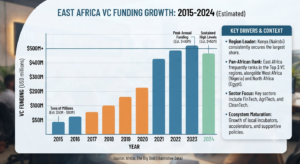
D. VC Investment Trends
Despite global economic shifts, Venture Capital (VC) flows into Africa have shown remarkable resilience.
6. Challenges and the Path Ahead
It is not all smooth sailing. For East Africa to truly become the “Silicon Valley” of the continent, it must overcome several hurdles.
- The Funding Gap: While total funding is up, most of it goes to “The Big Four” (Kenya, Nigeria, South Africa, Egypt). Smaller startups in Uganda or Tanzania still struggle to find seed capital.
- Fragmented Markets: Each country has different regulations, currencies, and languages. For a startup to scale across East Africa, it has to navigate a complex web of different laws.
- Brain Drain vs. Brain Gain: Many of Africa’s best developers are being hired by Google, Microsoft, or Amazon to work remotely or move abroad. While this brings in foreign currency, it can leave local startups short of senior talent.
- Infrastructure Beyond Cities: While Nairobi and Kigali have great internet, rural areas still lag. Bridging the “urban-rural digital divide” is crucial for inclusive growth.
7. The Future: AI, Blockchain, and Beyond
What does the next decade look like for East African tech?
- AI for Good: We are seeing AI being used to predict crop failures in Kenya and diagnose diseases in rural Uganda.
- Blockchain for Transparency: In countries where land titles can be disputed, blockchain is being explored as a way to create unchangeable digital records of property ownership.
- Electric Mobility: With high fuel prices, companies like BasiGo (electric buses) and Ampersand (electric motorbikes) are leading the transition to green energy in East African transport.
Conclusion: A Continent Redefined
The rise of East African tech hubs is more than just a business story; it’s a story of empowerment. By building their own “Silicon Valleys,” East African nations are taking control of their economic destinies. They are moving from being consumers of global technology to being creators of it.
Whether you are an investor looking for the next big market, a developer looking for inspiration, or a curious observer, one thing is clear: The future of tech is being written in East Africa.
Frequently Asked Questions (FAQ)
1. What is the “Silicon Savannah”?
The Silicon Savannah is a nickname for the technology ecosystem in and around Nairobi, Kenya. It highlights the region’s status as a major hub for innovation and startup growth.
2. Which East African country is best for startups?
Kenya currently has the most mature ecosystem with the most funding. However, Rwanda is often rated the best for “ease of doing business” due to its streamlined government processes.
3. Is it safe to invest in East African tech?
While all venture capital carries risk, the East African market has shown high growth potential. Many international firms, including SoftBank and Tiger Global, have begun investing in the region.
4. What is the most successful tech sector in East Africa?
Fintech (Financial Technology) is the clear leader, driven by the widespread use of mobile money. Other strong sectors include Agritech, Healthtech, and Green Energy.
5. How can I get involved in the East African tech scene?
Networking is key. Attending events like the Africa Tech Summit (Nairobi) or the Norrsken Impact Week (Kigali) are great ways to meet founders and investors.
About the Author