Meta Description: Discover how the new wave of East African fintech startups is moving beyond M-Pesa to revolutionize digital banking, wealth management, cross-border payments, and B2B finance.
For over fifteen years, the story of African financial technology (fintech) has been dominated by one household name: M-Pesa. Launched in Kenya in 2007 by Safaricom, this pioneering mobile money service completely changed how an entire region interacted with money. It turned basic mobile phones into digital wallets, allowed millions of unbanked people to send cash instantly, and laid the groundwork for Kenya to become the “Silicon Savannah.”
But today, a massive shift is happening. While M-Pesa remains a powerful force, the East African fintech ecosystem has outgrown its origin story.
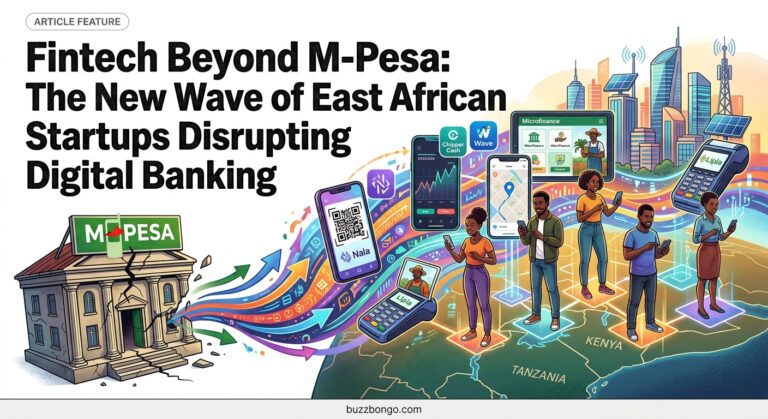
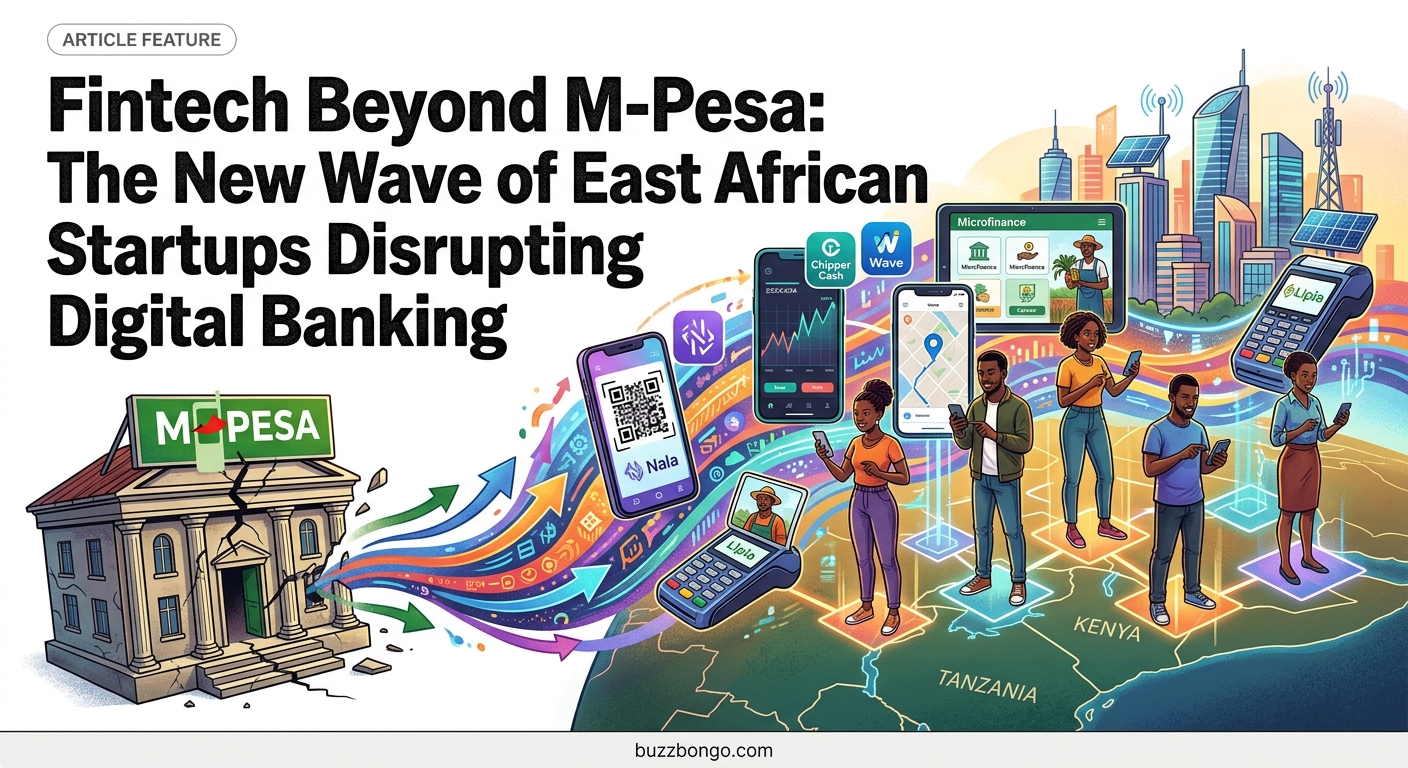
A dynamic, ambitious new wave of startups is rising across Kenya, Uganda, Tanzania, and Rwanda. These platforms are not just copying the old mobile money transfer model. Instead, they are building advanced digital banking platforms, open-source financial APIs, borderless remittance networks, and micro-investment apps. They are taking East Africa from the era of simple mobile wallets straight into the future of integrated digital banking.
In this deep dive, we will explore this exciting evolution. We will look at why this change is happening now, meet the startups leading the charge, explore the new technologies they are using, and discuss what this means for the future of money in East Africa.
1. The Foundation: How M-Pesa Created the Blueprint
To understand where East African fintech is going, we must first look at where it started.
Before 2007, traditional banking in East Africa was out of reach for the majority of the population. Opening a bank account required physical paperwork, a steady salary, travel to a city center, and high maintenance fees. As a result, millions of people kept their savings in cash or under the mattress, or relied on informal and unsafe transport networks to send money to family in rural areas.
M-Pesa solved this problem beautifully by using USSD technology (the simple text-based menus that work on any basic mobile phone). By partnering with local shopkeepers to act as “agents” where people could trade physical cash for digital currency, Safaricom created a massive, decentralized network of human ATMs.
[Physical Cash] <---> [Local Agent Shop] <---> [Digital Mobile Wallet (M-Pesa)]
This model was incredibly successful. Today, over 90% of Kenyan households use mobile money.
The Limitations of First-Generation Mobile Money
Despite its massive success, traditional mobile money has limitations:
- High Transaction Costs: Sending and withdrawing money through mobile networks can still be expensive, especially for small micro-transactions.
- Basic Financial Services: Traditional mobile money was designed for peer-to-peer (P2P) transfers and simple bill payments. It was not built to help users grow their wealth, invest in stocks, or access complex business loans.
- Closed Ecosystems: Historically, mobile money networks did not easily communicate with one another. Sending money from a Safaricom line in Kenya to an MTN line in Uganda was a complex and expensive task.
- Lack of True Digital Banking: Mobile money is a digital wallet, not a bank. It does not offer yield-earning savings accounts, credit cards, or sophisticated budgeting tools.
These gaps created a massive opportunity for a new group of tech entrepreneurs.
2. The Shift to Smart Digital Banking: Why Now?
Several factors have come together to trigger the current explosion of new fintech startups in East Africa.
  ┌─────────────────────────────────────────────────────────┐
  │              DRIVERS OF THE NEW FINTECH WAVE             │
  └────────────────────────────┬────────────────────────────┘
                               │
         ┌─────────────────────┼─────────────────────┐
         ▼                     ▼                     ▼
┌─────────────────┐   ┌─────────────────┐   ┌─────────────────┐
│   Smartphone    │   │  A Tech-Savvy,  │   │   Progressive   │
│   Penetration   │   │ Young Population│   │   Regulation    │
└─────────────────┘   └─────────────────┘   └─────────────────┘
A. Rapid Smartphone Penetration
While the first wave of fintech relied on basic brick-like phones, the present and future belong to the smartphone. Thanks to affordable devices from brands like Tecno, Infinix, and Xiaomi, along with innovative “pay-as-you-go” smartphone financing models (like M-KOPA), millions of East Africans now have internet access in the palm of their hands. This allows for rich, app-based bank accounts rather than text-only USSD menus.
B. A Tech-Savvy, Young Population
East Africa has one of the youngest populations in the world. The average age in the region is under 20. This new generation—often referred to as digital natives—does not want to stand in long lines at physical banks. They expect their financial services to look and feel like social media: fast, intuitive, cheap, and accessible on their phones.
C. Regulatory Shifts and Open Banking
Regulators in East Africa, particularly the Central Bank of Kenya (CBK) and the National Bank of Rwanda, have become much more supportive of technology. Through sandbox programs (which let startups test new ideas under regulatory supervision) and the push for interoperability (the ability for different financial systems to work together), the regulatory landscape is opening up.
This has paved the way for “Open Banking”—a system where secure financial data can be shared between banks and fintech apps via APIs (Application Programming Interfaces), allowing for more customized financial services.
3. Key Verticals of the New Wave
The new wave of East African fintech startups is organizing around several key areas that go far beyond simple money transfers. Let’s look at these major sectors.
Vertical A: Neo-banking and Digital-First Banking
Neo-banks are banks that operate entirely online without physical branches. They target young consumers and small business owners who want complete control over their money from a single mobile app.
Unlike traditional banks, which charge monthly maintenance fees, neo-banks usually offer free basic accounts, automated budgeting tools, instant virtual debit cards, and higher interest rates on savings.
Vertical B: Cross-Border Payments and Remittances
For a long time, sending money across African borders was slower and more expensive than sending money to another continent. Startups in this space are using modern routing networks and blockchain technology to make cross-border payments instant and affordable.
This is highly beneficial for the thousands of traders who buy and sell goods across borders (e.g., between Uganda, Kenya, and Rwanda) every day.
Vertical C: Wealthtech and Micro-Investing
In the past, investing in government bonds, local stock markets, or global shares was reserved for the wealthy. Wealthtech (wealth technology) startups are changing this by breaking down investments into small, affordable fractions.
Now, anyone with a smartphone can start investing with as little as $1.
Vertical D: B2B Merchant Commerce and Embedded Finance
Small and medium enterprises (SMEs) make up the backbone of East Africa’s economy, yet they are ignored by traditional banks. New startups are building specialized tools to help informal retailers manage their stock, accept digital payments, and get short-term loans based on their sales data.
4. Case Studies: The Startups Leading the Disruption
To appreciate how these verticals work in the real world, let us look at some of the key startups that are successfully challenging the status quo.
| Startup | Core Focus | Key Innovation | Target Audience |
|---|---|---|---|
| Nala | Cross-Border Payments | Low-cost, instant international money transfers and business payments | African diaspora & businesses |
| Fingo | Neo-banking | WhatsApp-integrated, youth-centric digital banking | Gen Z & young professionals |
| Ndovu | Wealthtech | Micro-investing in local and global funds | Everyday savers & retail investors |
| Lipa Later | BNPL (Consumer Credit) | Structured installment payments at checkout | Retail consumers & merchants |
| Zanifu | B2B Merchant Finance | Inventory micro-loans based on sales data | Informal retailers (Dukas) |
Nala: Reimagining Cross-Border Payments
Many international money transfer services charge high fees and offer poor exchange rates to Africans abroad who want to send money home.
Nala, a Tanzanian-founded fintech, began as a simple offline personal finance app but has since expanded into a powerful cross-border payment platform. Nala allows the African diaspora in the US, UK, and Europe to send money to East Africa instantly and cheaply.
[Diaspora Sender (UK/US)] ──(Nala App)──> [Direct to Mobile Wallet / Bank in East Africa (Instant)]
Recently, they launched Nala for Business, allowing global companies to pay their African partners and workers easily. By bypassing regular banking networks, Nala significantly reduces transaction costs and processing times.
Fingo: Kenya’s Digital Bank for the Youth
While traditional banks struggle to attract young users, Fingo has designed an app specifically for them. Partnering with Ecobank (one of Africa’s largest banking networks), Fingo launched Kenya’s first true youth-focused neo-bank.
Fingo allows users to open a bank account in under five minutes. The app makes sending money social and interactive, allowing users to send links via WhatsApp to request payments, set up automated savings goals (“chamas” or group savings), and access instant cash rewards.
Ndovu: Democratizing Wealth Management
Historically, if you wanted to invest in high-yield funds in Kenya, you needed a large sum of starting capital and had to fill out endless paperwork.
Ndovu is an investment platform that makes wealth creation accessible to everyone. Users take a quick quiz to determine their financial goals and risk tolerance. Ndovu’s smart technology then automatically builds a diversified portfolio of local and global investments, such as US stocks and local treasury bills.
By allowing investments of just a few dollars, Ndovu is shifting the conversation in East Africa from simply saving money to actively investing it.
Lipa Later: The Rise of Buy Now, Pay Later (BNPL)
Access to credit is one of the biggest economic challenges in East Africa. Most people do not have formal credit scores, making it nearly impossible to get a credit card from a bank.
Lipa Later has solved this by introducing the “Buy Now, Pay Later” (BNPL) model to East Africa. They partner with major retail brands (like Samsung, Apple, and local supermarkets) to allow consumers to buy products and pay for them in monthly installments.
Using their own data-scoring systems, Lipa Later can assess a buyer’s creditworthiness in real-time at the checkout counter, giving thousands of people access to essential household goods and electronics.
Zanifu: Financing the Corner Shop
In Kenya, small neighborhood retail shops are known as dukas. These informal shops distribute over 80% of consumer goods, yet they regularly run out of stock because they lack the cash to buy inventory.
Zanifu addresses this problem by offering micro-loans specifically to dry-goods retailers. The startup integrates with wholesale distributors to see how much stock a shopkeeper regularly buys. Using this information, Zanifu provides short-term inventory financing.
Instead of receiving physical cash, the shopkeeper gets stock delivered to their store, and they pay Zanifu back as they sell the goods to their customers.
5. Challenges Facing the New Wave
The future looks bright for East African fintech, but the road ahead is not without obstacles. Startups in this region face several unique challenges.
                  CHALLENGES FOR THE NEW WAVE
                               │
       ┌───────────────────────┼───────────────────────┐
       ▼                       ▼                       ▼
┌──────────────┐        ┌──────────────┐        ┌──────────────┐
│  Regulatory  │        │ Funding and  │        │ Trust & Cash │
│ Fragmentation│        │ Market Size  │        │  Dominance   │
└──────────────┘        └──────────────┘        └──────────────┘
Challenge 1: Regulatory Fragmentation
Even though the East African Community (EAC) is working toward economic integration, each country still has its own financial regulator, licensing laws, and compliance standards.
A fintech startup that is licensed and thriving in Kenya cannot simply launch in Uganda or Tanzania. They must apply for brand-new licenses, build new banking partnerships, and adapt to different local laws. This makes scaling across borders a slow and expensive process.
Challenge 2: The Global Funding Winter
Between 2020 and 2022, African tech startups raised record-breaking amounts of venture capital. However, global economic shifts have caused investors to scale back, leading to a “funding winter.”
Startups can no longer rely on endless rounds of venture capital to fund cash-burning growth. Today, newer startups must prove they can make a profit early on, which forces them to build sustainable business models from day one.
Challenge 3: Trust and the Dominance of Cash
Despite high mobile money usage, physical cash remains the king of transactions in many parts of East Africa, particularly in rural markets.
Furthermore, because of a rise in online scams and digital lending apps that charge high fees, many users remain skeptical of unfamiliar digital platforms. Building deep, long-term trust with consumers is a hurdle that new startups must overcome.
6. What Lies Ahead: The Future of East African Digital Banking
What does the future hold for fintech in East Africa? We can expect several exciting trends to shape the next decade of digital banking.
       ┌────────────────────────────────────────────────────────┐
       │              FUTURE TRENDS (NEXT 5-10 YEARS)           │
       └───────────────────────────┬────────────────────────────┘
                                   │
         ┌─────────────────────────┼─────────────────────────┐
         ▼                         ▼                         ▼
┌─────────────────┐       ┌─────────────────┐       ┌─────────────────┐
│ AI-Powered      │       │ Blockchain &    │       │ Interoperable   │
│ Credit Scoring  │       │ Stablecoins     │       │ Pan-African Pay │
└─────────────────┘       └─────────────────┘       └─────────────────┘
A. AI-Powered Alternative Credit Scoring
As artificial intelligence (AI) continues to progress, digital banking apps will use machine learning to look at alternative data points.
If a user does not have a traditional credit history, an AI model can analyze their utility bill payments, mobile data purchases, and business sales records to create a highly accurate personal credit score. This will unlock credit for millions of previously ignored individuals.
B. Stablecoins and Blockchain for Borderless Trade
While speculative cryptocurrencies remain controversial, stablecoins (digital currencies pegged to stable assets like the US Dollar) are gaining traction.
Startups are exploring stablecoins as a tool to bypass expensive foreign exchange markets. This will make it much easier for an entrepreneur in Kigali to import goods from Nairobi without worrying about currency conversion fees and slow bank settlements.
C. The Pan-African Payment and Settlement System (PAPSS)
The African Union has introduced PAPSS, an initiative designed to simplify instant cross-border payments in local currencies across the entire continent.
As more banks and fintechs connect to this network, the cost of sending money across African borders will drop dramatically. This will open up a massive consumer market for East African startups.
Conclusion
The story of fintech in East Africa is evolving. The region has successfully transitioned from the pioneer era of M-Pesa to a vibrant ecosystem filled with specialized, user-focused digital financial services.
Today’s startups are not trying to replace M-Pesa; instead, they are building on the digital foundation it created. By offering accessible investing, borderless money transfers, and digital banking built for the next generation, these startups are showing the world what the future of finance looks like.
For consumers, businesses, and global investors, one thing is clear: the East African fintech ecosystem is just getting started.
About the Author