East Africa is quickly becoming one of the world’s most exciting technology hubs. Across the region, young innovators are building digital tools to solve everyday challenges, from farming and banking to healthcare and transport.
When people talk about technology in Africa, two East African nations always stand at the very top of the list: Kenya and Rwanda.
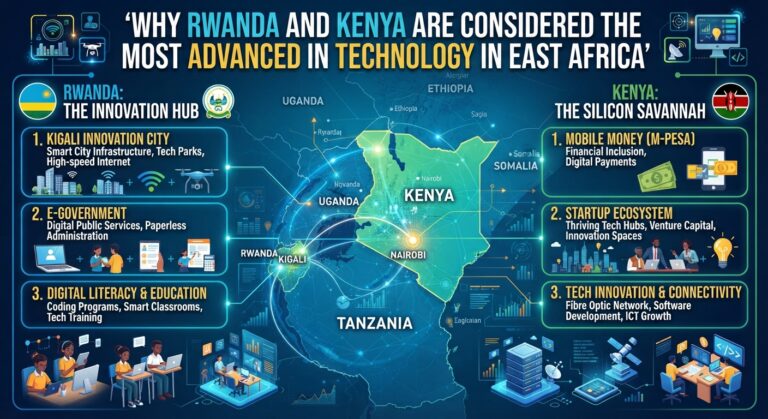
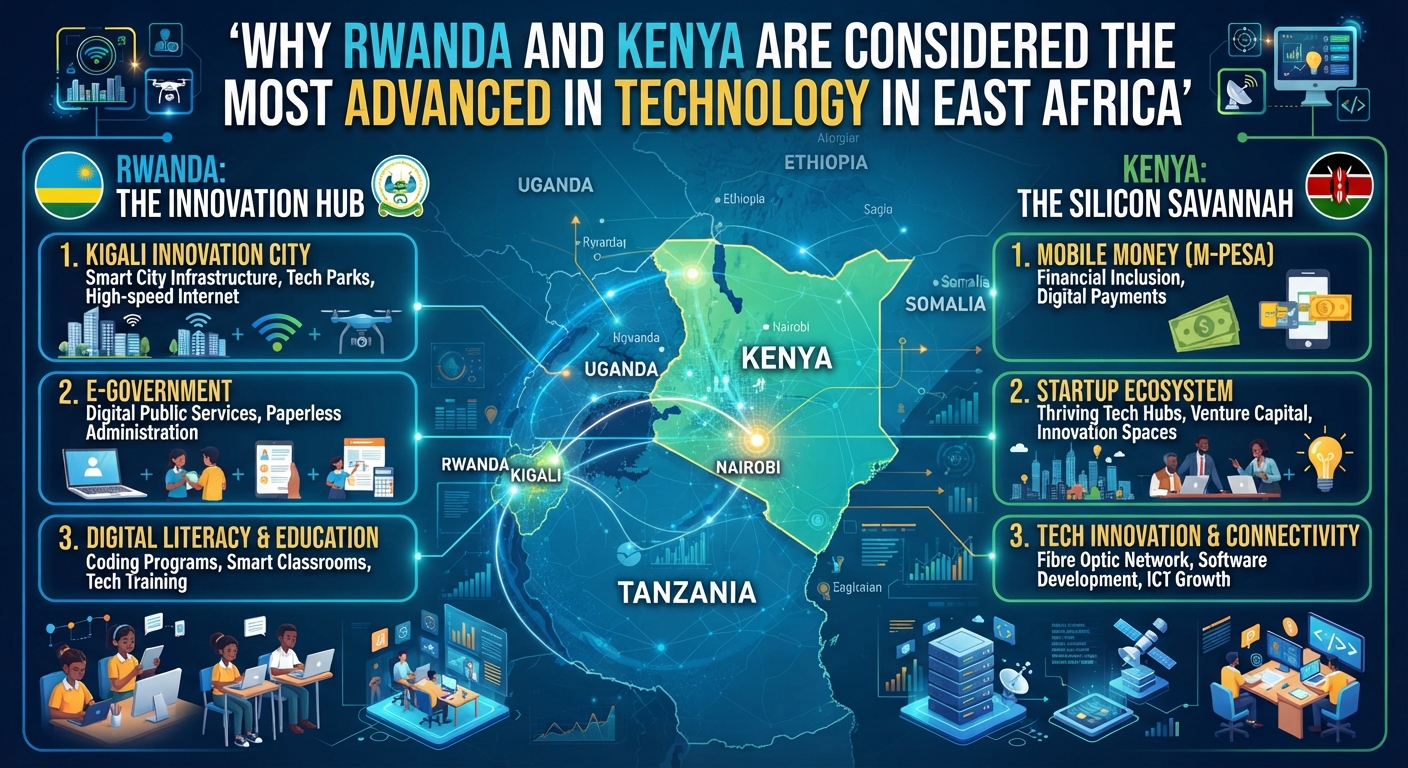
While both countries took different paths toward technological transformation, they have both achieved remarkable results. Kenya is famous for its massive startup ecosystem and digital payment revolution. Rwanda is world-renowned for its forward-thinking government policies, smart cities, and use of cutting-edge technologies such as delivery drones.
In this long-form post, we will explore why Kenya and Rwanda lead East Africa in technology, looking closely at their infrastructure, government policies, famous startups, and real-world statistical data.
1. Introduction: The Tech Revolution in East Africa
For decades, many people viewed Africa primarily as a consumer of global technology. Today, that story has completely changed. East Africa is now a producer of technology, creating digital solutions that the rest of the world studies and copies.
According to reports by Partech Africa, the African continent attracts billions of dollars in venture capital funding every year. A large portion of this investment lands in East Africa. Within this region, Kenya acts as the economic and financial tech engine, while Rwanda operates as the ultimate testing ground and innovation lab for future-focused ideas.
Together, these two countries are proving that digital infrastructure, smart policy, and youthful energy can transform a nation’s economy in a single generation.
2. Kenya: The “Silicon Savannah” of Africa
Kenya earned the nickname “Silicon Savannah” for a good reason. It is the birthplace of some of the most famous technological advancements on the continent. Nairobi, Kenya’s capital city, stands alongside Lagos (Nigeria), Cape Town (South Africa), and Cairo (Egypt) as one of the “Big Four” tech destinations in Africa.
       KENYA'S TECH FLYWHEEL

  +-------------------------------+
  |   High Mobile Internet Access |
  +---------------+---------------+
                  |
                  v
  +-------------------------------+
  |   M-Pesa Financial Inclusion  |
  +---------------+---------------+
                  |
                  v
  +-------------------------------+
  | Venture Capital & Startup Hubs|
  +---------------+---------------+
                  |
                  v
  +-------------------------------+
  | Major Infrastructure Projects |
  |      (Konza Technopolis)      |
  +-------------------------------+
A. The Mobile Money Revolution: M-Pesa
You cannot discuss technology in Kenya without talking about M-Pesa. Launched in 2007 by telecommunications giant Safaricom in partnership with Vodafone, M-Pesa completely changed how people handle money.
Before M-Pesa, millions of Kenyans had no bank accounts. Opening a traditional bank account required paperwork, formal employment, and physical travel to a bank branch. M-Pesa changed everything by allowing people to send, receive, and store money using simple text messages on basic mobile phones.
Key Statistics & Facts:
- Over 90% of Kenya’s adult population uses mobile money today.
- M-Pesa processes billions of transactions every year, handling an amount equivalent to roughly half of Kenya’s entire Gross Domestic Product (GDP).
- Financial inclusion in Kenya jumped from less than 27% in 2006 to over 83% today, largely due to mobile finance.
Because of M-Pesa, Kenya became a cashless leader long before many developed nations adopted digital wallets. Today, everyday Kenyans use mobile phones to buy groceries, pay school fees, purchase electricity, and pay for taxi rides.
B. World-Class Startup Hubs and Support Systems
Kenya’s tech success is heavily powered by its local ecosystem of incubators, co-working spaces, and tech hubs.
The most famous of these is iHub, founded in Nairobi in 2010. iHub provided an open space where programmers, designers, researchers, and investors could meet, collaborate, and build companies. Since then, dozens of tech spaces have popped up across Nairobi, particularly in the Kilimani and Westlands neighborhoods.
Famous Kenyan Tech Companies:
- Twiga Foods: A digital platform that connects small-scale farmers directly to urban shopkeepers, removing middlemen and reducing food waste.
- M-KOPA: A solar energy and financial technology company that allows low-income families to access off-grid solar power through pay-as-you-go micro-payments.
- Wasoko (formerly Sokowatch): A platform that transforms informal retail supply chains using mobile ordering and delivery networks.
- Cellulant: A leading payments company connecting businesses and consumers across multiple African countries.
In recent years, Kenyan startups have consistently raised hundreds of millions of dollars annually from global investors in North America, Europe, and Asia.
C. Major Infrastructure & Government Projects
Kenya’s leadership in technology is supported by strong digital infrastructure.
- Undersea Fiber Optic Cables: Early investment in subsea internet cables (such as TEAMS, SEACOM, and LION2) brought high-speed broadband internet to Kenya much earlier than many neighboring nations.
- Konza Technopolis: Often called the real-life Silicon Savannah, Konza Technopolis is a smart city project located about 60 kilometers south of Nairobi. This $14-billion flagship government project aims to host technology universities, data centers, software development firms, and light manufacturing plants.
- Data Protection & Regulations: Kenya passed the Data Protection Act in 2019, giving individuals control over their personal data and providing clear legal frameworks for international tech companies to operate safely within the country.
3. Rwanda: The Strategic Tech Pioneer and Proof-of-Concept Hub
While Kenya’s growth was largely market-driven and powered by private startups, Rwanda’s technological rise is driven by deliberate, top-down government vision.
After the devastating 1994 Genocide against the Tutsi, Rwanda made a firm decision: because the country is landlocked and lacks vast mineral reserves like some of its neighbors, its future economy must be built on knowledge, services, and technology.
                RWANDA'S STRATEGIC APPROACH

  +---------------------------------------------------+
  |  Clear Vision 2050 & Government Leadership        |
  +-------------------------+-------------------------+
                            |
                            v
  +---------------------------------------------------+
  |  E-Government Transformation (Irembo Platform)    |
  +-------------------------+-------------------------+
                            |
                            v
  +---------------------------------------------------+
  |  Real-World Tech Deployment (Zipline Medical Drones) |
  +-------------------------+-------------------------+
                            |
                            v
  +---------------------------------------------------+
  |  Kigali Innovation City & Global Ecosystem Partnerships |
  +---------------------------------------------------+
A. Clear National Policy: Vision 2050 and Smart Rwanda
Under the direction of its leadership, the Rwandan government established clear blueprints like the National Information and Communication Infrastructure (NICI) Plans and the Smart Rwanda Master Plan.
The country set out to build a digital nation, investing heavily in laying fiber-optic cables along every main road in the country. Today, high-speed 4G internet covers over 95% of Rwanda’s population, and tests for 5G deployment are already underway.
B. Digitizing Government Services: The Irembo Platform
In many countries, renewing a driver’s license, applying for a birth certificate, or paying land taxes requires long lines and physical paperwork. Rwanda solved this problem with Irembo.
Irembo is a centralized public services portal. Citizens can access more than 100 government services online using a smartphone or a basic feature phone via USSD codes.
Why Irembo Matters:
- It eliminates public administrative corruption by removing cash payments to officials.
- It saves citizens millions of hours of travel and waiting time.
- It sets an example of standard digital administration for the entire African continent.
C. A Living Lab for Future Tech: Drones and HealthTech
Rwanda has positioned itself as Africa’s “Proof-of-Concept Hub.” If an entrepreneur has an innovative technology idea that requires flexible laws to test, Rwanda invites them to test it there.
The best example of this is Zipline, an American robotics and drone delivery company.
When Zipline wanted to test autonomous drones to deliver blood supplies and critical medicines to remote rural hospitals, Rwanda offered the perfect regulatory environment.
- The Result: Zipline launched its first operational base in Muhanga, Rwanda, in 2016.
- The Impact: Today, Zipline drones make thousands of emergency autonomous flights every month across Rwanda, delivering life-saving blood, vaccines, and medical supplies in minutes instead of hours.
- Global Scale: After proving their business model in Rwanda, Zipline expanded to Ghana, Nigeria, Japan, and the United States.
D. Kigali Innovation City and Norrsken House
Rwanda is actively building physical and educational spaces to develop technological talent:
- Kigali Innovation City (KIC): A $300-million flagship project designed to hold universities, technology companies, biotech firms, and commercial real estate in Kigali.
- World-Class Higher Education: Rwanda convinced premier international institutions to open campuses in Kigali. These include Carnegie Mellon University Africa (CMU-Africa), which trains engineers in artificial intelligence, cybersecurity, and software engineering.
- Norrsken House Kigali: Built by Sweden’s Norrsken Foundation, Norrsken House Kigali is Africa’s largest hub for tech startups and social entrepreneurs, housing hundreds of tech founders under one roof.
4. Comparing the Two Giants: How Kenya and Rwanda Complement Each Other
While Kenya and Rwanda are both tech leaders, their strengths and approaches are quite distinct. Rather than direct competitors, they act as complementary models for the region.
| Feature / Metric | Kenya | Rwanda |
|---|---|---|
| Primary Driver | Private sector, active venture capital, huge market size | Government strategy, clear laws, fast policy implementation |
| Tech Nickname | Silicon Savannah | Living Lab / Proof-of-Concept Hub |
| Capital City Hub | Nairobi (Massive market, high private enterprise) | Kigali (Clean, highly organized, secure test market) |
| Famous Sector Leadership | Mobile money (FinTech), AgriTech, Supply Chain | E-Government, HealthTech, Drones, Smart City Logistics |
| Venture Capital Investment | High (Top 4 in Africa) | Medium (Growing rapidly, focusing on seed-stage innovation) |
| Business Environment Strategy | High consumer demand, strong local developer community | Streamlined business setup (Register a business in hours) |
Simple Analogy:
- Kenya is like California: Driven by market demand, fast-moving venture capital, massive consumer bases, and highly competitive startups.
- Rwanda is like Singapore: Clean, efficient, driven by government planning, exceptionally organized, and built as a regional test site for high-tech tools.
5. Shared Strengths Driving Both Nations Forward
Despite their differences, Kenya and Rwanda share several critical factors that have enabled them to outperform other East African neighbors like Tanzania, Uganda, Burundi, and South Sudan in technology adoption.
1. Youthful and Mobile-First Populations
In both Kenya and Rwanda, the average age of a citizen is under 20 years old. These young people grew up with mobile phones in their hands. They adapt quickly to mobile apps, online shopping, and digital payments, creating a ready market for tech products.
2. High Mobile and Internet Penetration
Both countries prioritized mobile network infrastructure. Smartphone prices have dropped significantly over the past ten years, allowing low-income families in rural areas to connect to high-speed mobile internet networks.
3. Progressive EAC (East African Community) Policies
Both nations belong to the East African Community (EAC). They have worked together to implement policies like the One Network Area, which dramatically reduced mobile roaming charges between Kenya, Rwanda, Uganda, and South Sudan. This makes cross-border tech business and communication seamless.
6. Challenges Standing in the Way
While Kenya and Rwanda lead East Africa in tech, their journey is not without significant obstacles. To maintain their positions, both countries must navigate several persistent challenges:
A. Digital Divide Between Cities and Rural Areas
While Nairobi and Kigali enjoy 4G/5G connections and high digital literacy, rural farmers in remote regions sometimes struggle with basic connectivity, expensive internet hardware, and low digital literacy skills.
B. Access to Early-Stage Capital
Although Kenya raises vast amounts of foreign investment, a large percentage of this venture capital historically went to foreign founders living in Kenya rather than native African entrepreneurs. In Rwanda, local startup funding is growing, but early-stage capital remains relatively limited compared to larger markets.
C. Brain Drain and Talent Retention
As software developers in Nairobi and Kigali grow more skilled, global tech companies in North America and Europe often hire them remotely or relocate them abroad. Keeping top-tier technical talent working on local problems is a constant challenge.
7. The Future: What Lies Ahead for Tech in East Africa?
The future of technology in East Africa is exceptionally bright. As Artificial Intelligence (AI), green energy, and cross-border digital finance expand, Kenya and Rwanda are positioned to lead the next wave of global innovation.
                  FUTURE HORIZONS

    KENYA                           RWANDA
  +-----------------------+       +-----------------------+
  | - AI-Driven FinTech   |       | - AI Research Labs    |
  | - Green Tech & EV     |       | - Electric Transport  |
  | - Global IT Outsourcing|      | - Regional Data Hubs  |
  +-----------------------+       +-----------------------+
Future Tech Trends in Kenya:
- Electric Mobility (EVs): Nairobi is witnessing a rapid rise in electric motorcycle and bus companies like BasiGo and Roam, aimed at making public transport green and cheap.
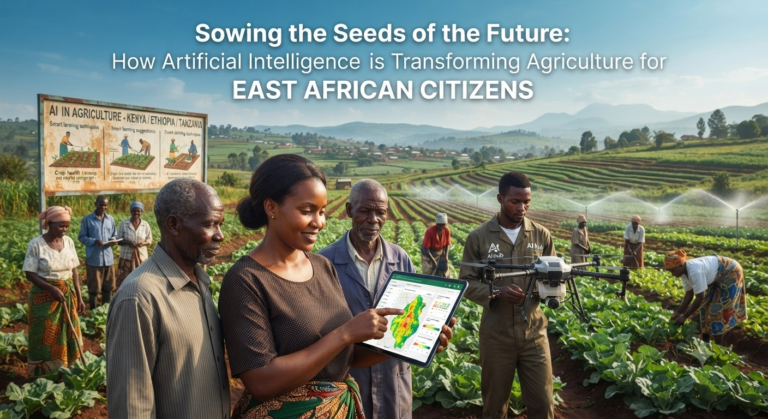
- AI in Agriculture: Startups are integrating machine learning into mobile apps to help farmers spot crop diseases using phone photos and forecast weather trends accurately.
- FinTech Integration: Moving beyond basic payments into cross-border trade, crypto assets, micro-insurance, and digital stock markets.
Future Tech Trends in Rwanda:
- Green and Smart Cities: Rwanda is implementing electric public transit systems and designing green infrastructure projects across secondary cities.
- Center for the Fourth Industrial Revolution (C4IR): In partnership with the World Economic Forum, Rwanda established the C4IR to focus on practical policies for artificial intelligence, machine learning, and data governance.
- Health Tech Ecosystems: Expanding drone networks and AI diagnostic tools across all district hospitals nationwide.
8. Conclusion
Kenya and Rwanda are considered the most advanced countries in technology in East Africa because they have mastered two essential ingredients: Innovation and Execution.
- Kenya showed the world what happens when you give creative entrepreneurs high-speed internet, mobile payments, and access to capital. It built a self-sustaining digital economy that powers millions of small businesses every single day.
- Rwanda showed the world what happens when a visionary government builds forward-thinking regulations, prioritizes digital infrastructure, and turns an entire country into a welcoming lab for futuristic tools.
Together, the Silicon Savannah of Kenya and the Innovation Hub of Rwanda are proving that East Africa is not just catching up to the global tech ecosystem—it is actively showing the rest of the world where the future is headed.
What Do You Think?
Do you think other East African countries like Tanzania or Uganda will catch up soon? Which tech innovation from East Africa has inspired you the most? Share your thoughts in the comments below!
About the Author