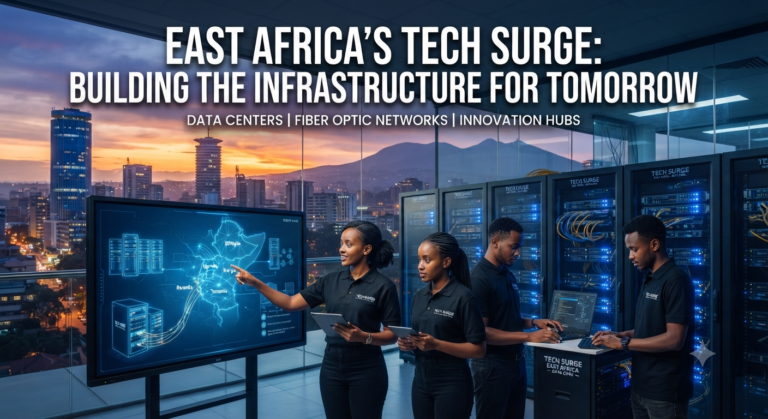
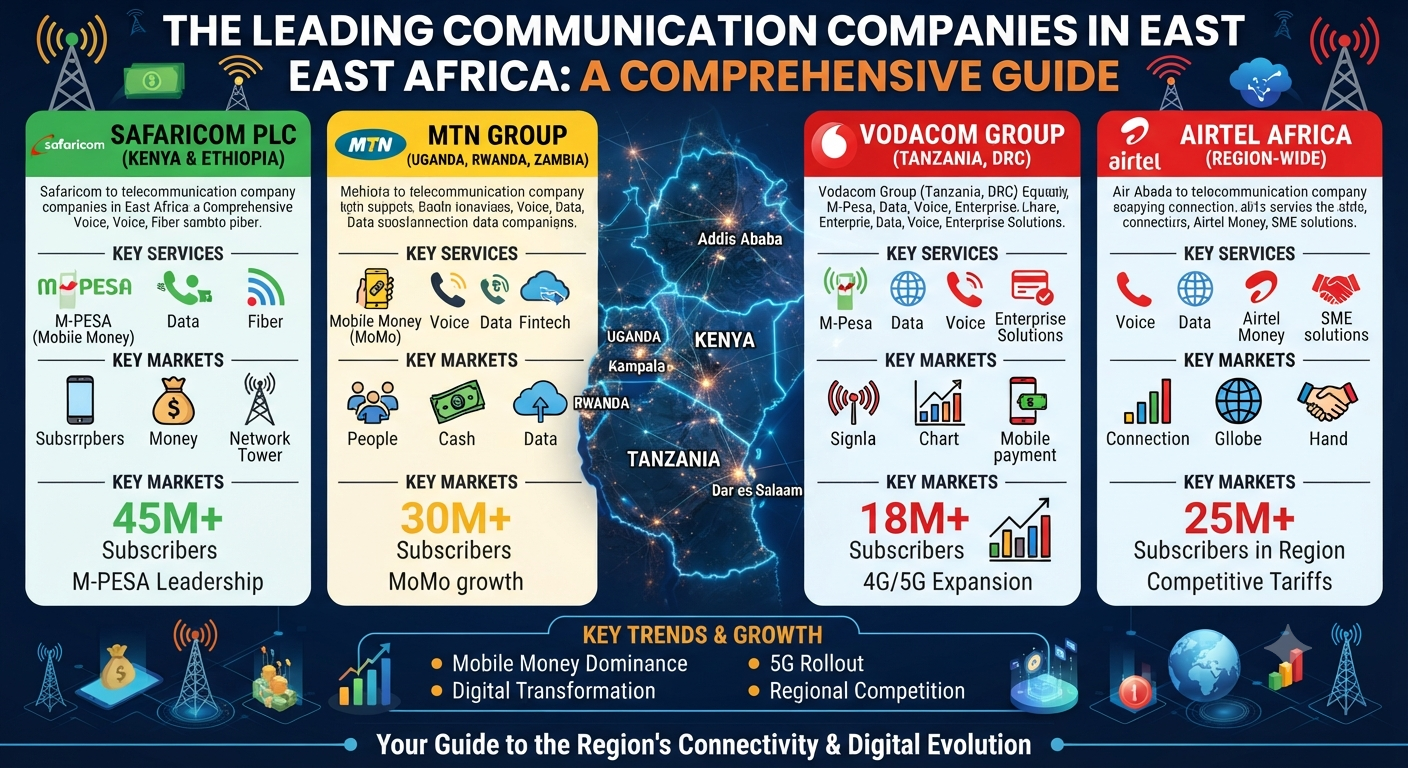
East Africa has experienced remarkable growth in its communication sector over the past two decades. From basic mobile phone connectivity to widespread 4G and emerging 5G networks, the region has transformed into one of Africa’s most dynamic telecommunications markets.
If you are a business owner, investor, or simply curious about how East Africa stays connected, understanding the key players in this space is essential. In this comprehensive guide, we will walk you through the leading communication companies operating in East Africa — who they are, what they offer, and why they matter.
Let’s dive in.
1. Overview of East Africa’s Communication Landscape
East Africa typically includes countries such as Kenya, Uganda, Tanzania, Rwanda, Burundi, South Sudan, and Ethiopia. Together, these nations represent a combined population of over 300 million people — a massive market for communication services.
The communication sector in this region includes:
- Mobile network operators (MNOs) — companies providing cellular connectivity
- Internet service providers (ISPs) — companies offering broadband and fiber connections
- Fixed-line operators — traditional telephone service providers
- Technology and infrastructure companies — firms building the backbone of communication networks
Over the last 10 years, mobile phone penetration in East Africa has grown from roughly 40% to over 80% in some countries. This explosive growth has created a competitive environment where several major companies vie for market share.
2. Why East Africa’s Telecom Sector Matters
Before we look at individual companies, it is important to understand why this sector is so significant.
Economic Impact: The telecom sector contributes billions of dollars to East Africa’s GDP. In Kenya alone, the ICT sector contributes approximately 8–10% of the national GDP, according to the Kenya National Bureau of Statistics (KNBS).
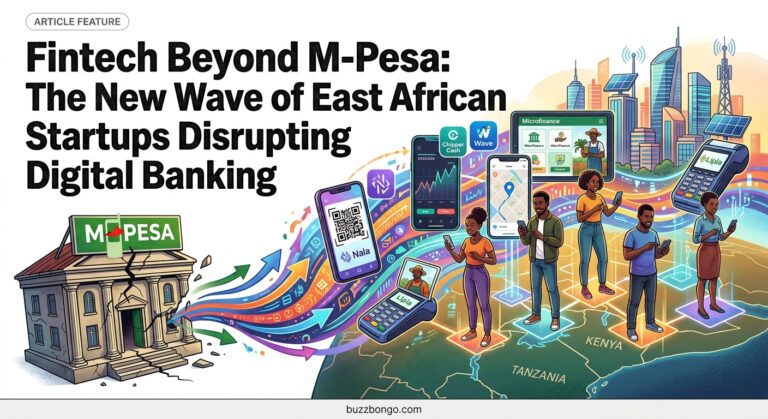
Financial Inclusion: Mobile money platforms like M-Pesa have brought millions of previously unbanked people into the financial system. The World Bank’s Global Findex Database highlights East Africa as a global leader in mobile money adoption.
Employment: The sector directly and indirectly employs hundreds of thousands of people across the region, from network engineers to retail agents.
Digital Transformation: Communication companies are the foundation upon which e-commerce, telemedicine, online education, and remote work are built — all critical pillars of modern development.
3. The Leading Communication Companies in East Africa
Now, let’s examine the major players in detail.
3.1 Safaricom
Headquarters: Nairobi, Kenya Website: www.safaricom.co.ke Founded: 1997
Who They Are
Safaricom is arguably the most well-known communication company in East Africa and one of the most profitable companies on the entire African continent. It is listed on the Nairobi Securities Exchange and is majority-owned by the Kenyan government (35%) and Vodacom/Vodafone (approximately 35%).
What They Offer
- Mobile voice and data services
- 4G and expanding 5G connectivity
- M-Pesa — the revolutionary mobile money platform
- Fiber-to-the-home (FTTH) internet
- Enterprise and cloud solutions
- IoT (Internet of Things) services
Why They Stand Out
Safaricom’s dominance in Kenya is unparalleled. With over 40 million subscribers in Kenya and its expansion into Ethiopia (through Safaricom Ethiopia), the company is the undisputed leader in the region. M-Pesa alone processes transactions worth billions of dollars annually.
Regional Presence
Safaricom operates primarily in Kenya but launched operations in Ethiopia in 2022 through a consortium, marking its biggest expansion move to date.
Useful Resource: Learn more about Safaricom’s financial performance at Safaricom Investor Relations.
3.2 MTN Group (MTN Uganda, MTN Rwanda, MTN South Sudan)
Headquarters: Johannesburg, South Africa (Group HQ) Regional Operations: Uganda, Rwanda, South Sudan, and recently licensed in other markets Website: www.mtn.com Founded: 1994
Who They Are
MTN Group is Africa’s largest mobile network operator by subscriber count. While headquartered in South Africa, MTN has a massive presence across East Africa through its subsidiaries in Uganda, Rwanda, and South Sudan.
What They Offer
- Mobile voice and SMS services
- 3G, 4G, and LTE data services
- MTN Mobile Money (MoMo) — a leading mobile financial service
- Broadband and fiber internet
- Enterprise communication solutions
Why They Stand Out
In Uganda, MTN is the market leader with over 15 million subscribers. The company has invested heavily in expanding network coverage to rural areas and is a key driver of mobile money adoption in the country. MTN Uganda was listed on the Uganda Securities Exchange in 2021, making it one of the largest IPOs in Ugandan history.
In Rwanda, MTN is one of two major operators and has played a significant role in expanding 4G coverage nationwide.
Regional Presence
- Uganda: Market leader
- Rwanda: Major operator
- South Sudan: Significant presence
Useful Resource: Visit the MTN Group Corporate Website for more details.
3.3 Airtel Africa (Airtel Kenya, Airtel Uganda, Airtel Tanzania, Airtel Rwanda)
Headquarters: Lagos, Nigeria (Group HQ) Regional Operations: Kenya, Uganda, Tanzania, Rwanda Website: www.airtel.africa Founded: 2010 (Africa operations restructured under Airtel Africa)
Who They Are
Airtel Africa is a subsidiary of Bharti Airtel, one of India’s largest telecommunications companies. Airtel has rapidly grown across East Africa and is a major competitor in nearly every market it operates in.
What They Offer
- Mobile voice and data services
- 3G, 4G, and emerging 5G connectivity
- Airtel Money — mobile money and financial services
- Fixed broadband services
- Enterprise and data center solutions
Why They Stand Out
Airtel is known for competitive pricing and aggressive data packages, making it popular among younger demographics. In Tanzania, Airtel is one of the leading operators, competing closely with Vodacom and Tigo (now merged). In Uganda, Airtel is the second-largest operator after MTN and has been growing rapidly. In Kenya, Airtel has gained market share by offering affordable data bundles and is gaining recognition for its 4G network expansion.
Regional Presence
- Kenya: Growing market share
- Uganda: Second-largest operator
- Tanzania: Major player
- Rwanda: Active competitor
Useful Resource: Visit Airtel Africa Investor Relations for financial and operational updates.
3.4 Telkom Kenya
Headquarters: Nairobi, Kenya Website: www.telkom.co.ke Founded: 1999 (privatized from the former Kenya Posts and Telecommunications Corporation)
Who They Are
Telkom Kenya is a state-owned enterprise that was partially privatized. The Kenyan government retains a majority stake, while the remainder is held by various investors. It is the third-largest mobile operator in Kenya after Safaricom and Airtel.
What They Offer
- Mobile voice and data services
- 3G and 4G connectivity
- Telkom M-Pesa (its own mobile money service, though less dominant)
- Fiber and broadband internet for homes and businesses
- Enterprise and managed IT services
- Fixed-line and broadband services
Why They Stand Out
Telkom Kenya holds a unique position because of its strong fixed-line heritage and fiber infrastructure. This makes it a preferred choice for many businesses that need reliable broadband and enterprise solutions. The company has also invested heavily in expanding its 4G network, particularly in underserved areas.
Regional Presence
Telkom Kenya primarily operates within Kenya but has partnerships and infrastructure reach that extend into neighboring countries.
Useful Resource: Check Telkom Kenya’s official site for service details and coverage maps.
3.5 Vodacom (Vodacom Tanzania)
Headquarters: Johannesburg, South Africa (Group HQ) Regional Operations: Tanzania (primary in East Africa) Website: www.vodacom.com Founded: 1994
Who They Are
Vodacom is another South African giant with significant operations in East Africa. Its most prominent presence in the region is in Tanzania, where it is one of the top two mobile operators.
What They Offer
- Mobile voice and data services
- 3G, 4G, and 5G connectivity
- M-Pesa Tanzania — mobile money (licensed from Safaricom)
- Fiber internet
- IoT and enterprise solutions
Why They Stand Out
Vodacom Tanzania is a market leader in the country and has been at the forefront of 4G and 5G rollout in Tanzania. The company’s partnership with Safaricom for M-Pesa technology has given it a strong advantage in the mobile money space.
Regional Presence
- Tanzania: Major operator and market leader
Useful Resource: Visit Vodacom Tanzania for more information.
3.6 Halotel (Viettel Tanzania)
Headquarters: Hanoi, Vietnam (Group HQ — Viettel Group) Regional Operations: Tanzania, Burundi Website: www.halotel.co.tz Founded: 2015 (Tanzania operations)
Who They Are
Halotel is the Tanzanian subsidiary of Viettel Group, Vietnam’s largest telecommunications company. It entered the Tanzanian market in 2015 and has grown rapidly by offering affordable services and extensive network coverage.
What They Offer
- Mobile voice and SMS services
- 3G and 4G data services
- Mobile money services
- Fiber broadband
- Enterprise solutions
Why They Stand Out
Halotel disrupted the Tanzanian market with extremely competitive pricing, making communication affordable for millions of people. The company has also invested heavily in rural network coverage, connecting communities that were previously underserved.
Regional Presence
- Tanzania: Growing market share
- Burundi: Active operations
Useful Resource: Visit Halotel Tanzania for service offerings.
3.7 Liquid Intelligent Technologies (Liquid Smart)
Headquarters: Johannesburg, South Africa (Group HQ) Regional Operations: Kenya, Uganda, Tanzania, Rwanda, and across the continent Website: www.liquid.tech Founded: 2005 (as Liquid Telecom)
Who They Are
Liquid Intelligent Technologies, formerly known as Liquid Telecom, is not a traditional mobile operator. Instead, it is a leading fiber and broadband infrastructure provider. It operates one of the largest independent fiber networks in Africa, spanning over 50,000 kilometers.
What They Offer
- Fiber-to-the-home (FTTH) internet
- Fiber-to-the-business (FTTB) solutions
- Wholesale and carrier services
- Data center services
- Cloud and cybersecurity solutions
- Satellite connectivity (through partnership with OneWeb/LEO)
Why They Stand Out
Liquid’s strength lies in its infrastructure. While mobile operators focus on wireless connectivity, Liquid builds the fiber backbone that much of East Africa’s internet traffic travels on. Their open-access model means other ISPs and operators can use their fiber infrastructure, making them a critical enabler of the entire communication ecosystem.
Regional Presence
Liquid has a presence in virtually every East African country and continues to expand its fiber network across the region.
Useful Resource: Explore their services at Liquid Intelligent Technologies.
3.8 Other Notable Players
While the above companies are the dominant forces, several other players deserve mention:
| Company | Country | Focus Area |
|---|---|---|
| Tingg (formerly KoryCell) | Various | Emerging connectivity solutions |
| Zuku (Wananchi Group) | Kenya | Fiber internet and TV |
| Jumia Technologies | Various | E-commerce enables digital communication |
| Surf Kenya | Kenya | Internet service provider |
| Smile Communications | Uganda, Tanzania, Kenya | 4G broadband |
| Kuza Fiber | Kenya | Fiber internet |
4. Key Services Offered by These Companies
Understanding the services offered by these communication companies can help you make informed decisions. Here is a breakdown:
4.1 Mobile Voice and SMS
This remains the core service of most operators. Voice calls and SMS are still widely used, particularly in rural areas where data connectivity may be limited.
4.2 Mobile Data and Internet
With the rise of smartphones, data services have become the fastest-growing revenue segment. Companies offer various data bundles — daily, weekly, and monthly — tailored to different usage levels.
4.3 Mobile Money and Financial Services
East Africa is the global pioneer of mobile money. Services like M-Pesa, MTN MoMo, and Airtel Money allow users to send money, pay bills, save, and even access loans — all from their phones.
4.4 Fiber Broadband
Fiber internet provides high-speed connectivity for homes and businesses. Companies like Liquid, Telkom Kenya, and Safaricom Home are leading providers of fiber-to-the-home (FTTH) services.
4.5 Enterprise Solutions
Businesses require dedicated communication solutions, including private networks, cloud services, data center hosting, and unified communications platforms. Companies like Liquid and Safaricom Enterprise specialize in this space.
4.6 IoT and Emerging Technologies
As the Internet of Things (IoT) grows, communication companies are developing solutions for smart agriculture, connected vehicles, smart cities, and more.
5. Mobile Money: East Africa’s Game Changer
No discussion of East African communication is complete without highlighting mobile money.
The Story of M-Pesa
Launched by Safaricom in Kenya in 2007, M-Pesa revolutionized financial services. The name “M-Pesa” derives from “M” (mobile) and “Pesa” (money in Swahili). Within a few years, M-Pesa had millions of users and fundamentally changed how money moves in East Africa.
Current State of Mobile Money
As of 2023–2024:
- Kenya has over 35 million active mobile money accounts (Central Bank of Kenya data)
- Tanzania leads in the total value of mobile money transactions
- Uganda has seen rapid growth through MTN MoMo and Airtel Money
- Rwanda has embraced mobile money as part of its digital transformation strategy
Why It Matters
Mobile money is not just a telecom service — it is a financial infrastructure. It enables:
- Remittances across borders
- Microloans and savings products
- Bill payments and merchant transactions
- Government disbursements and tax payments
Useful Resource: The GSMA’s State of the Industry Report on Mobile Money provides detailed statistics.
6. Challenges Facing the Communication Sector
Despite impressive growth, East Africa’s communication sector faces several challenges:
6.1 Infrastructure Gaps
Rural areas still lack adequate network coverage. While urban centers enjoy 4G and fiber connections, many rural communities have limited or no access to reliable communication services.
6.2 Regulatory Complexity
Each country in East Africa has its own regulatory framework. Navigating different licensing requirements, spectrum allocations, and compliance rules can be challenging for companies operating across borders.
6.3 Affordability
While prices have dropped significantly, data and device costs remain prohibitive for many low-income populations. According to the Alliance for Affordable Internet (A4AI), East Africa still needs to work toward making the internet affordable for all.
6.4 Cybersecurity Threats
As digital services expand, so do cyber threats. Fraud, phishing attacks on mobile money users, and data breaches are growing concerns that communication companies must address.
6.5 Political and Economic Instability
Countries like South Sudan face ongoing political challenges that disrupt infrastructure development and investment in the communication sector.
7. The Future of Communication in East Africa
The future of communication in East Africa looks promising, with several key trends shaping the industry:
7.1 5G Rollout
Kenya, Rwanda, and Tanzania have begun 5G trials and commercial launches. Safaricom launched Kenya’s first commercial 5G network, and the technology is expected to transform industries ranging from agriculture to healthcare.
7.2 Undersea Cables
New undersea cable projects, such as 2Africa (backed by Meta/Facebook) and Equiano, are set to dramatically increase bandwidth capacity along East Africa’s coastline, reducing costs and improving speeds.
7.3 Digital Financial Evolution
Mobile money is evolving beyond simple transfers. Expect to see more sophisticated financial products, including insurance, investment platforms, and cross-border payment systems.
7.4 Artificial Intelligence and Automation
Communication companies are increasingly using AI for network optimization, customer service (chatbots), fraud detection, and personalized services.
7.5 Satellite Internet
With companies like Starlink and OneWeb expanding into Africa, satellite internet could complement traditional mobile and fiber networks, especially in remote areas.
8. How to Choose the Right Communication Provider
If you are in East Africa and looking for a communication provider, here are some factors to consider:
Step 1: Identify Your Needs
Are you looking for personal mobile services, home internet, or business solutions? Your needs will determine the best provider.
Step 2: Check Coverage
Use coverage maps available on provider websites to ensure the company has strong network coverage in your area.
Step 3: Compare Pricing
Look at data bundles, call rates, and monthly plans. Each provider offers different packages, so compare carefully.
Step 4: Consider Mobile Money
If mobile money is important to you, consider which platform is most popular and functional in your area. In Kenya, M-Pesa dominates; in Uganda, MTN MoMo leads.
Step 5: Read Reviews
Check online reviews and ask friends and family about their experiences with different providers.
Step 6: Test Before Committing
Many providers offer SIM cards at low cost. Try a provider’s service before committing to a long-term contract.
9. Frequently Asked Questions (FAQs)
Q1: What is the largest communication company in East Africa?
Safaricom is generally considered the largest and most profitable communication company in East Africa, primarily due to its dominance in Kenya and its expansion into Ethiopia.
Q2: Which country has the best mobile network coverage in East Africa?
Kenya and Rwanda are often cited as having the best mobile network coverage in the region, thanks to significant investments by both private companies and government initiatives.
Q3: Is M-Pesa available in all East African countries?
M-Pesa is available in Kenya, Tanzania, Mozambique, the DRC, Lesotho, Ghana, and Ethiopia. In other East African countries, alternative mobile money platforms like MTN MoMo and Airtel Money are more prevalent.
Q4: How can I invest in East African communication companies?
Some companies, like Safaricom and MTN Uganda, are publicly listed on stock exchanges. You can also invest through ETFs (Exchange Traded Funds) that include African telecom stocks.
Q5: What is the best internet option in East Africa?
For home internet, fiber connections (offered by Liquid, Safaricom Home, Zuku, and Telkom Kenya) are generally the fastest and most reliable. For mobile internet, 4G plans from Safaricom, Airtel, or MTN are widely available.
Q6: Are there 5G services in East Africa?
Yes. Kenya (Safaricom), Rwanda (MTN), and Uganda (MTN) have launched or are in the process of rolling out commercial 5G services as of 2024.
10. Conclusion
East Africa’s communication sector is vibrant, competitive, and rapidly evolving. The leading companies — Safaricom, MTN, Airtel, Telkom Kenya, Vodacom, Halotel, and Liquid Intelligent Technologies — are driving connectivity, innovation, and economic growth across the region.
Whether you are looking for mobile services, mobile money solutions, fiber internet, or enterprise communication, there is a provider tailored to your needs. The key is to understand what each company offers, compare their services, and choose the one that best fits your requirements.
As 5G rolls out, new undersea cables come online, and satellite internet expands, the future of communication in East Africa is brighter than ever. Stay connected, stay informed, and take advantage of the incredible opportunities this sector has to offer.
Additional Resources
| Resource | Link |
|---|---|
| GSMA Intelligence (Mobile Industry Data) | www.gsma.com |
| Communications Authority of Kenya | www.ca.go.ke |
| Uganda Communications Commission | www.ucc.co.ug |
| Tanzania Communications Regulatory Authority | www.tcra.go.tz |
| Rwanda Utilities Regulatory Authority | www.rura.rw |
| Alliance for Affordable Internet | a4ai.org |
| World Bank Digital Development | www.worldbank.org/en/topic/digitaldevelopment |
Did you find this guide helpful? Share it with someone who could benefit from understanding East Africa’s communication landscape. For more insightful articles, subscribe to our newsletter.
Disclaimer: The information in this article is based on publicly available data as of 2024. Company details, market positions, and service offerings may change. Always verify current information directly with the providers.
About the Author