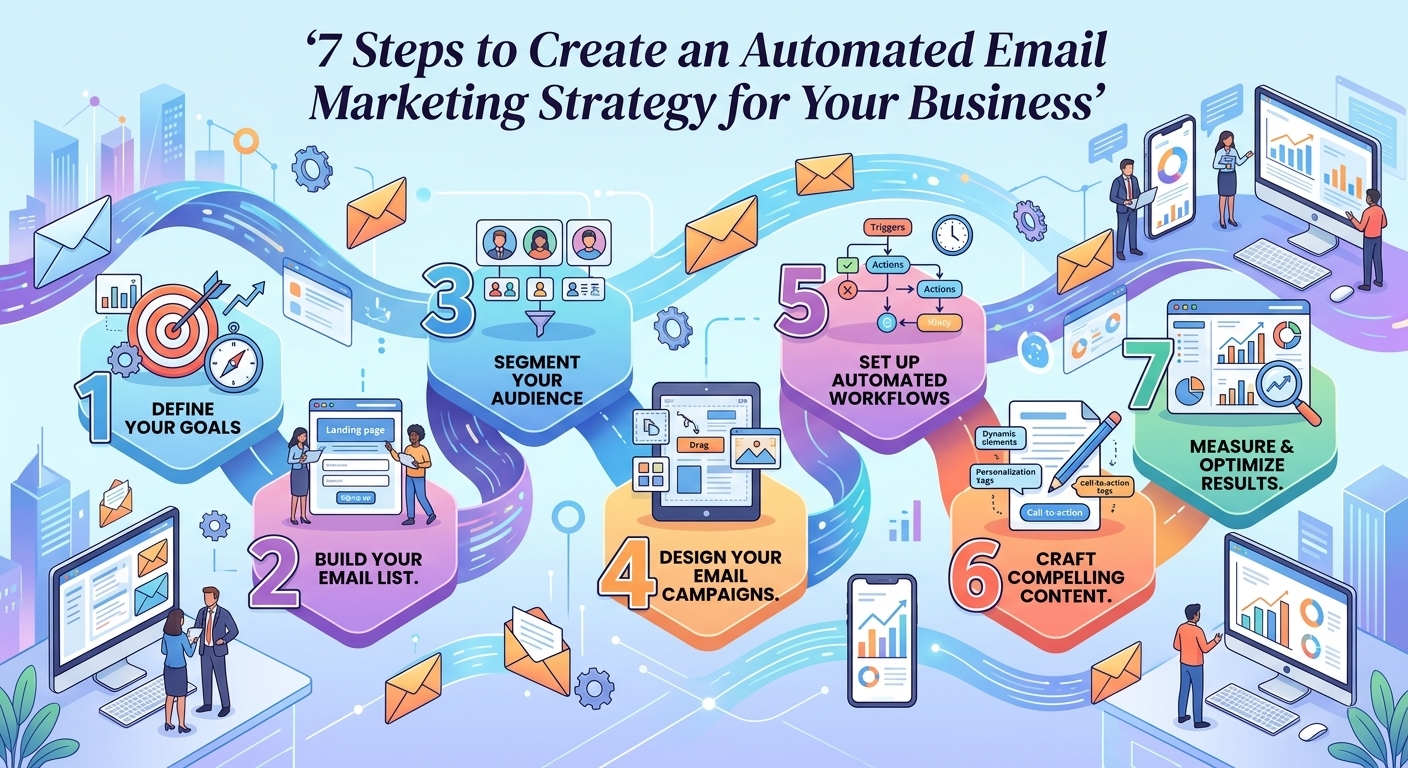
Email marketing remains one of the most powerful tools for connecting with your customers and generating sales, but its true potential is realized when it’s strategically automated. A well-designed strategy not only saves you time but also creates personalized experiences for each customer, effectively guiding them through your sales process.
In this post, we’ll guide you step-by-step through the process of building an automated email marketing strategy, from understanding your customers and designing your sales funnels to choosing an effective email marketing tool like Mailrelay and constantly optimizing your system. Whether you’re just starting out or already have experience, this practical approach will help you scale your business and achieve better results.
Are you ready to transform your email marketing into a system that works for you? Let’s get started!
1. Segment your customers precisely
When you’re creating an automated email marketing strategy, the first thing you should do is segment your customers. I know it might sound a bit technical, but believe me, this step is essential for your emails to be truly effective and not end up in the trash.
Why is segmentation important? Because not all your customers are the same. You and I both know that each person has different needs, interests, and behaviors, and sending the same message to everyone is like shooting arrows blindfolded. What do you prefer: speaking directly to someone who truly needs what you offer, or to a group that might not even pay attention to you?
To segment your market, start by profiling your customers. Think about what you already know about them: What do they buy? How often do they buy it? How did they find your business?
Here are some practical examples of how you could segment:
-
- By behavior: You can group your customers based on what they have purchased before, how often they interact with your emails, or whether they abandoned a shopping cart.
-
- By demographic data: Age, gender, geographic location, or even language.
-
- By interests: If you know that someone is interested in a specific product or service, focus your emails on that area.
- By customer stage: It’s not the same to address someone who just registered as it is to address a loyal customer who buys every month.
By segmenting your audience, you ensure that every email you send is relevant to the recipient. Best of all, this not only improves your open and click-through rates but also strengthens your relationships with your customers.
2. Analyze and understand your customers
Many entrepreneurs fall into the trap of thinking that automation is all about technology. Maybe you’ve thought that too. But let me tell you something important: technology is just a tool. What truly makes the difference in an automated email marketing strategy is how well you understand your customers.
Think about this: if you don’t understand what they want, what they need, or what motivates them, the automations you implement won’t work as expected. To create emails that truly connect, you first need to put yourself in your customers’ shoes.
How to do it? This is where tools that can help you analyze and map your customers’ buying process come into play:
-
- Customer Journey Map: This tool allows you to identify every point of interaction your customers have with you, from the moment they discover your business until they make a purchase (and beyond!). This lets you know what stage of the journey they are at and what kind of communication they need at each point.
-
- Value Proposition Canvas: This model helps you connect what you offer with your customers’ specific needs. By understanding their “pains” and “gains,” you can tailor your messaging to feel truly relevant.
- Empathy map: This tool helps you delve deeper into what your customers think, feel, see, and hear. This is key to developing personalized and effective messages that truly resonate with them.
When you analyze your customers with these tools, you can clearly structure their buying process. For example, you can identify their needs during the discovery stage, their questions before buying, and the type of follow-up they’d like to receive afterward. With this knowledge, the automations you set up will not only be more effective but also much more human and relevant.
In short, I always say that understanding your customers isn’t just a step; it’s the heart of your entire strategy! Have you already mapped how your customers move through their buying process?
3. Design your sales funnels
Now that you’ve segmented your customers and analyzed their buying process, it’s time to design your sales funnels. Let me tell you why this is so important: the sales funnel is like a map that guides your customers from the moment they become aware of you until they make a purchase decision. And not only that, but it’s also the foundation for structuring the automations that will make your strategy a success.
A good sales funnel allows you to guide each customer in a personalized way, resolving their doubts and eliminating objections at each stage. But what are the stages of the funnel, and what should you keep in mind at each one? Let’s review them:
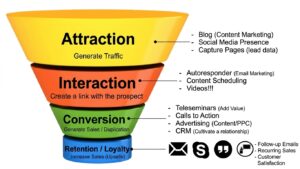
Stage 1: Attraction
This is where your potential customers discover your business. At this point, the key is to capture their attention with relevant and engaging content. This could be through an advertisement, a blog post, or a free resource like an ebook or webinar.
Common objection: “I don’t know if this is relevant to me.”
How to overcome it: Make sure your initial content is clear, useful, and targeted to the specific interests of your segment.
Stage 2: Consideration
At this stage, your prospects already know who you are, but they’re still evaluating whether what you offer is what they need. This is where your emails should provide more detailed information about your products or services, success stories, and benefits.
Common objection: “Will this really be useful for me?”
How to overcome it: Use testimonials, reviews, and comparisons that highlight the value of your solution.
Stage 3. Decision
This is the moment when your prospects are ready to buy, but they might have some final doubts. Your job here is to give them a little nudge to convert them into customers. Exclusive offers, guarantees, or free shipping can be your best allies.
Common objection: “I’m not sure if it’s worth it or if I should buy it now.”
How to overcome it: Use emails that convey urgency, such as limited-time promotions, or highlight the exclusive benefits of your product.
Stage 4: Customer Loyalty
Once a customer has made a purchase, the work isn’t over. At this stage, your goal is to maintain a close relationship and build loyalty so they buy again or even recommend you.
Common objection: “Will this business be consistent or reliable in the long term?”
How to overcome it: Send follow-up emails with educational content, discounts for frequent customers, or surveys to show that you care about their experience.
When you design your sales funnels with these stages and objections in mind, you’re building a clear and effective path that guides your customers from start to finish. Furthermore, by automating emails for each stage, you not only save time but also ensure the right message arrives at the right time.
4. Build your content strategy
Now that you have a clear understanding of your sales funnel, it’s time to take the next step: building your content strategy. Trust me, this is where your automated email marketing truly comes to life, because content is what keeps your customers moving from one stage to the next. But it’s not just about creating content for the sake of creating it; each piece must fulfill a specific objective and be aligned with the stage of the funnel your customer is in.
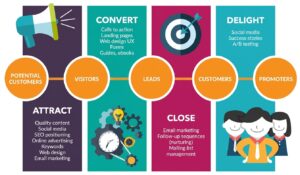
Below, we present content ideas for each stage of your sales funnel…
Attraction stage: Generate interest and capture attention
At this stage, your goal is to attract people who might be interested in what you offer, but who don’t yet know you well. Here you need content that is educational, useful, and sparks curiosity.
Examples of content:
- Downloadable guides or ebooks.
- Checklists or templates.
- Invitations to free webinars.
- Subscription offers to your newsletter with exclusive content.
These resources not only help you capture leads, but also allow you to collect data to begin segmenting. For example, if someone downloads an ebook about “5 tips to save money in your business,” you already know they’re interested in optimizing costs.
Consideration stage: Educating and building trust
At this stage, your prospect is already evaluating whether your product or service is the solution to their problem. The content should answer questions, resolve doubts, and show how you can help them.
Examples of content:
- Case studies or success stories from other clients.
- Educational emails that explain how your product or service works.
- Comparisons or infographics that highlight your benefits.
- Demonstration videos or tutorials.
The goal here is for the client to feel that they understand your proposal and can trust what you offer.
Decision stage: Convince and close the sale
At this point, your prospects are ready to make a decision, but they might need that final push. Content at this stage should focus on conveying urgency and showing why buying now is a great decision.
Examples of content:
- Exclusive discounts or limited-time promotions.
- Personalized offers based on your interaction history.
- Testimonials from happy customers.
- Emails that reinforce unique benefits, such as guarantees or easy returns.
Loyalty stage: Maintaining interest and strengthening the relationship
Once a customer has made a purchase, your content should focus on maintaining the relationship and encouraging future purchases. This is where you can add value beyond the sale itself.
Examples of content:
- Personalized thank-you emails.
- Recommendations for complementary products based on your purchase.
- Educational content such as guides to get the most out of what they bought.
- Reward programs or exclusive discounts for frequent customers.
One content, one objective
Remember: every piece of content should have a clear purpose. Do you want them to download something? Sign up for a webinar? Take advantage of an offer? Define the objective of each email before creating it. By doing so, you not only stay focused, but you can also measure results and adjust as needed.
Building your content strategy isn’t complicated if you consider your customers’ needs at each stage of the funnel and the goals you want to achieve. Do you already have ideas for content you could use?
5. Choose the tools and channels to develop your strategy
It’s time to get down to business and start implementing your automated email marketing strategy. This is where technology truly comes into play, but, as I always say, not all tools are created equal. Choosing the right platform can make all the difference between success and wasted effort.
Factors to consider when choosing an email marketing tool
When choosing a tool to implement your strategy, keep the following in mind:
-
- Ease of use: If the tool is not easy to understand and use, it will take you longer to implement, and you are likely to get frustrated.
-
- Advanced features: Look for tools that allow you to segment, automate, and personalize your emails effectively. Even better if they offer integrations with other platforms you already use!
-
- Deliverability: A good tool ensures that your emails reach your customers’ inboxes, not the spam folder.
-
- Technical support: Make sure it offers fast and expert assistance, even on free plans.
- Scalability: Think about the future of your business. You need a tool that grows with you and doesn’t limit you when your needs increase.
Mailrelay: A standout option
If you’re looking for a reliable tool that meets all these criteria, let me tell you about Mailrelay, a platform that has earned the trust of entrepreneurs and businesses of all sizes.
Why Mailrelay? Here are some reasons:
-
- The largest free account on the market: Mailrelay offers free plans with premium features you won’t easily find on other platforms. This is ideal if you’re just starting and want to reduce costs without compromising quality.
-
- Advanced tools and AI-powered editor: It features an intuitive editor powered by artificial intelligence, a development API for integrations, and SMTP with statistics for deeper analysis.
-
- Reliability and experience: With decades in the industry, Mailrelay is a mass email marketing tool that has proven to be reliable, effective, and secure.
-
- Expert human support: Unlike other platforms, all accounts (even free ones) have 100% support provided by email marketing specialists, ready to help you with whatever you need.
- Easy to use and with excellent deliverability: Its interface is intuitive, making it easy to create campaigns, and its system ensures that your emails reach your customers’ inboxes.
Mailrelay is not only powerful, but it’s also designed with businesses in mind that are looking for real results, without complications.
Define the channels of your strategy.
In addition to the tool, you need to decide which channels will support your email marketing strategy. Email doesn’t work in isolation, and combining it with other channels can multiply your results. Some examples:
-
- Social media: Use them to capture leads that you can then nurture with your emails.
-
- Paid ads: Campaigns on Facebook, Instagram, or Google can attract people to download your free resources or subscribe to your list.
-
- Your website or blog: Make sure to include subscription forms and content that guides your visitors toward your email marketing strategy.
- Multichannel automation: Integrate email with push notifications or SMS messages to complement the customer experience.
In short, the success of your strategy depends on two things: the tool you choose and how you connect your marketing channels to maximize their reach. With a tool like Mailrelay and good planning, you’ll have everything you need to run an effective, automated strategy.
Do you already know which tools and channels you will use for your strategy?
6. Attract customers to your sales funnels
Now that you have your automated sales system designed, it’s time to put it into action and start attracting customers. Because, let’s face it, no sales funnel can work without traffic to feed it. This step is crucial because this is where we execute the attraction strategies that will connect potential customers with your business.
Below are some strategies to attract customers to your sales funnels:
Strategy 1: Create valuable content
Content is one of the most effective ways to attract customers. Publish articles, videos, or infographics that answer common questions from your audience or solve specific problems. Think educational content, such as “How to Choose the Best Product for [X]” or “The 5 Most Common Mistakes When Doing [X].”
Example: A blog post with a form that offers a free ebook in exchange for your email address.
Strategy 2: Irresistible offers
Nothing attracts a customer more than a good offer. It could be a discount, a free sample, or an exclusive resource, such as a guide or a downloadable template. These offers not only grab attention but also make it easier for people to give you their contact information and enter your sales funnel.
Example: “Download our free guide to optimize your personal finances and start saving today.”
Strategy 3: Paid Ads
Platforms like Google Ads, Facebook, and Instagram are powerful tools for quickly generating traffic. Design targeted campaigns that drive your potential customers directly to a lead capture page, also known as a landing page.
Example: An Instagram ad that says: “Having trouble organizing your day? Download our free daily planner template.”
Strategy 4: Collaborate with influencers or strategic partners
If you work in a specific niche, collaborating with influencers or strategic partners can help you reach an audience that already trusts them. This increases your chances of converting them into quality leads.
Example: A social media mention from an influencer with a link to your sales funnel.
Strategy 5: Optimize your website and SEO
Your website is one of your best tools for attracting quality traffic. Make sure it’s optimized with visible subscription forms and relevant content. Also, work on your SEO so customers can find your page when they search for solutions to their problems.
Example: A pop-up on your homepage offering an exclusive discount in exchange for subscribing.
Strategy 6: Email Marketing combined with referrals
If you already have a database, use it to attract more people. Send an email to your current customers inviting them to refer their friends in exchange for incentives, such as discounts or gifts.
Example: “Refer a friend and get a 20% discount on your next purchase.”
Strategy 7: Free events or webinars
Organizing an online event, such as a webinar, not only positions you as an expert in your industry, but is also a great way to attract interested clients.
Example: A free webinar titled: “How to improve your financial habits in 30 days.”
Connect the strategies to your funnel.
Remember that the ultimate goal of these strategies is to feed your sales funnel. Every action you take should guide your prospects toward the initial stage of your funnel, whether it’s signing up, downloading a resource, or registering for an event.
And the best part is that, once inside the funnel, your automated system will take care of nurturing them until they become loyal customers.
7. Constantly analyze and optimize your strategy
The work doesn’t end when your automated email marketing strategy is up and running; in fact, this is where one of the most important stages begins: analysis and optimization. Your first sales funnels might not generate the results you expected, but that doesn’t mean they’ve failed. On the contrary, every piece of data you gather is an opportunity to improve and refine your strategy.
The importance of continuous analysis
When you analyze the data from each stage of your sales funnel, you can clearly identify what’s working and what isn’t. For example:
-
- Are your emails getting low open rates? Perhaps you should improve your subject line.
-
- Are many customers abandoning their search during the consideration stage? Perhaps your educational content isn’t answering their questions.
- Are few people buying? The offer may not be attractive enough, or objections may not be being addressed correctly.
Analysis is not just about looking at numbers; it’s about understanding your customers’ behavior and using that information to make informed decisions.
How to analyze and optimize your strategy?
Step 1: Define your key metrics (KPIs)
Determine which success indicators you want to measure. Some examples:
- Mail opening rate.
- Click-through rate (CTR) on links.
- Conversion at each stage of the funnel.
- Subscription cancellation rate.
- Revenue generated by each funnel.
Step 2: Use analysis tools
Most email marketing platforms, such as Mailrelay, offer detailed statistics that allow you to analyze the performance of your emails. For example:
- What issues generate the most openings?
- Which links receive the most clicks?
- Which emails generate the most conversions?
Supplement this data with tools like Google Analytics to understand how customers interact with your website.
Step 3: Perform A/B tests
A/B testing is one of the most effective ways to optimize your strategy. Change a single element in your emails (such as the subject line, image, or call-to-action button) and analyze which one performs best.
Example:
- In an email, use the subject line “Take advantage of this exclusive offer!”
- In another, try “Discover how to save 20% today.”
Choose the one that performs best for your next campaigns.
Step 4: Identify bottlenecks
Review each stage of the funnel to identify where customers are getting stuck. If, for example, you have many leads in the attraction stage, but few reach the decision stage, you need to adjust your emails or educational content in the consideration stage.
Step 5: Learn from the results
Every piece of data is a lesson. If something isn’t working, don’t see it as a failure, but as an opportunity to learn and improve. Ask yourself:
- What could change in my strategy?
- How can I improve the customer experience at this stage?
- What insights can I apply to future automations?
Step 6: Iterate constantly
Adopt a continuous improvement mindset: plan, execute, measure, analyze, learn, and optimize. This cycle will allow you to refine your strategy and adapt to your customers’ evolving needs.
The advantage of this approach
Working on your strategy this way gives you a clear view of what’s happening at each stage of the process. Instead of guessing, you’re making decisions based on concrete data. This not only helps you improve your results but also makes you more efficient and strategic with your resources.
Remember: success doesn’t happen overnight. The results you expect are the fruit of a constant process of analysis and optimization. Over time, each adjustment will make your strategy stronger and more effective.
Do you already have in mind how you could start measuring the performance of your strategy?
Conclusion
Building an automated email marketing strategy for your business isn’t just about technology; it’s about understanding your customers, designing a clear system, and constantly optimizing it. By implementing the steps we’ve discussed, you’ll create an efficient machine that not only saves you time but also boosts your results by connecting with the right people at the right time with the perfect message.
Remember, success doesn’t come overnight, but with analysis, learning, and continuous adjustments, your strategy will improve day by day. Now it’s your turn to put what you’ve learned into practice and start seeing your business scale automatically.
Are you ready to transform your email marketing starting today and take your business sales to the next level?
About the Author